 How-to
Safe Moss Removal from Asphalt Shingles: A Step-by-Step Guide
Quick Summary
The safest way to remove moss from asphalt shingles is to work gently from a stable ladder, loosen the growth with a soft-bristle brush, apply a shingle-safe moss treatment, then rinse lightly at low pressure. Avoid pressure washing and bleach, since both can strip granules and damage the roof.
- Work from the ground or a stable ladder, and use fall protection for any roof work above one story.
- Loosen moss with a soft-bristle brush, sweeping in the direction of the shingles.
- Use a moss treatment labeled as safe for asphalt shingles, and follow the label's dilution exactly.
- Rinse lightly with a garden hose at low pressure, and avoid pressure washing.
- Stop DIY work and call a professional if the roof is steep, more than one story, or has soft shingles.
Table of Contents
- Why Moss Grows on Asphalt Shingles and Why It Matters
- How to Tell Moss from Algae and Decide Whether to Remove It
- Best Time of Year to Remove Moss from Your Roof
- Safety Setup: Working from the Ground and Protecting Your Roof
- Step-by-Step: How to Remove Moss from Roof Without Damaging Shingles
- Choosing a Moss Killer for Asphalt Shingles and Removing Moss Without Bleach
- Booking Roof Rejuvenation to Protect Your Shingles After Moss Removal
- Frequently Asked Questions
Why Moss Grows on Asphalt Shingles and Why It Matters
Finding moss from asphalt shingles on your roof is a sign that the surface stays damp for long periods. Moss and algae need moisture, shade and a little organic debris to take hold, and Utah roofs on shaded slopes or under trees give them exactly that. Once a patch starts, it holds water against the shingles and spreads.
Moss matters because it does more than look untidy. The roots and the damp mat trap moisture against the shingle surface. Over time that moisture can lift granules and speed up wear. Owners often find that a roof they thought was fine has worn spots hidden under the growth.
A few things make growth more likely:
- North-facing slopes that get little sun
- Overhanging trees that drop leaves and needles
- Gutters that overflow and keep the edge wet
- Shingles that are already worn or losing granules
Catching growth early keeps the cleanup simple and the shingles intact.
How to Tell Moss from Algae and Decide Whether to Remove It
Moss has small, green, leafy shoots that grow in thick clumps. It feels spongy and can lift off the surface in patches. Algae looks more like dark streaks or stains, often black or blue-gray, and it sits flat on the shingle.
Both need attention, but they call for different decisions:
- Moss: usually worth removing, because the clumps hold water and can work into the shingle seams.
- Light algae streaking: often mostly cosmetic. Cleaning helps, but it is not always urgent.
- Heavy growth under gutters or in valleys: remove it, since water pools there.
If you are unsure, check the underside of a loose patch. If moss from asphalt shingles has left soft, dark, or crumbling spots, get a closer look from a professional before you do anything else.
Best Time of Year to Remove Moss from Your Roof
The best time is when the roof is dry for a few days and the weather is mild. Late spring and early fall usually work well in Utah. Avoid working in freezing temperatures, because shingles become brittle and crack more easily. Avoid the hottest part of summer too, since the surface is hot and slippery with cleaners on it.
Plan the job after a dry spell so the moss is dry and comes off more easily. Wet moss is heavy and clings to the shingles. Dry moss lifts with a soft brush and a gentle rinse.
Safety Setup: Working from the Ground and Protecting Your Roof
Safety comes first. Falls from ladders and roofs are among the most common home-injury causes, and a wet, mossy roof is one of the slickest surfaces you can stand on.
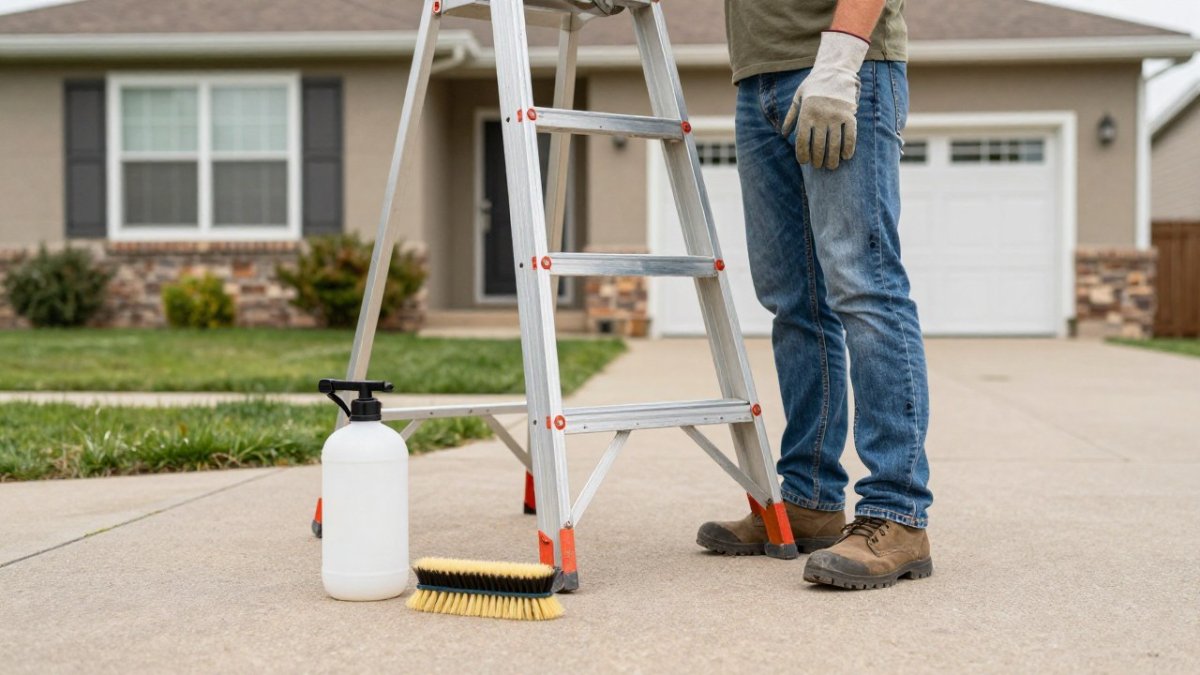
A low-risk, ground-based workflow:
- Set the ladder correctly. Place it on firm, level ground, use the 4-to-1 rule (one foot of distance from the wall for every four feet of height), and extend it at least three feet above the roof edge. Have a second person foot the ladder.
- Work from the ladder, not the roof. A pump sprayer and a long-handled soft-bristle brush let you treat and loosen moss along the lower roof edges and eaves without stepping onto the shingles.
- Reach only what you can reach safely. Keep your body centered between the ladder rails, keep three points of contact, and never lean out or overreach to hit a far patch.
- Treat the rest from the ground. For higher areas, use an extension pole with a sprayer or brush, or call a professional. Many moss problems on upper slopes are best handled by a roofer with fall protection.
- Clean up from the ground. Rinse gutters and downspouts from a ladder or with a hose from below, and bag loosened moss rather than washing it into drains.
Personal protection. Wear non-slip shoes with good tread, work gloves, and eye protection when mixing or spraying treatments. Long sleeves and pants reduce skin contact with cleaners. Never work on a wet, frosty, or windy roof.
Protect the rest of the property. Cover plants and shrubs, direct runoff away from garden beds and storm drains, and keep children and pets away from the work area until surfaces are dry. Rinse gutters and downspouts as you go so loosened moss does not block them.
Watch out: a ladder placed on moss, wet leaves, or soft ground is a leading cause of falls, clear the base, check the footing, and never work alone.
Step-by-Step: How to Remove Moss from Roof Without Damaging Shingles
Work gently. Shingles can tear or lose granules if you scrub too hard or use high-pressure water. If you find cracked or brittle shingles during cleaning, you can learn how to repair brittle shingles before the damage spreads. This step-by-step approach keeps the damage low.
- Inspect first. Look for soft spots, lifted tabs, and worn areas. Note them so you can check them after cleaning.
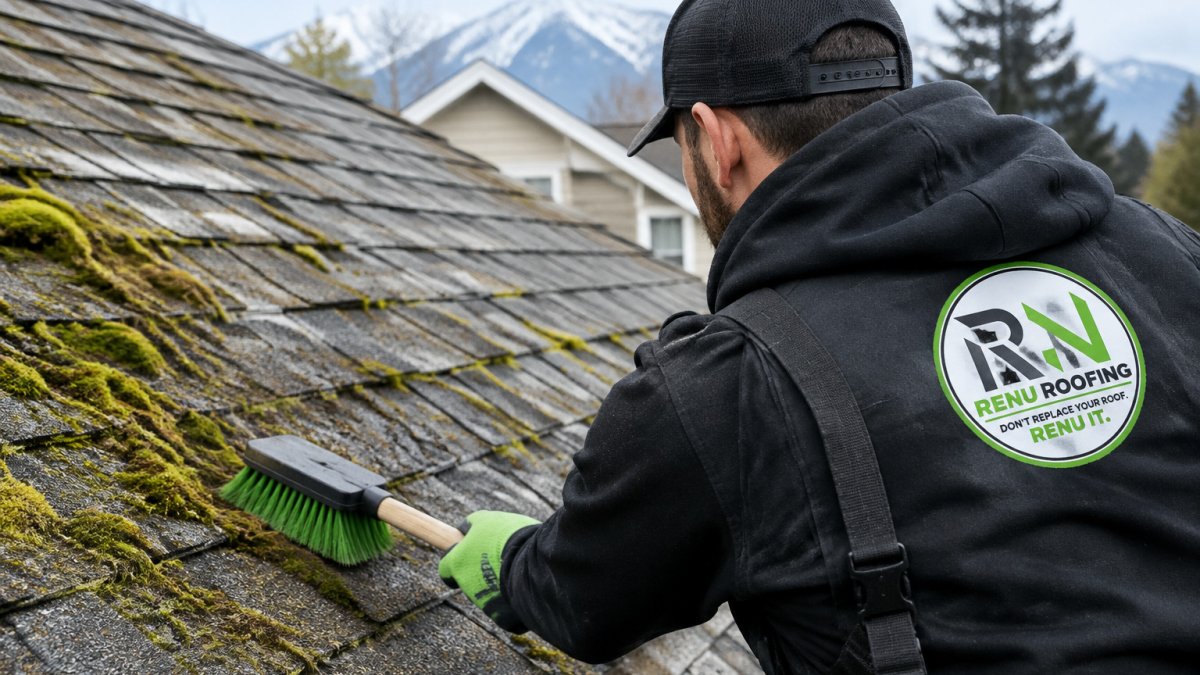
- Loosen the moss. Use a soft-bristle brush or broom with a gentle hand. Sweep in the direction of the shingles, not against them.
- Apply a moss treatment. Spray the affected areas and let it sit for the time listed on the product label.
- Let it work. Most treatments need several hours or more to kill the growth. Do not rush this step.
- Remove the dead moss. Once it has browned and loosened, brush it off gently. Do not pry it up.
- Rinse lightly. Use a garden hose at low pressure. Avoid pressure washing, which can strip granules.
- Check your work. Look for remaining patches and repeat the treatment on those areas only.
Expect the roof to look lighter and cleaner, but expect some regrowth in shaded spots over time. Regular checks catch it early.
Choosing a Moss Killer for Asphalt Shingles and Removing Moss Without Bleach
Most roof-moss products fall into a few families, and the right choice depends on your roof's condition, the size of the growth, and what is growing below the roof.
Match the treatment to the roof condition:
- Light, scattered moss on sound shingles: a labeled shingle-safe moss treatment applied with a pump sprayer, followed by gentle brushing after the moss dies, is usually enough. This is generally the lowest-risk path to start with.
- Heavy clumps in valleys, along gutters, or on shaded north slopes: start with manual loosening using a soft-bristle brush, then treat the remaining growth. Heavy mats hold water and block the treatment from reaching the shingle surface, so mechanical removal first improves results.
- Worn, brittle, or granule-depleted shingles: avoid aggressive scrubbing and strong chemicals altogether. On a roof already losing granules, cleaning can do more harm than the moss. Have the roof evaluated before treatment, and consider whether rejuvenation or replacement is the better investment.
- Moss spreading across most of the roof plane: a professional service is usually the safer call, because whole-roof treatment raises runoff, safety, and shingle-damage stakes at the same time.
Shingle-safe alternatives to compare:
- Zinc-based treatments: zinc sulfate or zinc chloride products labeled for roof moss control are widely used and generally gentler on shingles than bleach. They work by releasing zinc ions that moss cannot tolerate.
- Copper-based treatments: copper sulfate is effective but stains shingles and nearby surfaces and is toxic to aquatic life, so it is a poor fit near water features or where runoff reaches storm drains.
- Potassium salts of fatty acids (soaps): these burn down moss on contact and break down relatively quickly, but they work best on light growth and may need repeat applications.
- Commercial roof-moss cleaners labeled for asphalt shingles: the safest default is a product whose label explicitly lists asphalt shingles as an approved surface. Follow the dilution on the label exactly, more concentrate does not kill moss faster and increases the risk to shingles and landscaping.
Warranty considerations. Abrasive cleaning, pressure washing, and incompatible chemicals can damage shingles or affect warranty coverage. Before treating, check your shingle manufacturer's published cleaning guidance and any warranty terms that address cleaning methods.
Runoff management. Whatever you apply, direct runoff away from garden beds, soil, storm drains, and water features. Cover or pre-wet plants and shrubs before treatment, and rinse them with plain water afterward.
What to expect afterward. Moss usually dies and releases gradually rather than lifting off immediately. Expect the growth to brown over several days to a few weeks depending on weather, then brush off what has loosened.
Watch out: mixing bleach with other cleaners, or applying any product to a hot roof in direct sun, can damage shingles and create hazardous fumes, apply in mild weather and follow the label.
The table below compares the shingle-safe moss treatment options covered in this section, so you can match one to your roof.
| Treatment | Best for | Key difference |
|---|---|---|
| Labeled shingle-safe moss treatment | Light, scattered moss on sound shingles | Lowest-risk starting point |
| Zinc-based treatments | Routine moss control | Gentler on shingles than bleach |
| Copper-based treatments | Dry areas away from water | Stains surfaces; toxic to aquatic life |
| Potassium fatty-acid salts | Light growth | Works on contact; may need repeat applications |
| Bleach (sodium hypochlorite) | Not recommended as a default | Harsh on shingles; toxic to plants and soil |
Booking Roof Rejuvenation to Protect Your Shingles After Moss Removal
Cleaning removes the moss, but it does not restore a worn shingle surface. If your roof is aging, moss removal is a good moment to consider roof rejuvenation. ReNu Roofing offers roof rejuvenation for residential asphalt roofs in Utah. You can compare rejuvenation costs, lifespan, and results before deciding.
For flat commercial roofs, ReNu Roofing applies Gaco roof coatings. Rejuvenation is used on residential asphalt roofs, and the two services carry separate warranties.
Ready to protect your shingles after cleaning? request a roof rejuvenation quote to see whether your roof qualifies, or contact ReNu Roofing to talk through your options. You can also learn how to extend asphalt roof life with a simple maintenance schedule.
Frequently Asked Questions
What will kill moss on asphalt shingles?
Moss on asphalt shingles is usually killed with a zinc sulfate or copper-based moss treatment applied at low pressure, then left to dry and brushed off once the growth has turned brown. Some homeowners also use other cleaning solutions, but each option carries different risks to shingle granules, nearby plants and runoff. Read the product label, test on a small area first, and follow the manufacturer's dilution and dwell-time instructions.
Does moss ruin asphalt shingles?
Moss does not usually ruin asphalt shingles on its own, but it holds moisture against the roof surface, which can speed up granule loss and encourage rot in the decking over time. Thick mats can lift shingle edges and trap debris. Removing moss gently and protecting the roof afterward helps preserve the shingles' expected lifespan. Scraping or pressure washing at high pressure is the most common way homeowners cause damage, so a gentle approach matters more than the removal itself.
Can you remove moss from a roof without bleach?
Yes. Zinc sulfate-based treatments are one option some roofers use to kill moss without chlorine bleach. Diluted white vinegar can also loosen growth, though it may need repeated applications. Whichever option you choose, rinse the roof and clean gutters and downspouts afterward. Pressure washing should be avoided on asphalt shingles, so use a low-pressure garden hose setting for rinsing.
Should you remove moss from asphalt shingles yourself or hire a roofer?
Homeowners can handle light moss on a low, accessible roof from the ground using a pump sprayer and a soft-bristle brush. Steep roofs, multi-story homes or heavy growth make the work a fall risk, and climbing onto a slippery roof is the most dangerous part of the job. In those cases, a professional roofing service is the safer choice. If you are unsure whether the shingles can handle treatment, a roof inspection before you start can help you decide.