 how-to
How to Extend Asphalt Roof Life
Learn how to extend the life of your asphalt shingle roof, recognize early signs of aging, and determine when roof rejuvenation may be a smarter alternative to replacement.
Table of Contents
- Signs of Asphalt Shingle Aging You Shouldn't Ignore
- Your Asphalt Shingle Maintenance Schedule
- How to Extend Asphalt Roof Life Through Gutter and Attic Care
- Moss, Algae, and Overhanging Branches: Preventative Steps
- Roof Rejuvenation Cost and What the Process Covers
- How to Extend Asphalt Roof Life with Professional Inspections
- Frequently Asked Questions
Last Updated: September 2, 2026
Asphalt shingle roofs can often last for many years with with proper maintenance, but aging, weather exposure, and deferred maintenance can gradually reduce their performance. Before assuming your roof needs to be replaced, it’s worth understanding the signs of aging, what maintenance can realistically accomplish, and whether restoration or rejuvenation may be an option. This guide explains how to extend asphalt roof life, what to watch for, when to call a professional, and how to get the most value from an existing roof.
Signs of Asphalt Shingle Aging You Shouldn't Ignore
Catching deterioration early can help homeowners address problems before they become more extensive and expensive. Asphalt shingle aging follows recognizable patterns, and understanding those warning signs can help you make a more informed decision about repair, restoration, rejuvenation, or replacement.
Granule Loss, Curling, and Brittleness
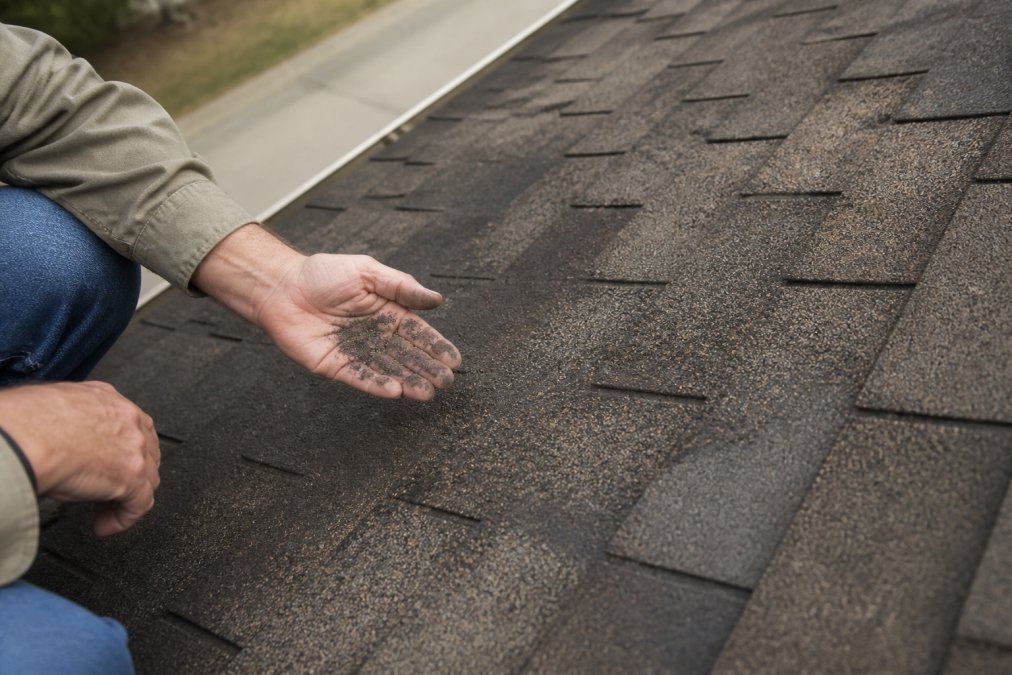
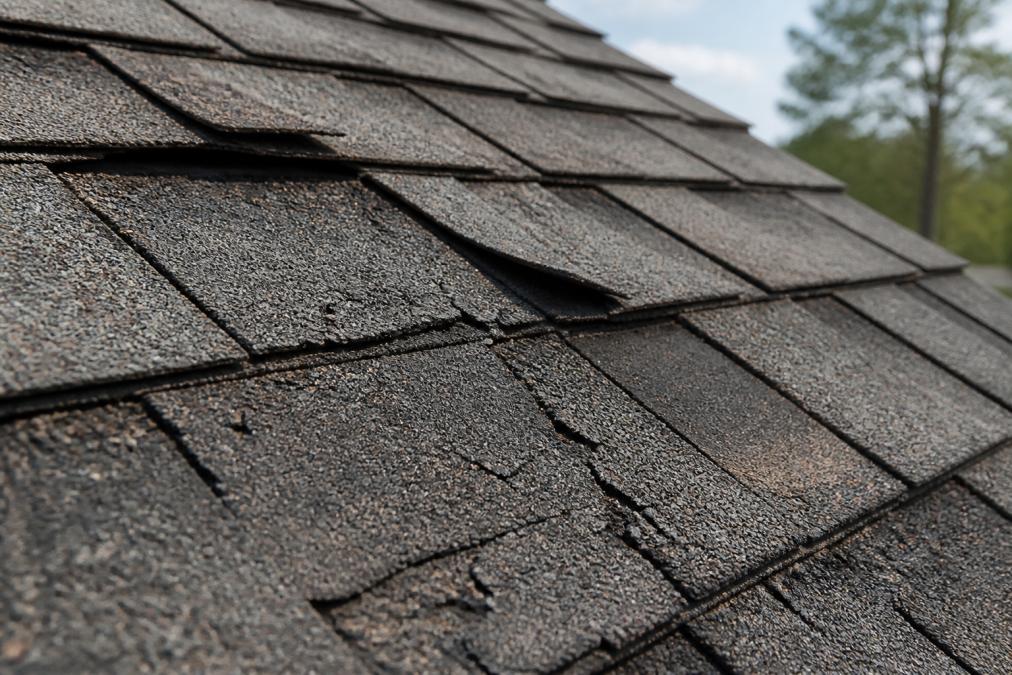
Granule loss is the process by which the protective mineral coating embedded in asphalt shingles wears away due to UV degradation, thermal cycling, and rain impact. When granules shed at an accelerating rate, the underlying asphalt is exposed to direct sunlight, which accelerates brittleness and oil depletion.
Check your gutters. A heavy accumulation of granules in gutter channels after a rainstorm is one of the clearest early indicators that your shingles are past their midpoint. On the roof surface itself, look for bald patches, inconsistent coloring, or a sandpaper-like texture that's gone smooth.
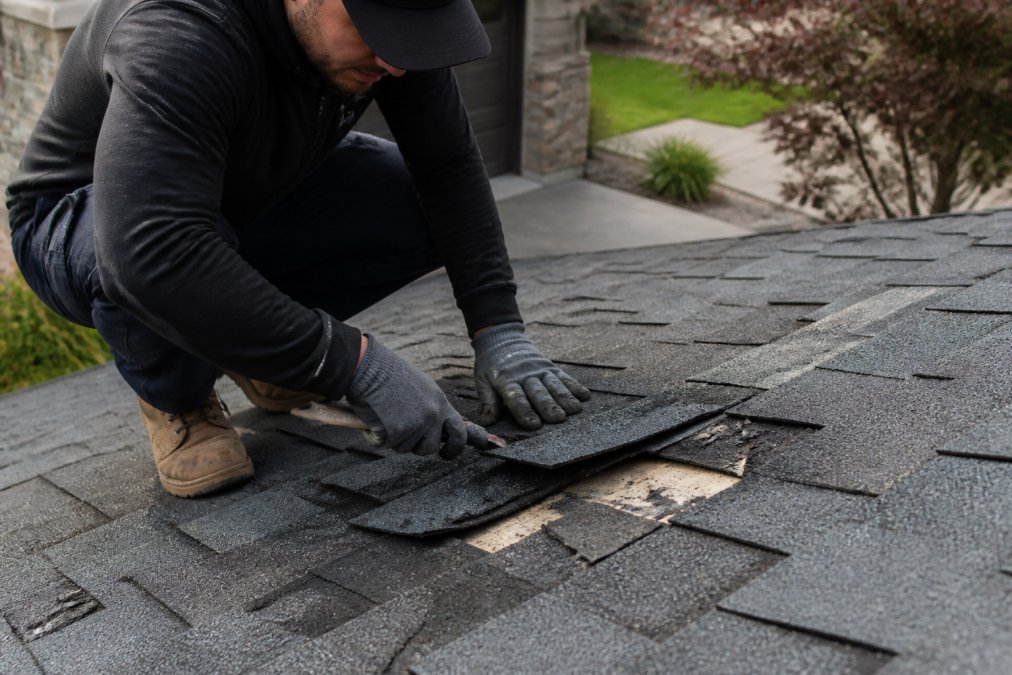
Curling and buckling can develop as asphalt shingles age. You may notice edges or corners lifting, shingles appearing wavy, or sections no longer laying flat. These conditions can be associated with aging, moisture, ventilation problems, installation issues, or other underlying roof conditions. Because lifted or distorted shingles can be more vulnerable to wind and water intrusion, it’s a good idea to have significant curling or buckling evaluated by a roofing professional.
Brittleness is the final stage before shingles start cracking and breaking apart. As asphalt shingles age and lose some of their natural flexibility, they can become more brittle and more susceptible to cracking. Professional roof rejuvenation treatments are designed to replenish certain oils in aging asphalt shingles may help restore flexibility when the roof is still a suitable candidate.
Flashing Failures and Moisture Buildup
Flashing is the thin metal sheeting that seals roof penetrations, chimneys, skylights, vents, and valleys. It's also one of the most common sources of water intrusion in otherwise functional roofs. Flashing fails when sealants crack with age, when the metal corrodes or when improper installation leaves gaps that widen over time.
Signs of flashing failure include water stains on interior ceilings directly below roof penetrations, rust streaks on exterior walls beneath roof edges, and visible gaps or lifted metal at the roof-wall junction. Moisture buildup in these areas can compromise the roof deck and underlayment long before the shingles themselves give out.
According to the Insurance Institute for Business & Home Safety's guidance on roof performance, proper flashing installation and maintenance is one of the highest-use factors in preventing wind-driven rain intrusion, a particularly important consideration in climates with significant seasonal weather variation.
Your Asphalt Shingle Maintenance Schedule
Consistent maintenance can help prevent premature roof failure and give your roof the best chance of lasting as long as it should-or much longer. Most homeowners treat their roof reactively, only addressing it when something visibly fails. That approach is expensive.
Seasonal Tasks: What to Do and When
Here's a practical asphalt shingle maintenance schedule organized by season:
Season | Task | Priority |
|---|---|---|
Spring | Inspect for winter damage; clean gutters; check flashing | High |
Summer | Trim overhanging branches; check for moss/algae growth | Medium |
Fall | Full gutter clean before freeze; inspect attic insulation | High |
Winter | Monitor for ice dams; check attic airflow | Medium |
Annual | Professional roof inspection; assess shingle condition | High |
Spring is the most important inspection window. After a winter of thermal cycling, freeze-thaw stress, and potential ice dam activity, shingles are most likely to show new cracking, curling, or granule loss. Address any flashing gaps before spring rains arrive.
Fall preparation matters just as much. Gutters clogged with leaves prevent proper drainage, which forces water to back up under shingles at the eave line, a primary cause of ice dams and moisture buildup in the roof deck.
How to Extend Asphalt Roof Life Through Gutter and Attic Care
The most underestimated factors in asphalt roof life have nothing to do with the shingles themselves. Gutters and attic conditions silently determine how long your roof deck and shingles perform.
Regular Gutter Cleaning and Guard Installation
Gutters that overflow or hold standing water create a cascade of problems. Water that can't drain properly backs up under the first course of shingles, saturating the underlayment and eventually the roof deck. Over time, this moisture buildup causes wood rot, mold growth, and structural compromise.
Clean gutters at minimum twice per year, once in late fall after leaf drop and once in spring. In areas with significant tree canopy overhead, quarterly cleaning is more appropriate. Downspout extensions should direct water at least 1.5 metres away from the foundation.
Gutter guard systems reduce cleaning frequency but don't eliminate it entirely. Fine-mesh guards are the most effective at blocking debris while maintaining flow.
Attic Ventilation, Insulation, and Thermal Cycling
Poor attic ventilation is one of the leading causes of premature asphalt shingle failure. When attic airflow is inadequate, heat builds up under the roof deck in summer, accelerating UV degradation from below and increasing thermal cycling stress on shingles. In winter, warm air escaping from the living space into a poorly insulated attic melts snow on the roof surface, which then refreezes at the cold eaves as ice dams.
As noted by the U.S. Department of Energy's guidance on attic insulation and ventilation, proper attic insulation combined with adequate airflow is essential for both energy efficiency and roof system longevity. The standard recommendation is a 1:150 ratio of ventilation area to attic floor space, though local building codes may specify different requirements.
Proper attic insulation keeps the roof deck temperature consistent, reducing the freeze-thaw cycling that causes shingles to crack and lose granules prematurely.
Schedule a FREE Roof Inspection →
Moss, Algae, and Overhanging Branches: Preventative Steps
Biological growth such as moss, algae, and overhanging branches can contribute to roof deterioration and are often preventable with proper maintenance.
Moss growth thrives in shaded, moisture-retaining environments. It holds water against the shingle surface, which accelerates granule loss and can eventually lift shingle edges, allowing water infiltration. Algae presents similarly, appearing as dark streaking on the roof surface and indicating chronic moisture retention.
Algae prevention is most effectively achieved through zinc or copper strips installed at the roof ridge. As rainwater washes over the metal, it releases ions that inhibit biological growth across the shingle surface below. According to the Asphalt Roofing Manufacturers Association's technical guidance on algae-resistant shingles, copper strips and algae-resistant shingle formulations are the two most reliable long-term prevention methods.
For existing moss or algae, a diluted sodium hypochlorite solution applied carefully, with full protection for surrounding landscaping, is the standard treatment. Pressure washing is not recommended; it strips granules and voids most manufacturer warranties.
Overhanging branches create two problems: physical abrasion as branches drag across shingles in wind, and a constant supply of organic debris that holds moisture and feeds moss growth. Trim any branches that extend over the roof line, maintaining at least 3 metres of clearance where possible.
Roof Rejuvenation Cost and What the Process Covers
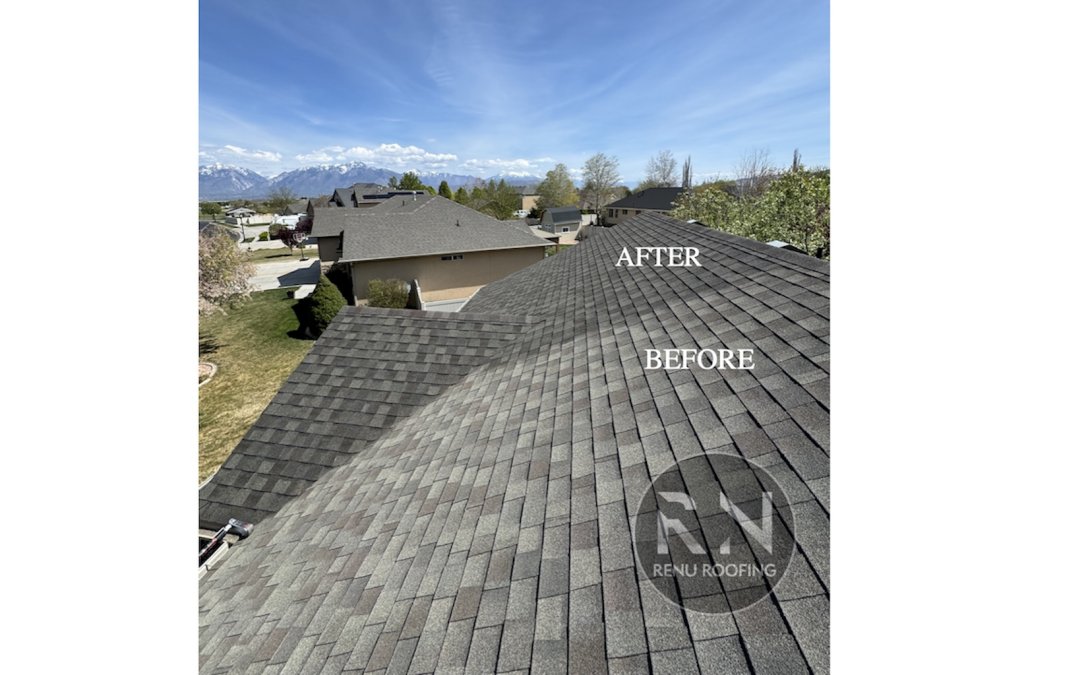
Roof rejuvenation is a professional treatment designed to restore flexibility to aging asphalt shingles, replenish essential oils lost over time, and help slow the effects of UV exposure and weather. When a roof is still structurally sound but showing signs of aging, rejuvenation may be an option to help extend its service life rather than replacing the entire roof. While saving homeowners thousands compared to a full roof replacement.
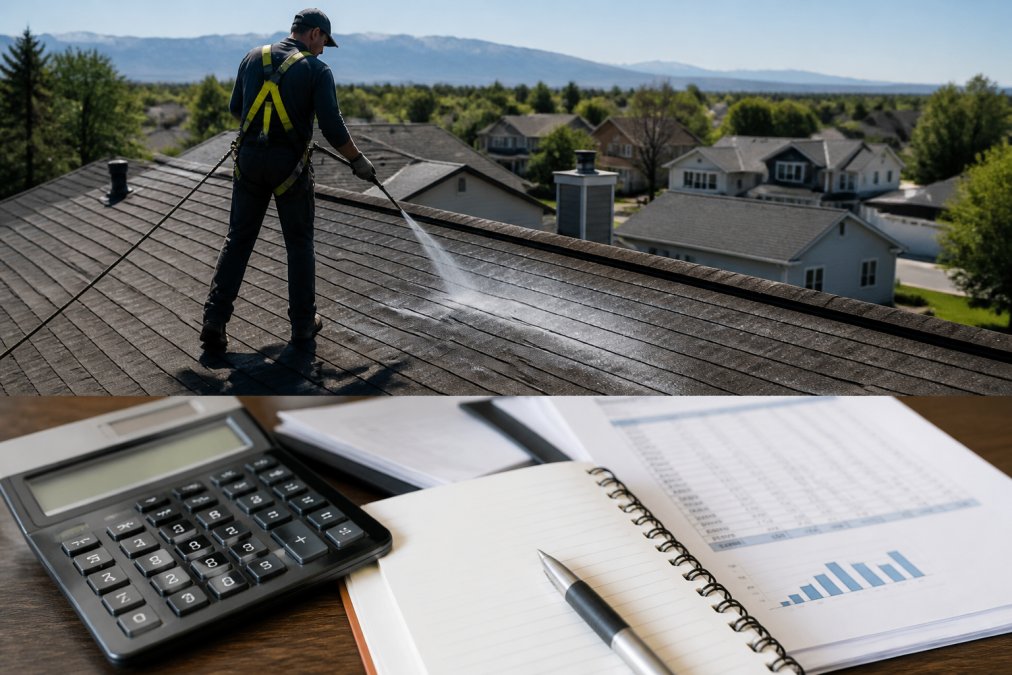
The process typically begins with a thorough roof inspection to determine whether the shingles are a good candidate for rejuvenation. The roof is then prepared and cleaned, minor repairs are completed as needed, and the rejuvenation treatment is professionally applied. For flat roofs, seamless waterproof coatings address ponding water and membrane degradation. The result is a roof that performs closer to its original specification, with restored granule adhesion, improved flexibility, and better resistance to UV degradation.
Cost varies based on roof size, pitch, condition, and the treatment required. ReNu Roofing backs its rejuvenation services with a 6-year transferable warranty, providing homeowners with added peace of mind and allowing the warranty to transfer with the property if it is sold. For flat roof coatings, the warranty extends to 20 years. For current pricing specific to your roof's condition and size, contact ReNu Roofing directly for an accurate quote.
DIY vs. Professional Rejuvenation: Safety and Warranty Risks
Working on a pitched roof without professional fall protection equipment is genuinely dangerous. Roof pitch, surface texture, and weather conditions all affect footing, and falls from residential roofs are a leading cause of serious home improvement injuries. The Occupational Safety and Health Administration's guidance on fall protection applies to workers, but the physics apply equally to homeowners on ladders.
Roof rejuvenation isn’t simply a matter of spraying a product onto the shingles. The roof needs to be properly evaluated, prepared, and treated according to the product manufactures requirements. Most manufacturer warranties on asphalt shingles specify that treatments or coatings must be applied by qualified contractors to remain valid. A DIY rejuvenation product applied incorrectly can actually damage shingles, accelerate granule loss and void whatever warranty protection remained on your shingles.
Cleaning gutters, trimming branches, and applying zinc strips are reasonable DIY tasks. Anything involving product application directly to the shingle surface or repairs to flashing is better handled by a professional.
Climate-Specific Considerations and Material Quality Indicators
Utah’s combination of intense UV exposure, dry conditions, temperature swings, snow, and freeze-thaw cycles can put significant stress on asphalt shingles. These conditions can accelerate oil depletion, brittleness, granule loss, cracking, and other signs of roof aging. Regular inspections and proper maintenance can help identify these issues before they become more expensive problems. Professional roof rejuvenation can help restore flexibility and replenish oils that have been depleted over time, helping the shingles better withstand continued exposure to Utah’s weather conditions.
Material quality also shapes the maintenance equation. Architectural shingles generally carry better granule adhesion and thicker asphalt layers than three-tab shingles, giving them more resilience to thermal cycling and physical impact.
How to Extend Asphalt Roof Life with Professional Inspections
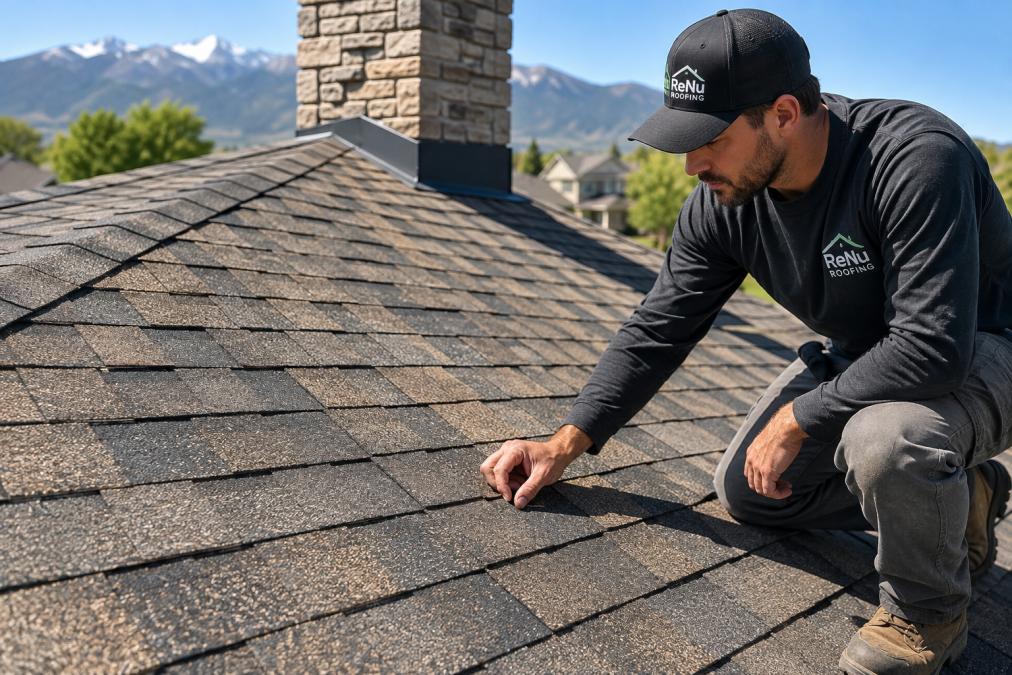
Professional roof inspections are the most reliable way to catch developing problems before they become structural failures. A qualified roofing contractor can assess shingle condition, granule retention, flashing integrity, underlayment performance, and attic ventilation in ways that a ground-level or gutter-edge inspection simply cannot.
A professional roof inspection at least once a year is recommended, and can help identify developing problems before they become expensive repairs. Additional inspections are especially helpful after significant hail, wind, or other severe weather events.
A professional inspection also serves as documentation. If you're filing an insurance claim after a storm, a pre-event inspection report that establishes baseline roof condition is a significant advantage. Home inspectors conducting buyer-side assessments also weight recent professional roof inspections positively, which translates directly to curb appeal and negotiating position at sale.
The ReNu Roofing team approaches inspections as a diagnostic tool, not a sales pitch. Our goal is to provide an honest assessment of what your roof actually needs, whether that's targeted repairs, roof rejuvenation, full replacement when necessary, or simply a maintenance plan to follow for the next few years.
Maintenance Task | DIY or Professional | Frequency | Impact on Roof Life |
|---|---|---|---|
Gutter cleaning | DIY | 2-4x per year | High |
Moss/algae treatment | DIY (with care) | As needed | Medium-High |
Branch trimming | DIY | Annually | Medium |
Copper strip installation | Professional | Once | Medium |
Attic insulation check | Professional | Every 5 years | High |
Flashing inspection and repair | Professional | Annually | High |
Shingle rejuvenation treatment | Professional | Typically every 5-10 years | Very High |
Professional roof inspection | Professional | Annually | Very High |
Learning how to extend asphalt roof life is ultimately about building consistent habits around the tasks above. No single intervention replaces a maintenance rhythm, and no maintenance rhythm replaces professional eyes on the roof every year.
Aging asphalt shingles don't have to mean a full replacement. The challenge is knowing which problems are genuinely end-of-life and which ones respond to targeted treatment. ReNu Roofing specializes in professional rejuvenation, protective coatings, and honest inspections that tell you what your roof actually needs. With a 6-year transferable warranty on rejuvenation services and a 20-year warranty on coatings, you're not guessing at longevity. Inquire now to get a straightforward assessment of your roof's condition and a clear path forward.
Frequently Asked Questions
How long does a 30-year asphalt roof actually last?
A 30-year asphalt shingle roof typically lasts between 20 and 25 years under average conditions. UV degradation, poor attic ventilation, heavy moss growth, and infrequent maintenance all shorten that window. Consistent upkeep, including annual inspections, gutter cleaning, and timely shingle repairs, can push a roof closer to or past its rated lifespan. Professional rejuvenation treatments that restore oil saturation in shingles can add another 5 to 15 years before full replacement becomes necessary.
Do professional roof rejuvenators really work?
Yes, when applied to shingles that still have structural integrity. Rejuvenation treatments work by restoring the natural oils that asphalt shingles lose over time due to UV exposure and thermal cycling. This reduces brittleness, slows granule loss, and extends the roof's functional life. They are not a fix for shingles that are already severely cracked, delaminated, or missing. A qualified roofing contractor should inspect the roof first to confirm it is a good candidate for rejuvenation rather than full replacement.
Can I perform roof rejuvenation myself or do I need a pro?
DIY roof rejuvenation products exist, but applying them safely and correctly is harder than it looks. Steep roof pitches, slippery shingle surfaces, and the need for even product coverage all create real fall and application risks. Improper application can void your existing shingle manufacturer's warranty and may not deliver lasting results. A licensed roofing contractor carries the right safety equipment, knows how to assess shingle condition first, and typically backs the work with a transferable warranty, which matters if you plan to sell the home.
What are the early signs that an asphalt roof is failing?
The clearest early signs include granules collecting in gutters or downspouts, shingles that are curling at the edges or cupping upward, visible cracking or brittleness when you look from the ground, dark streaking from algae growth, and daylight visible through the attic deck. Flashing around chimneys and vents that has lifted or corroded is another common early warning. Catching these signs during a routine inspection gives you time to address them with repairs or rejuvenation rather than a full roof replacement.
Can roof rejuvenation save money compared with replacing a roof?
In many cases, roof rejuvenation can save homeowners thousands of dollars compared with a full roof replacement when the existing shingles are still structurally sound. Rejuvenation restores flexibility and helps extend the service life of aging asphalt shingles without the cost and disruption of tearing off and replacing the entire roof. A professional inspection can determine whether your roof is a good candidate.
This article was written using GrandRanker
Frequently Asked Questions
Q: How long does a 30-year asphalt roof actually last?
A: A 30-year asphalt shingle roof typically lasts between 20 and 25 years under average conditions. UV degradation, poor attic ventilation, heavy moss growth, and infrequent maintenance all shorten that window. Consistent upkeep, including annual inspections, gutter cleaning, and timely shingle repairs, can push a roof closer to or past its rated lifespan. Professional rejuvenation treatments that restore oil saturation in shingles can add another 5 to 15 years before full replacement becomes necessary.
Q: Do professional roof rejuvenators really work?
A: Yes, when applied to shingles that still have structural integrity. Rejuvenation treatments work by restoring the natural oils that asphalt shingles lose over time due to UV exposure and thermal cycling. This reduces brittleness, slows granule loss, and extends the roof's functional life. They are not a fix for shingles that are already severely cracked, delaminated, or missing. A qualified roofing contractor should inspect the roof first to confirm it is a good candidate for rejuvenation rather than full replacement.
Q: Can I perform roof rejuvenation myself or do I need a pro?
A: DIY roof rejuvenation products exist, but applying them safely and correctly is harder than it looks. Steep roof pitches, slippery shingle surfaces, and the need for even product coverage all create real fall and application risks. Improper application can void your existing shingle manufacturer's warranty and may not deliver lasting results. A licensed roofing contractor carries the right safety equipment, knows how to assess shingle condition first, and typically backs the work with a transferable warranty, which matters if you plan to sell the home.
Q: What are the early signs that an asphalt roof is failing?
A: The clearest early signs include granules collecting in gutters or downspouts, shingles that are curling at the edges or cupping upward, visible cracking or brittleness when you look from the ground, dark streaking from algae growth, and daylight visible through the attic deck. Flashing around chimneys and vents that has lifted or corroded is another common early warning. Catching these signs during a routine inspection gives you time to address them with repairs or rejuvenation rather than a full roof replacement.
Can roof rejuvenation save money compared with replacing a roof?
In many cases, roof rejuvenation can save homeowners thousands of dollars compared with a full roof replacement when the existing shingles are still structurally sound. Rejuvenation restores flexibility and helps extend the service life of aging asphalt shingles without the cost and disruption of tearing off and replacing the entire roof. A professional inspection can determine whether your roof is a good candidate.