 how-to
How to Identify Early Signs of Shingle Granule Loss
Learn how to spot shingle granule loss, identify exposed asphalt, and recognize early warning signs of roof deterioration before costly repairs are needed.
Table of Contents
- What Shingle Granule Loss Looks Like on Your Roof
- Signs of Roof Aging You Should Never Ignore
- How to Inspect Roof Shingles Safely: A Step-by-Step Guide
- Why Shingles Loose Granules: UV Rays, Heat, and Weathering
- Granule Loss by Shingle Type and Climate
- Roof Rejuvenation Benefits: When to Repair Instead of Replace
- So, What Can You Do to Prevent Granule Loss or Premature Roof Failure?
- Insurance Claims and When to Call a Roofing Contractor
- Frequently Asked Questions
Last Updated: September 12, 2026
What Shingle Granule Loss Looks Like on Your Roof
Shingle granule loss is the shedding of the protective mineral layer embedded in asphalt shingles, exposing the asphalt beneath to UV rays and weather. This guide from ReNu Roofing covers how to identify early signs of shingle granule loss before it becomes a structural problem.
Granules are the aggregate layer that shields shingles from UV degradation and impact. When they wash away, the shingle's protective layer thins, and premature aging accelerates. Catching this early is the difference between a maintenance call and a full replacement.
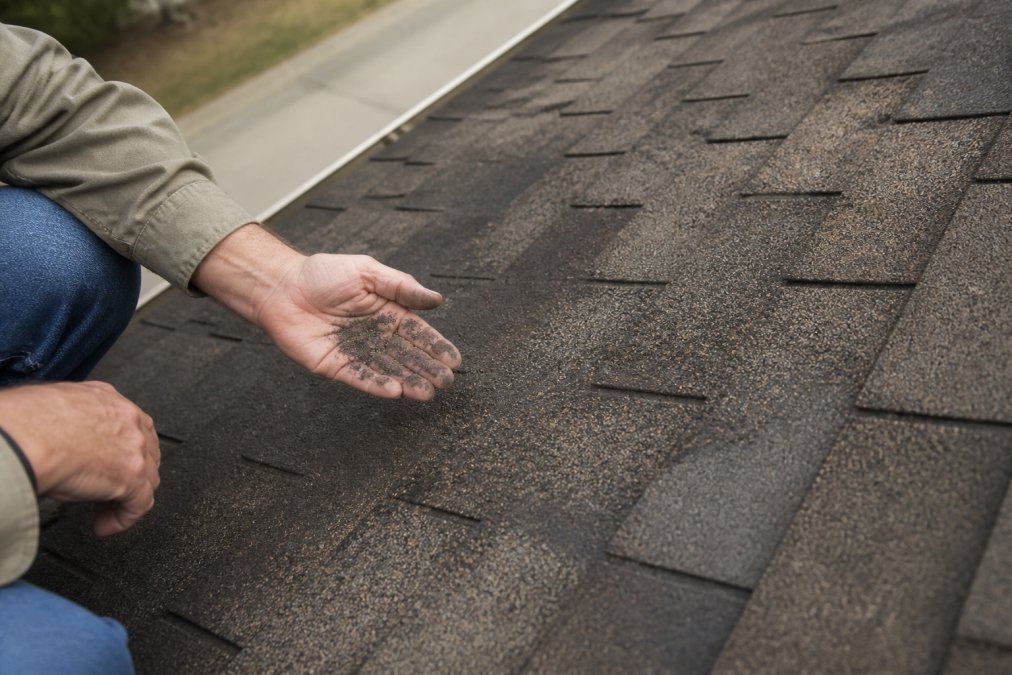
Bald Spots and Exposed Asphalt
Bald spots appear where granules have shed completely, leaving dark, exposed asphalt visible. These patches often start small and expand after each storm. Check the sunniest roof planes first, since UV degradation hits those hardest. A shingle that looks smooth or dark in patches is telling you its protective layer is gone.
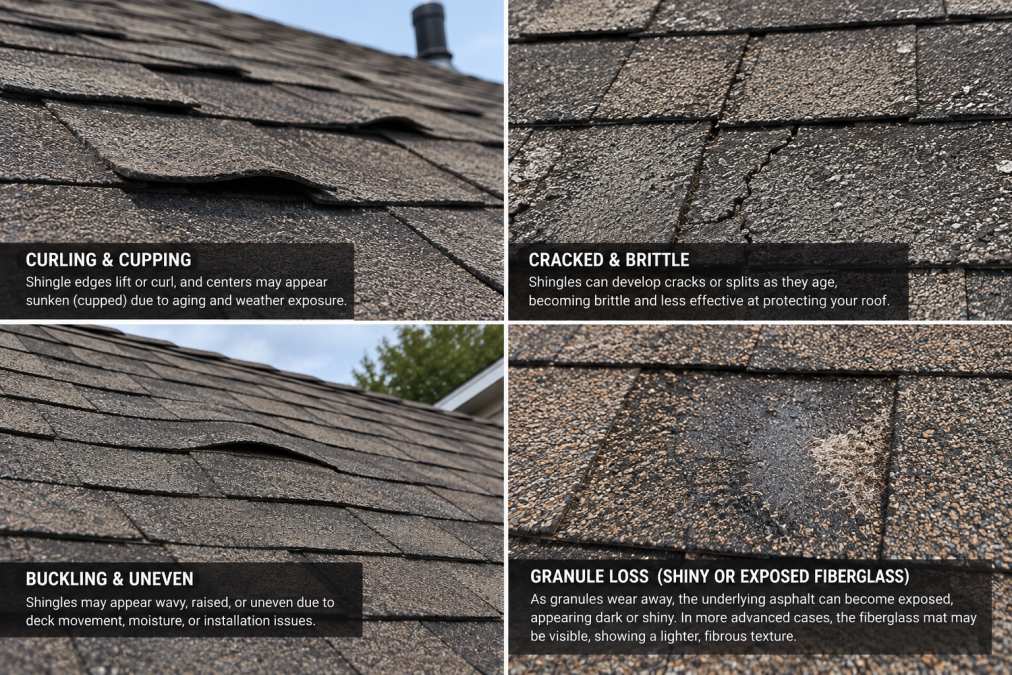
Shiny Patches and Exposed Fiberglass
As granules wear away, the underlying asphalt becomes exposed, creating smooth, dark, or shiny patches that reflect sunlight. In more advanced cases, continued deterioration can expose the fiberglass mat beneath the asphalt. These areas may appear lighter or have a visible, fibrous texture. Both are warning signs of granule loss that can leave shingles more vulnerable to UV damage, moisture, and premature aging.
Signs of Roof Aging You Should Never Ignore
Beyond granule loss, (being one of the most common signs) aging asphalt shingles may show signs of curling, cracking, or buckling. Recognizing these conditions can help homeowners identify potential roofing problems before they worsen.
Curling and Cupping Shingles
Shingle edges may curl or lift as they age and deteriorate, making them more vulnerable to wind damage and further wear.
Cracked and Brittle Shingles
As shingles lose flexibility, they can develop cracks or splits that compromise their ability to protect the roof from moisture.
Buckling and Uneven Shingles
Waves, ridges, or raised areas across the roof may indicate deck movement, moisture, or installation issues that warrant inspection.
Sign | What It Looks Like | Likely Cause |
|---|---|---|
Curling | Lifted or rolled edges | Aging, thermal expansion and shrinkage |
Buckling | Wavy ridges across surface | Deck movement, moisture, uneven underlayment |
Blistering | Small raised bumps | Trapped moisture, heat, shingle defects, & ventilation issues |
Bald spots | Dark exposed asphalt | Granule loss |
Shiny patches | Smooth or reflective areas | Granule loss exposing asphalt |
How to Inspect Roof Shingles Safely: A Step-by-Step Guide
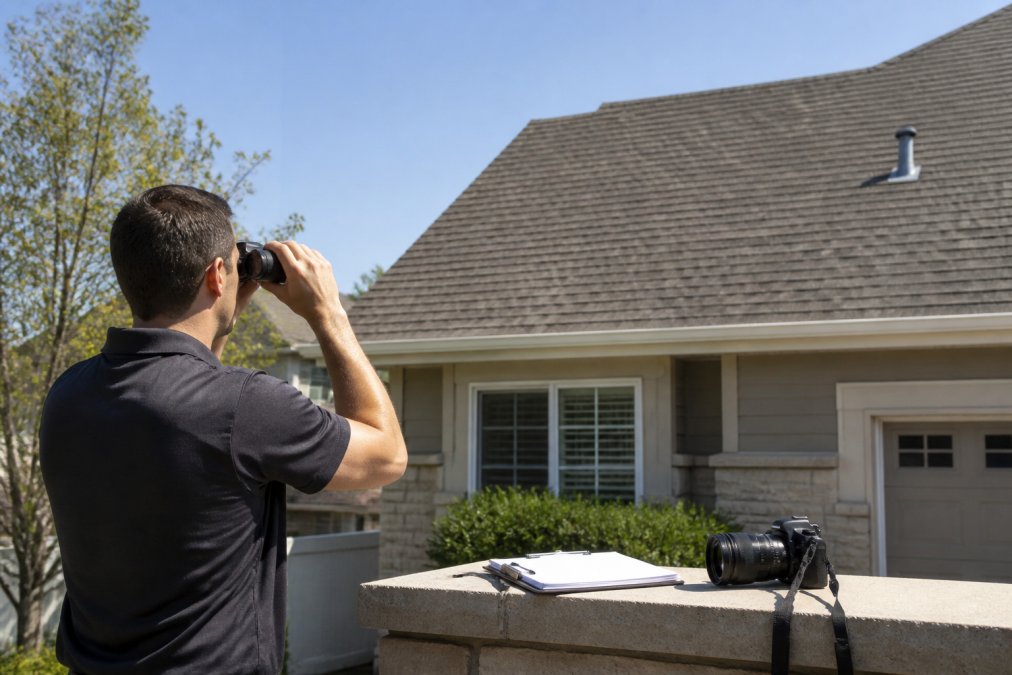
Inspecting roof shingles safely means staying off the roof whenever possible and using ground-level tools to spot problems early. Most granule loss is visible from the ground with binoculars and a careful look at your gutters. Falls are the leading cause of serious injury in roof work, so the safest inspection is the one that never puts you on the slope.
Ground-Level Inspection Steps
- Check gutters and downspouts for accumulated grit and sediment after rain.
- Look for granule buildup at the base of downspouts, a clear sign of active shedding.
- Use binoculars from the ground to scan for bald spots and shiny patches.
- Photograph any suspect areas with your phone for comparison over time.
- Note curling, buckling, or blistering shingles on each roof plane.
- Log the date and weather conditions for each inspection.
Ladder Safety and Fall Protection
If you must use a ladder to reach gutter level, treat it as a controlled task, not a quick peek:
- Ladder setup: Place the ladder on firm, level ground, set it at roughly a 4-to-1 angle (one foot out for every four feet of height), and extend it about three feet above the gutter line so you have a handhold when stepping off.
- Three points of contact: Keep two hands and one foot, or two feet and one hand, on the ladder at all times. Never carry tools in your hands while climbing, use a tool belt or hoist them up.
- Footwear and conditions: Wear shoes with slip-resistant soles. Avoid inspecting in rain, ice, high wind, or when the roof or ladder is wet.
- Fall protection: For any work at height beyond a quick gutter check, a personal fall-arrest system, a full-body harness, lanyard, and a properly anchored point, is the standard safeguard. Roof anchors and harnesses are widely available, but they only help if the anchor is rated and installed correctly.
- The buddy rule: Have someone else present who can spot the ladder and call for help. Never inspect alone.
DIY vs. Professional Inspection Safety Protocols
DIY inspection should stay at ground level: binoculars, a camera, and gutter checks from a stable ladder. Walking a roof with compromised shingle integrity risks falls and further damage. A professional roof inspection covers deck condition, flashing, and moisture infiltration that ground checks cannot reveal, and a trained inspector arrives with the harnesses, anchors, and ladder-stabilizing equipment most homeowners do not own. When in doubt, call a roofing contractor rather than climbing.
Why Shingles Loose Granules: UV Rays, Heat, and Weathering
Granules shed because UV rays, heat, and weather break down the asphalt binder holding them in place. Ultraviolet light degrades the binder over years, while thermal expansion and contraction work the granules loose season by season. Hail, wind, and ice accelerate the process, stripping granules in concentrated areas.
Shingle composition matters here. Asphalt shingles rely on a stable binder to keep the aggregate embedded. Once weathering thins that binder, shedding speeds up. Roof maintenance, including gutter cleaning and guard installation, keeps water moving and reduces the standing moisture that worsens degradation. According to the Asphalt Roofing Manufacturers Association, proper attic ventilation and drainage play a major role in how quickly shingles age.
Granule Loss by Shingle Type and Climate
Not all shingles wear the same way, and the difference comes down to how the granule layer is built. Asphalt shingles are made by saturating a reinforcing mat with asphalt, coating it, then pressing mineral granules into the hot coating so they embed partway. The thicker the coating and the deeper the embedment, the more granules stay put.
How Shingle Construction Drives Granule Loss
- Three-tab shingles use a single layer of mat and a thinner asphalt coating, so granules sit closer to the surface and shear off sooner under UV and thermal cycling. They typically show the earliest and most uniform shedding.
- Architectural (laminated) shingles bond two or more layers together with a heavier coating, giving granules more binder to grip. They usually hold granules longer, but the raised shadow lines and laminated edges can trap debris and moisture that accelerate localized loss.
- Luxury and premium laminated shingles use the heaviest coatings and often a larger, more angular granule blend. They resist UV degradation longest, but they are not immune, once the coating oxidizes, shedding follows the same pattern, just later.
A useful rule of thumb: the thinner the shingle profile, the faster you should expect to see grit in the gutters. If you know your shingle type, you can calibrate how alarmed to be by a given amount of shedding.
Climate-Specific Wear Patterns
Climate changes where and how fast granules leave the roof:
- Hot, dry, high-UV regions: UV radiation oxidizes the asphalt coating, and the daily heat cycle makes the coating brittle. Granules release in broad, sun-facing patches, and shiny or reflective areas show up earlier. South- and west-facing planes degrade first.
- Freeze-thaw regions: Water works into micro-gaps, freezes, expands, and pries granules loose. Shedding concentrates along edges, ridges, and anywhere ice dams form, and it spikes after each winter.
- High-wind and hail corridors: Impact and wind-driven debris strip granules in concentrated streaks and dings rather than uniform patches, which can look like storm damage instead of aging.
Roof Rejuvenation Benefits: When to Repair Instead of Replace
Roof rejuvenation benefits homeowners whose shingles still have structural life left but are shedding granules. Rejuvenation restores flexibility to the shingle mat and reduces further granule loss, extending roof lifespan without a full tear-off. It is a cost-effective alternative to replacement when the damage is surface-level rather than structural.
ReNu Roofing specializes in professional roof rejuvenation that extend roof life by 5 to 15 years. The service restores shingle flexibility, resists UV damage, and protects against hail, wind, and ice. Every rejuvenation job is backed by a 6-year transferable warranty. One customer put it simply: "ReNu Roofing did an exceptional job on our roof while helping us avoid the cost of a full replacement."
So, What Can You Do to Prevent Granule Loss or Premature Roof Failure?
Don’t wait until granule loss and shingle deterioration lead to costly roof repairs or replacement. Professional roof rejuvenation can help restore shingle flexibility, reduce further granule loss, and extend the life of aging asphalt shingles. The key is taking action while your roof is still a good candidate for treatment.
ReNu Roofing helps homeowners protect their roofs before premature deterioration takes its toll. Our professional roof rejuvenation service is designed to replenish essential oils, improve shingle flexibility, and help extend your roof’s service life—potentially saving you thousands compared to premature replacement.
If your shingles are showing signs of aging or granule loss, now is the time to find out if rejuvenation is right for your roof.
Contact ReNu Roofing today to schedule your FREE roof inspection and see if your roof can be rejuvenated instead of replaced.
Don’t Replace Your Roof — ReNu It.
Schedule Your FREE Roof Inspection & Rejuvenation Quote Today
Insurance Claims and When to Call a Roofing Contractor
Insurance may cover granule loss when it stems from a single storm event rather than normal aging. Documenting damage with dated photos and a professional inspection report strengthens a claim. Normal weathering is typically excluded, so the distinction between aging and storm damage matters. A National Association of Insurance Commissioners consumer guide advises reviewing your policy's storm-damage terms before filing.
Call a roofing contractor when you see bald spots across multiple planes, buckling, or any sign of moisture infiltration. These point to structural damage that surface treatments cannot fix.
Frequently Asked Questions
How much granule loss is too much?
A small amount of granule shedding is normal as shingles age. But if you find a steady accumulation of grit in your gutters after every rain, or if bald spots and exposed asphalt cover more than 10% of a shingle's surface, the protective layer is failing. At that point, the roof can no longer block UV rays effectively, and moisture infiltration becomes likely. A professional roof inspection can tell you whether repair, rejuvenation, or replacement is the right next step.
Is granular loss covered by insurance?
Most standard homeowners insurance policies cover sudden damage from hail, wind, or fallen debris, not gradual granule loss caused by normal weathering. If a single storm event stripped granules from your shingles, document the date and file a claim. If the loss happened slowly over years, insurance typically will not pay. A roofing contractor can help you distinguish storm damage from age-related wear before you file.
Can roof rejuvenation stop granule loss?
Roof rejuvenation treatments restore flexibility to aging asphalt shingles and help them hold remaining granules longer. They do not replace granules that are already gone, but they slow future shedding and extend roof lifespan by 5 to 15 years in many cases. Rejuvenation works best on roofs with mild to moderate granule loss, not on shingles that are already heavily damaged.
What causes asphalt shingles to lose granules?
UV degradation breaks down the asphalt binder that holds granules in place, while thermal expansion and contraction from daily temperature swings loosen them over time. Rain, hail, and wind then wash or knock the granules free. Poor attic ventilation speeds up the process by trapping heat. Shingle blistering and curling are visible signs that this cycle is already underway on your roof.
Granule loss rarely stays small, and the earlier you catch it, the more options you keep. ReNu Roofing offers honest assessments, professional roof rejuvenation, and protective coatings designed to extend roof life by 5 to 15 years, backed by a 6-year transferable warranty and a 20-year coating warranty. Get started with ReNu Roofing and protect your roof before shedding turns into replacement.