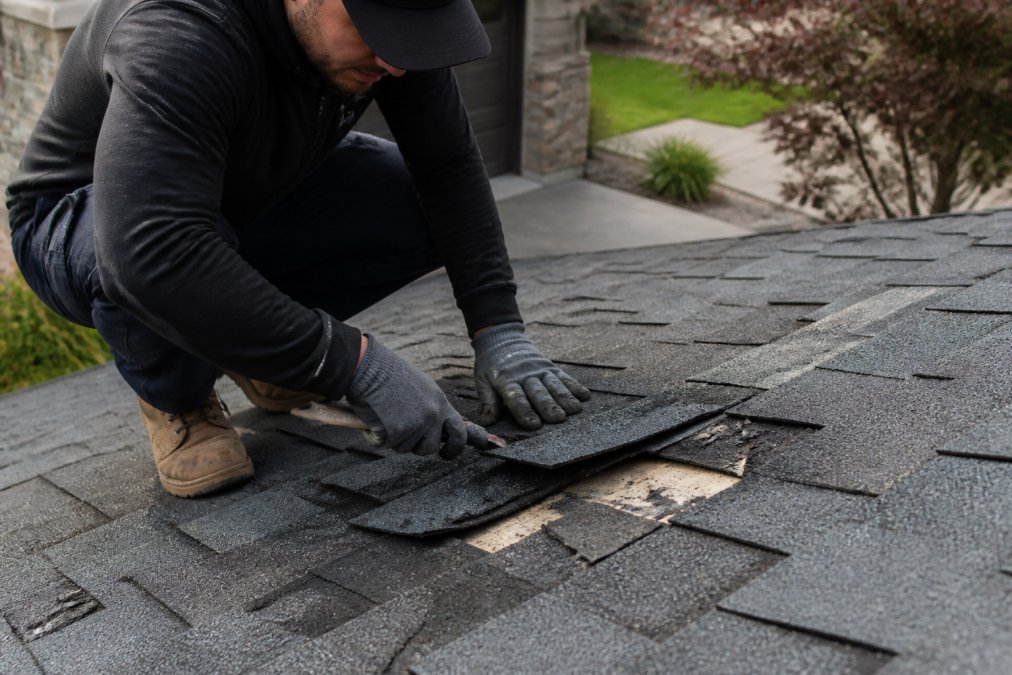
 how-to
How to Repair Brittle Shingles
Learn how to identify brittle shingles, understand your repair options, and determine when roof repair, rejuvenation, or replacement may be the right solution.
Table of Contents
- What Makes Asphalt Shingles Brittle (and Why It Matters)
- Signs of Roof Shingle Aging: A Visual Identification Guide
- How to Assess Shingle Brittleness Before Repairs
- Tools and Materials Needed to Repair Brittle Shingles
- Schedule Your FREE Roof Inspection Today!
- Step-by-Step: How to Repair Brittle Shingles Safely
- How to Tell If Roof Needs Replacement (vs. Repair)
- Asphalt Shingle Rejuvenation Cost: What to Expect
- Long-Term Maintenance and Insurance Implications
- Frequently Asked Questions
Last Updated: September 13, 2026
What Makes Asphalt Shingles Brittle (and Why It Matters)
Brittle shingles are asphalt shingles that have lost their flexibility and will crack or tear instead of bending when handled. At ReNu Roofing, we see this constantly on older roofs: the shingle looks fine from the ground, but the moment anyone walks on it or lifts a tab, it snaps. That loss of flexibility is the single biggest reason how to repair brittle shingles is a different job than repairing a young, pliable roof.
Two forces drive the change. The first is UV degradation: years of sun exposure oxidize the asphalt and strip away the oils that keep shingles supple. The second is thermal shock, the daily cycle of expansion in afternoon heat and contraction overnight, which stresses the mat until it stiffens permanently.
Once shingles reach that state, granule loss accelerates, curling and cracking follow, and the roof's structural integrity declines with every storm. According to the EXTERNAL_LINK: Asphalt Roofing Manufacturers Association guidance on [asphalt shingle performance | asphaltroofing.org], weathering and oxidation are the primary drivers of shingle deterioration over a roof's service life.
Signs of Roof Shingle Aging: A Visual Identification Guide
The clearest signs of shingle aging are granule loss, curling edges, cracking, and exposed mat. Inspect from the ground with binoculars first, then check gutters for the gritty sand-like granules that wash off aging shingles.
Watch for these markers:
- Granule loss: bald patches where the dark mineral surface has worn thin
- Curling: corners lifting away from the roof plane
- Cracking: visible splits in the shingle tabs
- Exposed mat: the fibrous backing showing through worn spots
- Loose shingles: tabs that lift in wind or flap when pressed
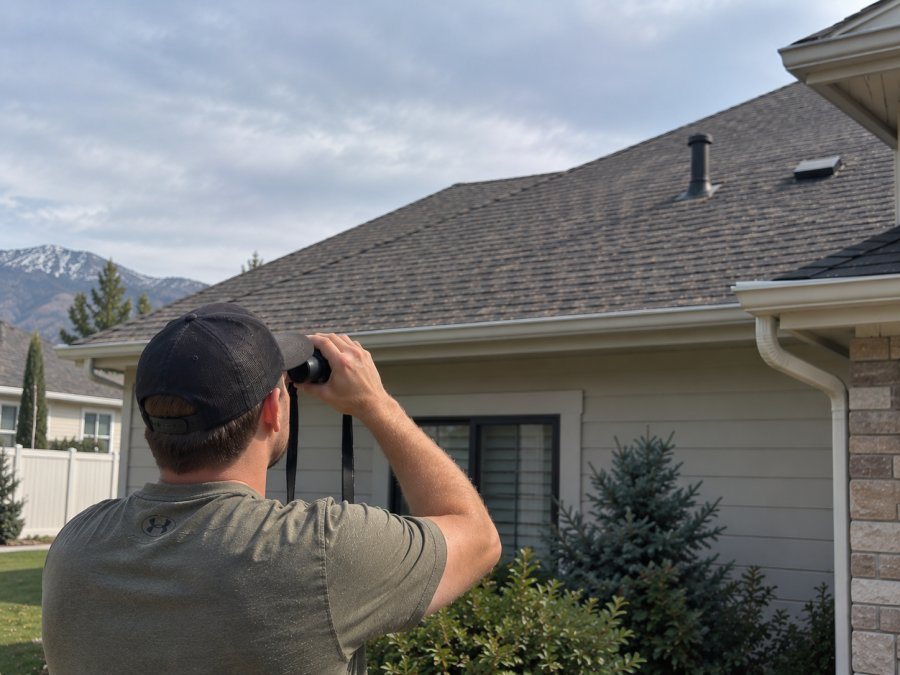
Homeowner using binoculars to inspect curled and cracked roof shingles needing to repair brittle shingles.
How to Assess Shingle Brittleness Before Repairs
Asphalt shingles naturally become less flexible as they age and experience prolonged sun and weather exposure. During a professional roof inspection, a contractor may carefully assess shingle flexibility to help determine whether localized repairs are practical.
If shingles crack, split, or lose significant granules when carefully lifted, repairs may risk causing additional damage. However, there is no universally accepted 90-degree bend or fist test that definitively determines whether a roof is repairable. Shingle condition, temperature, installation, and the surrounding roof area should all be considered.
Important: Avoid forcing or sharply bending aging shingles to test them. A professional roofer can evaluate their condition and determine the appropriate repair options.
Tools and Materials Needed to Repair Brittle Shingles
Repairing brittle asphalt shingles requires the right tools and materials to avoid cracking surrounding shingles or causing additional damage. While minor repairs may seem simple, brittle shingles can be difficult to work with and are best handled by a qualified roofing professional.
The core kit:
Matching replacement asphalt shingles
Roofing nails
Roofing cement or compatible shingle adhesive
Caulking gun
Flat pry bar or shingle removal tool
Utility knife with hook blades
Putty knife
Hammer or roofing nailer
Roof snake (helps install new shingles without lifting them up all the way, preventing further cracking or damage)
Ladder stabilizer and proper fall-protection equipment
Schedule Your FREE Roof Inspection Today!
Step-by-Step: How to Repair Brittle Shingles Safely
Repairing brittle shingles means working with the shingle's weakness instead of against it: warm it, support it, and seal it without forcing it to bend. Below is the sequence we walk homeowners through, and the sequence to follow if you're attempting a DIY repair.
Step 1: Set Up Ladder and Roof Safety Gear
Set the ladder on level ground at a stable angle and secure a safety harness before you climb. Never step onto a roof without fall protection; the surface you're standing on is the same surface that's failing.
Step 2: Clean and Prep the Damaged Area
Clear away loose granules, debris, and any fragments of broken shingle. A clean surface is the only surface roofing cement will bond to properly.
Step 3: Apply Roofing Cement and Seal the Shingle Tabs
Run a bead of roofing cement under the lifted tab with the caulking gun, then press the tab flat. Seal the edges so wind can't catch them.
Step 4: Patch, Press, and Check the Repair
For a torn tab, cut a replacement shingle to size, seat it in cement, and nail it with roofing nails driven just above the seal line. Press it down, then check the repair by hand before you leave the roof.
How to Tell If Roof Needs Replacement (vs. Repair)
This is the decision that matters more than any repair technique. Patching a roof that has already crossed the replacement threshold wastes money and buys you one storm, not one season. Use the criteria below instead of guessing.
The repairable-vs-non-repairable checklist
Walk the roof (with fall protection) and score each item. Repair is realistic when most answers land in the left column.
Condition | Repairable | Non-repairable |
|---|---|---|
Bend test result | Tab flexes without cracking | Tab snaps or crumbles |
Extent of damage | Isolated to a few tabs on one slope | Cracking across multiple slopes |
Granule loss | Patchy, surface-level | Widespread, mat visible |
Tab adhesion | Most tabs still sealed | Tabs lifting across the field |
Underlayment | Dry, intact under damaged area | Soft, stained, or exposed |
Flashing | Sound at penetrations | Lifted, rusted, or sealed with tar |
Roof age | Within the shingle's rated service life | Near or past the manufacturer's rated life |
A common pattern: if more than a handful of tabs fail the bend test on a single slope, the same failure is already underway on the rest of the roof. You are not repairing damage at that point, you are chasing it.
The three zones
- Repair zone: Damage is isolated, the field still flexes, and the underlayment is dry. A targeted patch is the right call.
- Rejuvenation zone: The roof is stiffening and losing granules but the mat is intact and there is no active leak. A rejuvenation treatment can extend service life by roughly 5 to 15 years and postpone replacement (asphaltroofing.org). This is the zone most homeowners are actually in when they search for this repair.
- Replacement zone: Widespread brittleness, cracking across slopes, or water already reaching the deck. Patching here is a treadmill, you fix one section and the next storm opens another.
The insurance angle most guides skip
Before you climb, understand how a DIY repair interacts with your coverage. Most homeowner policies require you to maintain the roof in reasonable condition and to prevent further damage after a loss. Two things commonly go wrong:
- Improper repair as the cause of loss. If a poorly seated tab or a cement-only patch fails and water enters, the insurer may treat the resulting damage as the consequence of faulty workmanship rather than a covered peril. Many policies exclude faulty workmanship outright.
- Undisclosed deterioration. If a claim adjuster finds long-term neglect, widespread granule loss, multiple failed patches, the carrier may reduce the payout or deny the claim on the grounds that the damage was gradual and preventable, not sudden.
The practical takeaway: document the condition before you touch anything, photograph the repair, and keep the receipt. If the roof is already in the rejuvenation or replacement zone, get a professional inspection in writing before you file any claim. An inspection report establishes the roof's condition as of a date, which is exactly what an adjuster asks for.
When to Call a Professional Roofer
Contact a professional roofer if you notice missing or damaged shingles, cracking/curling, persistent leaks, widespread granule loss, sagging areas, or signs of moisture damage. Addressing roofing issues early can help prevent more costly repairs and determine whether your roof needs repairs, rejuvenation, or replacement.
Not sure about your roof’s condition? ReNu Roofing offers FREE roof inspections to help you understand your roof’s condition and explore your options before committing to a costly replacement.
Asphalt Shingle Rejuvenation Cost: What to Expect
Asphalt shingle rejuvenation cost depends on roof size, pitch, and condition, so there's no single figure that applies to every home. Any contractor who quotes a firm number before inspecting the roof is guessing.
What drives the number:
- Total roof square footage and number of slopes
- Roof pitch and how much safety rigging the job needs
- Extent of existing damage and prep work
- Whether gutters and guards are included
At ReNu Roofing, we price after an inspection. Rejuvenation is designed as a cost-effective alternative to full replacement, and every rejuvenation service carries a 6-year transferable warranty.
Long-Term Maintenance and Insurance Implications
Preventative maintenance is what keeps a roof out of the replacement zone, and documentation is what keeps a claim from being denied. Both hinge on the same habit: record what you did and when.
A preventative maintenance schedule that delays brittleness
Brittleness is cumulative, so the goal is to slow the two drivers, UV oxidation and thermal cycling, before they compound.
- Spring: Inspect the roof from the ground with binoculars. Check gutters and downspouts for granule accumulation, which signals active loss. Clear debris from valleys and behind chimneys.
- Summer: After any major storm, check for lifted or missing tabs and reseal them while the shingle is still warm and pliable. Warm-weather sealing bonds better than cold-weather patching.
- Fall: Clear leaves and debris before the first freeze. Debris holds moisture against the shingle surface and accelerates mat degradation.
- Winter: After ice or snow events, check for cracked tabs and ice-dam evidence at the eaves. Do not chip ice off shingles, you will crack them.
- Every 3 to 5 years: Have a professional inspection. This is also the interval at which a rejuvenation treatment makes sense for a roof that is stiffening but not yet failing.
Keep gutters flowing and guards installed where debris is heavy. Water backing up under the shingle edge is one of the fastest ways to turn surface brittleness into deck rot.
How insurance actually treats a brittle roof
This is the part most repair guides leave out, and it is the part that costs homeowners the most money.
- Gradual deterioration is generally not a covered peril. Policies cover sudden, accidental damage, wind, hail, falling limbs. They typically exclude wear and tear, aging, and deterioration. A brittle roof that fails because it was old is usually a maintenance problem, not a claim.
- Faulty workmanship is commonly excluded. If your DIY patch fails and water enters, the resulting interior damage may be denied as the consequence of faulty workmanship rather than a covered event.
- Neglect can reduce or void a payout. If an adjuster documents widespread granule loss, multiple failed patches, or obvious long-term neglect, the carrier may reduce the settlement or deny the claim.
- Documentation is your defense. Inspection reports, dated photographs, repair receipts, and warranty paperwork establish that the roof was maintained. That record is what supports a claim and what a buyer's inspector will ask for at sale.
What to keep, and why it pays off
Save every inspection report, repair receipt, and warranty document. A transferable warranty, like the 6-year transferable warranty on rejuvenation, only has value if the new owner can prove the roof was maintained. That paper trail protects the roof's value through a sale and gives you a defensible position if a claim is ever questioned.
If you sell the home, hand the file to the buyer. A documented maintenance history is one of the few roof-related items that reliably shows up in a home inspection report as a positive.
Frequently Asked Questions
Can damaged brittle shingles be repaired, or do they always need replacing?
Many brittle shingles can be repaired if the damage is limited to a few tabs. Loose shingles, small cracks, and lifted tabs respond well to roofing cement and roofing nails. However, if shingles crack when you bend them or granule loss covers large sections, patching only delays the inevitable. A roofing contractor can confirm whether repair or replacement is the better path.
What causes asphalt shingles to become brittle in the first place?
Brittleness comes from years of UV degradation and oxidation that strip the asphalt's oils, leaving shingles dry and stiff. Thermal shock, the repeated expansion and contraction from hot days and cold nights, accelerates cracking. Granule loss exposes the asphalt underneath, speeding up the process. Once shingles lose flexibility, even light foot traffic can snap them, so treat any aging roof with care.
Is it safe to walk on a roof with brittle shingles?
Walking on brittle shingles is risky for both you and the roof. The shingles can crack underfoot, and a missed step near a damaged area can cause a fall. Always use a safety harness anchored to a solid point, keep three points of contact on the ladder, and avoid stepping on visibly curled or cracked tabs. If the roof feels soft or crunches underfoot, call a roofing contractor instead of continuing.
How does asphalt shingle rejuvenation cost compare to a full roof replacement?
Rejuvenation typically costs a fraction of a full replacement (often up to 80% less) because it restores flexibility and seals granule loss without tearing off existing shingles. Exact pricing depends on roof size, condition, and the products used, so ReNu Roofing recommends requesting a quote for your specific roof. For homeowners on a fixed income, rejuvenation can extend roof lifespan by 5 to 15 years, delaying the larger replacement expense.
Brittle shingles rarely fail all at once; they fail one storm, one cracked tab, and one ignored gutter at a time. If your roof is past the point where patching keeps up, ReNu Roofing can assess whether rejuvenation is a realistic alternative to replacement, backed by a 6-year transferable warranty on rejuvenation and a 20-year warranty on coatings. Get started with ReNu Roofing and find out how many more years your current roof has left.