 how-to
How to Prevent Asphalt Shingle Granule Loss
Learn what causes asphalt shingle granule loss, how to spot early warning signs, and how to protect your roof from premature wear.
Table of Contents
- Why Granules Matter and Why They Fall Off
- How to Spot Early Signs of Roof Granule Loss
- Step-by-Step Guide to Prevent Granule Loss
- Preventative Asphalt Shingle Maintenance Tips That Work
- When to Call a Professional for Roof Rejuvenation Services
- The Cost of Inaction vs. Timely Repair
- Frequently Asked Questions
Last Updated: September 9, 2026
Why Granules Matter and Why They Fall Off
If you have an asphalt shingle roof, you have probably noticed small, sand-like particles collecting in your gutters or around your downspouts. Those particles are called roofing granules, and they play an important role in protecting your shingles.
Roofing granules are the small, rough pieces of mineral material covering the surface of an asphalt shingle. They help protect the asphalt underneath from sunlight, weather, and everyday wear. They also contribute to the shingle’s overall appearance and fire resistance.
Some granule loss is normal, especially when a roof is new. A small amount of loose granules may wash off during the first few years after installation. However, continued or excessive granule loss can be a sign that your shingles are aging or becoming more vulnerable to damage.
At ReNu Roofing, we inspect asphalt shingle roofs regularly, and one of the first things we look for is the condition of the shingle surface. Granule loss by itself does not automatically mean that your roof needs to be replaced. The important question is why the granules are coming off and what condition the shingles are in underneath.
What Causes Asphalt Shingle Granule Loss?
Several things can cause shingles to lose granules over time, including:
Age: Asphalt shingles naturally become less flexible as they age.
Sun exposure: Years of UV exposure can gradually break down the asphalt and make shingles more brittle.
Severe weather: Hail, heavy rain, high winds, snow, and ice can accelerate wear.
Foot traffic: Walking on shingles incorrectly can loosen or damage the protective granule layer.
Poor roof ventilation: Excessive heat buildup in an attic can contribute to faster aging of roofing materials.
Normal weathering: Even a properly installed roof will gradually wear as it is exposed to the elements.
As shingles age, they can become harder and less flexible. Once the shingle surface begins to deteriorate, granules can loosen more easily. Over time, this can leave portions of the asphalt more exposed to the sun and weather.
The good news is that seeing granules in your gutters does not automatically mean you need a new roof. A professional inspection can help determine whether your roof has normal wear, localized damage, or more significant deterioration.
How to Spot Early Signs of Roof Granule Loss
Granule loss usually happens gradually, which means there may be warning signs before a roof reaches the point where replacement is necessary.
One of the easiest places to look is your gutters and downspouts. After a rainstorm, check for small piles of dark, sand-like material. A small amount can be normal, but larger amounts that continue appearing over time are worth investigating.
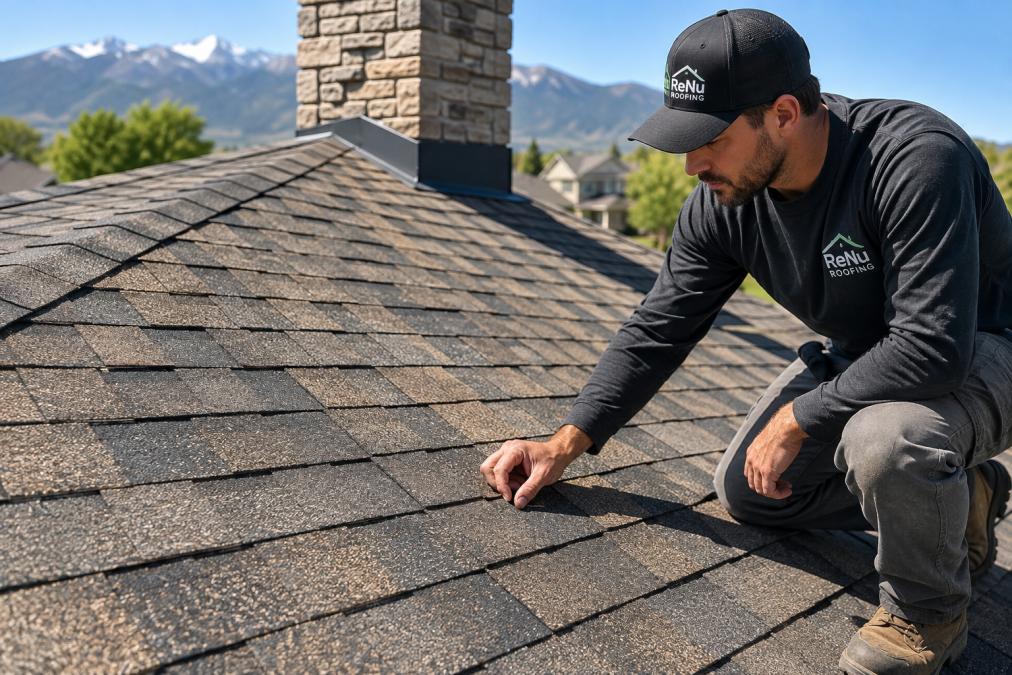
You can also look at the shingles themselves. Healthy asphalt shingles should have a relatively consistent layer of granules across their surface. Areas that look unusually smooth, shiny, or darker than the surrounding shingles may have lost some of their protective granules.
Signs to Look For:
During a basic visual inspection, look for:
Granules collecting in gutters or near downspouts
Areas of shingles that appear unusually smooth or bare
Shingles that are curling at the edges
Cracked or brittle-looking shingles
Missing or damaged shingles
Dark spots where the underlying asphalt is more visible
Shingles that appear to have lost their original texture
Excessive granules appearing after storms
It’s important to remember that one sign alone does not tell you the entire story. For example, granules in a gutter could come from normal weathering, an older section of roof, storm damage, or another roofing issue.
That is why looking at the overall condition of the roof is more useful than judging the roof based on one symptom.
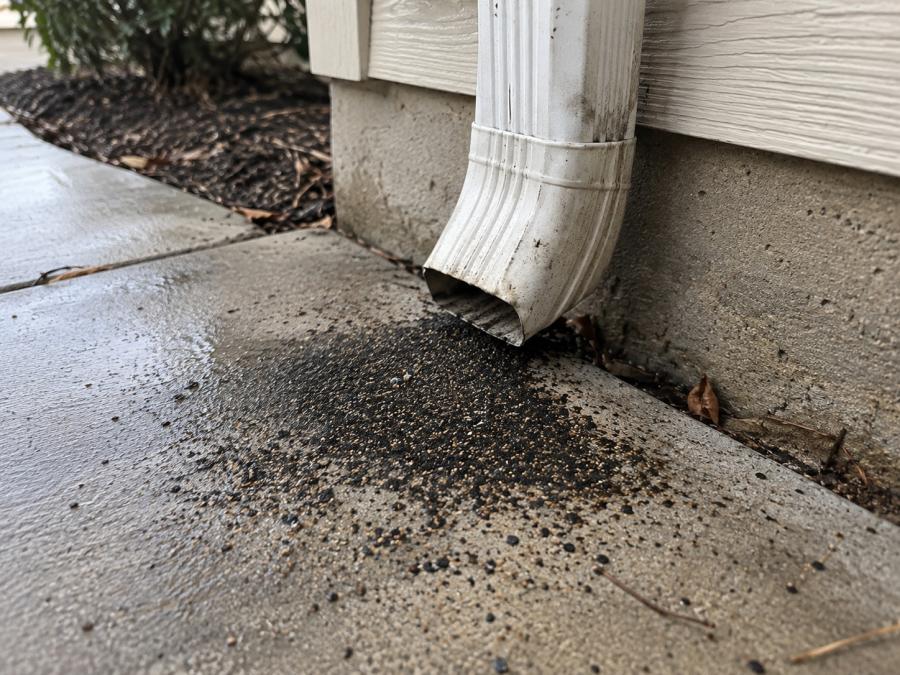
Loose asphalt shingle granules collecting near a downspout after washing off the roof
When Should You Be Concerned?
If your roof is relatively young and you are seeing significant granule loss, it is worth having it inspected. The same is true if granule loss is accompanied by curling, cracking, exposed asphalt, missing shingles, or visible storm damage.
For an older roof, granule loss may simply be part of the natural aging process. However, that does not necessarily mean replacement is your only option.
At ReNu Roofing, we look at the shingles, granule coverage, flexibility, weathering, flashing, vents, valleys, and other areas of the roof before recommending a solution. Our goal is to determine what your roof actually needs—not automatically recommend a replacement.
A common mistake is confusing normal wear with premature failure. Most asphalt composition shingles shed a small number of granules during their first summer as loose surface material washes away. The distinction matters: if you're seeing consistent granule accumulation months or years after installation, or if bare spots are expanding, your roof is aging faster than it should. According to guidance from the Asphalt Roofing Manufacturers Association on granule loss, persistent granule accumulation in gutters warrants a professional roof inspection to assess whether the shingles still have adequate protection.
Step-by-Step Guide to Prevent Granule Loss
The best way to protect your asphalt shingle roof is to stay ahead of small maintenance issues. You don’t need to be a roofing expert—just keep an eye on the areas that can affect your roof’s condition.
Step 1: Check Your Roof From the Ground
Walk around your home a few times a year and look for obvious changes such as curling, cracked, missing, or damaged shingles. Binoculars can help you get a closer look without climbing onto the roof.
If something looks unusual, have a roofing professional take a closer look.
Step 2: Keep Gutters and Downspouts Clear
Clean your gutters regularly so rainwater can flow away from the roof properly. Pay particular attention after storms and during seasons when leaves and debris are common.
If you consistently find large amounts of granules in your gutters, consider having your roof inspected.
Step 3: Keep Branches and Debris Off the Roof
Trim branches that can contact the shingles and remove leaves or other debris that collect on the roof.
Branches can scrape the shingle surface, while trapped debris can hold moisture against the roof and contribute to premature wear.
Step 4: Avoid Unnecessary Foot Traffic
Try not to walk on asphalt shingles. Foot traffic can loosen granules and damage shingles, particularly as they become older and more brittle.
If your roof needs a close inspection, having a professional evaluate it is safer and can prevent additional damage.
Step 5: Address Problems Early
If you notice damaged shingles, loose flashing, or other roofing problems, don’t wait until you have a leak to address them.
A professional can determine whether the roof needs a simple repair, maintenance, rejuvenation, or replacement based on its overall condition.
Step 6: Consider Maintenance for an Aging Roof
If your shingles are aging but are still in serviceable condition, roof maintenance may help extend their useful life.
ReNu Roofing specializes in asphalt shingle roof rejuvenation for qualifying roofs. We evaluate the condition of the existing shingles first and recommend rejuvenation only when the roof is a good candidate.
The goal isn’t to replace a roof that still has useful life. It’s to help homeowners understand the condition of their roof and choose the right solution for it.
Preventative Asphalt Shingle Maintenance Tips That Work
Beyond the basic inspection routine, several preventative strategies can slow granule loss. Roof ventilation is one of the most overlooked factors. Attics that trap heat cook the underside of your shingles, accelerating thermal aging and weakening granule adhesion. Ensure your attic has adequate intake and exhaust vents to regulate temperature.
Climate-specific prevention also matters. In Utah's high-desert environment, roofs face intense UV radiation in summer and freeze-thaw cycles in winter. Keeping branches trimmed reduces debris and allows your roof to dry faster after storms, preventing leaves from trapping moisture that promotes granule loss and algae growth.
For roofs already showing moderate granule loss, a professional rejuvenation treatment can restore flexibility to the asphalt and improve granule adhesion. These treatments penetrate the shingle to replenish the oils that UV radiation breaks down over time. This approach is far more cost-effective than replacement, and it's the core of what the National Roofing Contractors Association's maintenance guidance recommends for extending the service life of aging asphalt shingle roofs.
When to Call a Professional for Roof Rejuvenation Services
There's a clear threshold between what you can handle yourself and when you need professional help. If you've noticed granules in your gutters for more than one season, or if your shingles show visible bare spots, curling, or cracking, DIY maintenance won't reverse the damage. This is where professional roof rejuvenation services become the smart financial choice.
What Roof Rejuvenation Actually Does
Roof rejuvenation is not a cleaning or a sealant. It's a restorative treatment that penetrates the asphalt shingle and replenishes the natural oils that UV radiation and thermal cycling break down. As these oils deplete, the asphalt becomes brittle and loses its ability to hold onto granules. Rejuvenation products, such as those based on bio-based oils or proprietary petroleum distillates, restore flexibility to the asphalt mat, which can help re-embed loose granules and prevent further loss.
Schedule Your FREE Roof Inspection →
This is a chemical process, not a physical one. The treatment is typically applied with a low-pressure sprayer and must be done on a dry day with moderate temperatures. The product needs time to soak into the shingle, which is why professional application is critical. A DIY application can easily result in uneven coverage, product runoff, or a slippery surface that is a safety hazard.
The DIY vs. Professional Threshold
A common question is whether homeowners can apply a roof rejuvenation treatment themselves. While some roof maintenance can be handled by a homeowner, rejuvenation is best evaluated and applied by a professional. The condition of the shingles matters more than the roof’s age alone.
Situation | DIY or Professional? | Why? |
|---|---|---|
Roof is relatively new and in good condition | DIY or Professional Routine maintenance | A newer roof may not need rejuvenation yet. Regular inspections and basic maintenance can help keep it in good condition. However ReNu Roofing’s rejuvenation treatment on a brand new roof can put a pause on normal aging and wear for up to a decade or more. |
Roof is aging but still in good condition | Professional evaluation | A professional can determine whether the shingles are a good candidate for rejuvenation and whether treatment could help extend their useful life. |
Roof has noticeable granule loss, cracking, or bare areas | Professional inspection | This is a critical stage. A professional can determine if rejuvenation will be effective or if replacement is the more cost-effective option. Applying a treatment to a roof that is too far gone is a waste of money. |
Roof has severe deterioration, widespread damage, or exposed underlying material | Professional evaluation | Rejuvenation may not be appropriate for a roof that has deteriorated beyond a serviceable condition. Replacement or repairs may be the better option. |
Homeowners want to apply rejuvenation themselves | Professional application | Proper preparation, application, coverage, and weather conditions all matter. Professional application helps ensure the treatment is applied correctly and consistently. Professionals can also many times provide a warranty. Whereas DIY may void warranty coverage. |
The Bottom Line
Roof age is only one piece of the puzzle. Two roofs that are the same age can be in very different conditions depending on their shingles, installation, weather exposure, ventilation, maintenance, and storm history.
At ReNu Roofing, we evaluate the existing roof before recommending rejuvenation. If the roof is a good candidate, rejuvenation can be a way to maintain an aging asphalt shingle roof without immediately replacing it. If it isn’t, we’ll tell you that too.
The Warranty and Insurance Factor
When considering roof rejuvenation, homeowners often wonder whether the treatment will affect their existing shingle warranty. The answer can depend on the product being used, so it is important to understand how the treatment works.
ReNu Roofing uses Fresh Roof, a professional asphalt shingle rejuvenation treatment powered by GreenSoy™ Technology. Unlike a traditional surface coating, Fresh Roof is designed to penetrate into the asphalt shingle and restore flexibility and granule adhesion. Fresh Roof states that its treatment does not void the manufacturer’s shingle warranty when properly applied.
Fresh Roof also provides a 6-year performance warranty when the product is professionally applied by a certified dealer.
Homeowners should still keep their original shingle warranty documentation and understand what their specific manufacturer warranty covers. Manufacturer warranties generally address specific product defects and do not necessarily cover normal aging, maintenance, or storm damage.
Insurance and Granule Loss
Normal aging and gradual granule loss are generally maintenance issues rather than an insurance-covered event. However, if your roof experiences sudden damage from a covered event, such as a severe hailstorm, the situation may be different.
If you believe your roof has storm damage, have it professionally inspected and documented before deciding between repair, rejuvenation, or replacement.
The Professional Rejuvenation Process
A professional roof rejuvenation service should follow a clear, documented process:
- Thorough Inspection: A detailed inspection of the entire roof, including shingles, flashing, valleys, and ventilation. The inspector should document the condition with photos and provide a written report.
- Cleaning: The roof must be clean and dry before treatment. This may involve careful washing or chemical cleaning to remove algae and moss.
- Spot Repairs: Any damaged or loose shingles should be repaired or replaced before treatment to ensure a sound surface.
- Application: The product is applied using a low-pressure sprayer, ensuring even coverage and avoiding over-application that can cause runoff.
- Post-Application Inspection: After the treatment dries, a final inspection ensures the product was applied correctly with no missed spots.
The Cost-Benefit Analysis
Rejuvenation is not a cheap service. The cost can range from hundreds to thousands of dollars, depending on the size of your roof and the product used. However, compared to a full roof replacement, which can easily run into the tens of thousands, rejuvenation is a fraction of the cost. Typically 80% cheaper than a full roof replacement. If it extends your roof's life by 5-15 years, it can be a very smart financial move.
But it's not the right move for every roof. A professional should be honest about whether rejuvenation will work. If your shingles are too brittle, too damaged, or the underlayment is already compromised, rejuvenation can be a waste of money. A good contractor will tell you replacement is the better option, even if it means losing a sale. Which is something ReNu Roofing takes pride in with being honest about the best option for our customers.
The decision to call a professional comes down to risk. If granule loss has progressed to the point where water can penetrate the shingle mat, you're no longer dealing with a cosmetic issue. You're dealing with potential leaks, rot, and structural damage. A professional assessment tells you whether rejuvenation will work or whether replacement is genuinely necessary, and that honest answer is worth the cost of the inspection alone.
The Cost of Inaction vs. Timely Repair
Delaying action on granule loss is one of the most expensive mistakes a homeowner can make. What starts as a few bare spots on your shingles progresses to cracked shingles, then to water intrusion, and finally to damage in your roof deck and insulation. Each stage multiplies the repair cost. The Insurance Institute for Business & Home Safety research on roof maintenance emphasizes that routine maintenance is the most effective way to prevent premature roof failure and avoid costly claims.
Homeowners often worry about the upfront cost of rejuvenation, especially those on fixed incomes. The honest comparison is this: rejuvenation typically costs a fraction of full replacement and extends your roof's life by 5-15 years. That delay gives you time to plan and save for a future replacement rather than being forced into an emergency expense. ReNu Roofing provides honest assessments of whether rejuvenation will work for your roof, and we never recommend services you don't need.
Granule loss doesn't have to mean the end of your roof's life. By understanding what causes it, catching the signs early, and following a consistent maintenance routine, you can add years to your asphalt shingle roof and avoid the cost of premature replacement. When the damage has progressed beyond DIY fixes, professional roof rejuvenation services offer a proven, cost-effective alternative that restores your shingles and protects your home. Get started with ReNu Roofing and find out how rejuvenation can extend your roof's life without the expense of a full replacement. Inquire now for an honest assessment of your roof's condition.
Frequently Asked Questions
How much granule loss is too much?
Some granule loss is normal for a new roof, but you should be concerned if you see a significant amount in your gutters or on the ground. A good rule of thumb is to check the shingles themselves. If you see large bald spots, exposed bitumen, or widespread loss across multiple shingles, it's likely excessive. This level of wear leaves the mat vulnerable to UV radiation and weathering, which can lead to premature aging and leaks. Contact a professional for a roof inspection to assess the extent of the damage.
Can you stop granule loss once it starts?
You can't reverse granule loss, but you can slow it down. Once the granules are gone, they don't grow back. Preventative measures like improving roof ventilation to reduce thermal expansion and keeping gutters clear of debris can help. For roofs with moderate loss, professional roof rejuvenation services can restore flexibility to the shingle and improve granule adhesion. This proactive approach can extend your roof's lifespan by 5 to 15 years and prevent the problem from worsening to the point of needing a full replacement.
Is granular loss on roof covered by insurance?
Insurance typically covers granule loss only if it's caused by a sudden, covered peril like a severe hail storm. It does not cover gradual wear and tear from normal weathering or UV radiation. To make a claim, you'll need to prove the damage was sudden. For age-related granule loss, a maintenance plan or roof rejuvenation is the more practical solution. Consult with a professional roofer to document the cause and determine if you have a valid insurance claim.
How often should you inspect your roof for granule loss?
You should inspect your roof at least twice a year, typically in the spring and fall. It's also wise to check after any major storm that involves high winds or hail. During your inspection, look for granules in your gutters and downspouts and check your shingles for signs of blistering, cracking, or curling. If you're not comfortable walking on your roof, you can inspect from the ground with a pair of binoculars or hire a professional to perform a thorough roof inspection.