 How-to
Can Roof Coatings Stop Ice Dams in Utah Homes?
Quick Summary
No, roof coatings cannot prevent ice dams. Ice dams form when heat escaping the attic melts snow on the upper roof, which refreezes at the cold eave, so fixing attic air leaks, insulation and ventilation addresses the real cause of roof coatings ice dams problems.
- Ice dams are caused by heat escaping the attic, not by the roof surface itself.
- Ice and water shield membrane is the code-recognized eave protection, installed under shingles.
- Seal attic air leaks around light fixtures, plumbing penetrations and attic hatches.
- Improve attic insulation and check that soffit vents are not blocked.
- Never chip ice off the roof with tools, as this can puncture shingles.
Table of Contents
- What Ice Dams Are and How They Form on Utah Roofs
- Can Roof Coatings Prevent Ice Dams? A Direct Answer
- How to Prevent Ice Dams on a Roof Before Coatings Enter the Picture
- Attic Insulation and Ventilation for Ice Dams: The Causes Coatings Cannot Fix
- Flat Roof Coating for Ice and Water Protection on Commercial Buildings
- Asphalt Shingle Roof Rejuvenation for Residential Homes in Utah
- Diagnosing Ice Dam Damage and Choosing Your Next Step with ReNu Roofing
- Frequently Asked Questions
What Ice Dams Are and How They Form on Utah Roofs
An ice dam is a ridge of ice that forms at the edge of a roof and blocks melting snow from draining off. Snow on the upper roof melts from the warmth escaping the attic, the water runs down toward the cold eave, and it refreezes there. Over time the ice builds up, and water backs up under the shingles where it can leak into the walls and ceilings below.
Utah winters bring repeated freeze-thaw cycles, which is exactly the pattern that builds ice dams. Daytime sun warms the roof, and nights drop well below freezing. That is why we see dams most often on north-facing slopes and along the eaves of older homes with leaky attics.
- Heat from living spaces rises into the attic and warms the roof deck.
- Snow melts on the warm upper roof and runs toward the cold edge.
- Meltwater refreezes at the eaves, gutters and roof edge.
- The ice ridge grows and traps more water behind it.
Can Roof Coatings Prevent Ice Dams? A Direct Answer
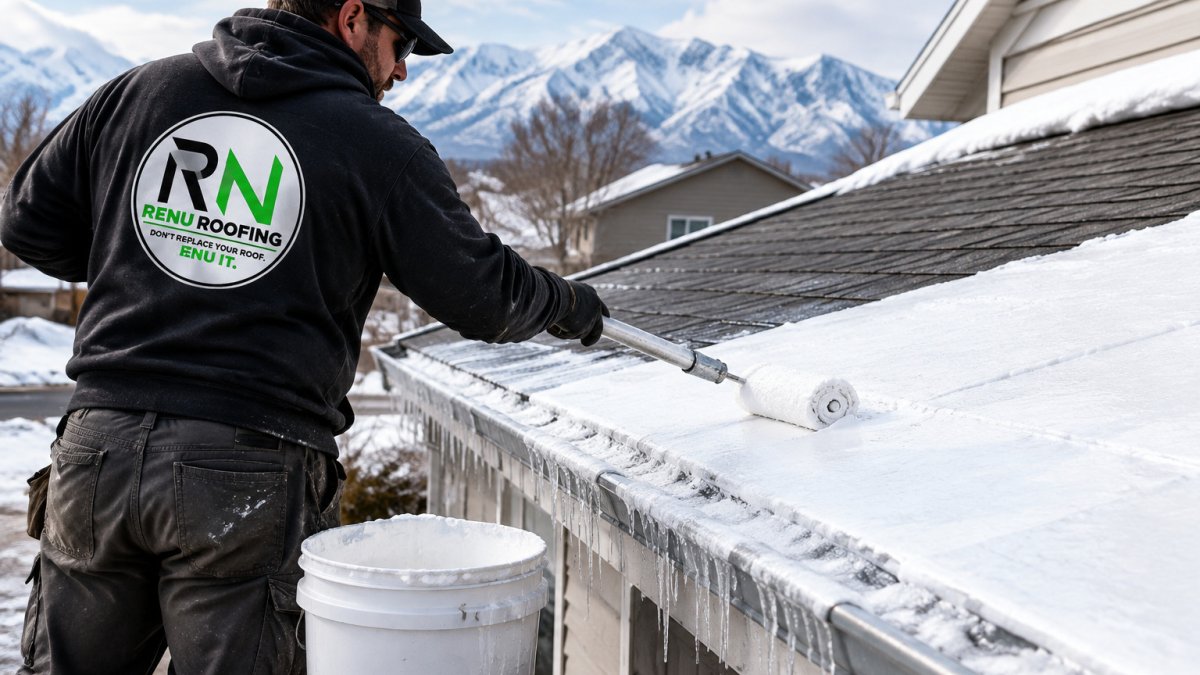
No. A roof coating is not a prevention measure for ice dams. A coating is a surface layer, and ice dams are caused by heat escaping the attic and melting snow on the upper roof, which then refreezes at the cold eave. A coating does not change attic heat loss, roof deck temperature, or drainage at the eave, so it cannot stop the melt-refreeze cycle that builds the dam.
It also helps to separate coatings from the products that are actually specified for ice dam protection:
- Ice and water shield membrane is an underlayment installed along the eaves, valleys, and other vulnerable edges before shingles go on. It is the standard code-recognized detail for the eave edge and is what most roofers mean when they talk about ice dam protection at the roof surface.
- Roof coating is a fluid-applied layer over an existing roof surface. It sits above the membrane, not in place of it, and it does not create the same eave protection.
- Heat cables and de-icing systems address drainage paths at the eave and in gutters. They are a separate category from coatings and membranes.
A common pattern is for a homeowner to hear "coating" and assume it works like an ice and water shield. It does not. If your concern is the eave edge, the conversation should be about underlayment, attic heat loss, and drainage, not about a coating.
For our work, coatings are a flat-roof product. We use Gaco coatings only on flat roofs, which are mainly commercial buildings. On residential asphalt roofs, we use rejuvenation instead, and the two are kept separate so the warranties stay correctly assigned.
The article separates roof coatings from the products that actually address ice dam protection, so the key differences are summarised below.
| Product | Role in ice dam protection | Where it sits |
|---|---|---|
| Ice and water shield membrane | Code-recognized eave protection | Underlayment, under shingles |
| Roof coating | Surface layer, not eave protection | Over existing roof surface |
| Heat cables and de-icing systems | Address drainage paths at the eave | Eave and gutters |
How to Prevent Ice Dams on a Roof Before Coatings Enter the Picture
Start with the causes. Most ice dam prevention is about keeping the roof cold and the snow moving off it. Work through these steps in order:
- Seal attic air leaks. Find gaps around light fixtures, plumbing penetrations and attic hatches, and seal them with caulk or foam.
- Improve attic insulation. Bring ceiling insulation up to a level that keeps heat in the living space.
- Check attic ventilation. Soffit and ridge vents should move cold air through the attic so the roof deck stays cold.
- Remove snow safely. Use a roof rake from the ground to pull snow back from the eaves, and avoid climbing on icy roofs.
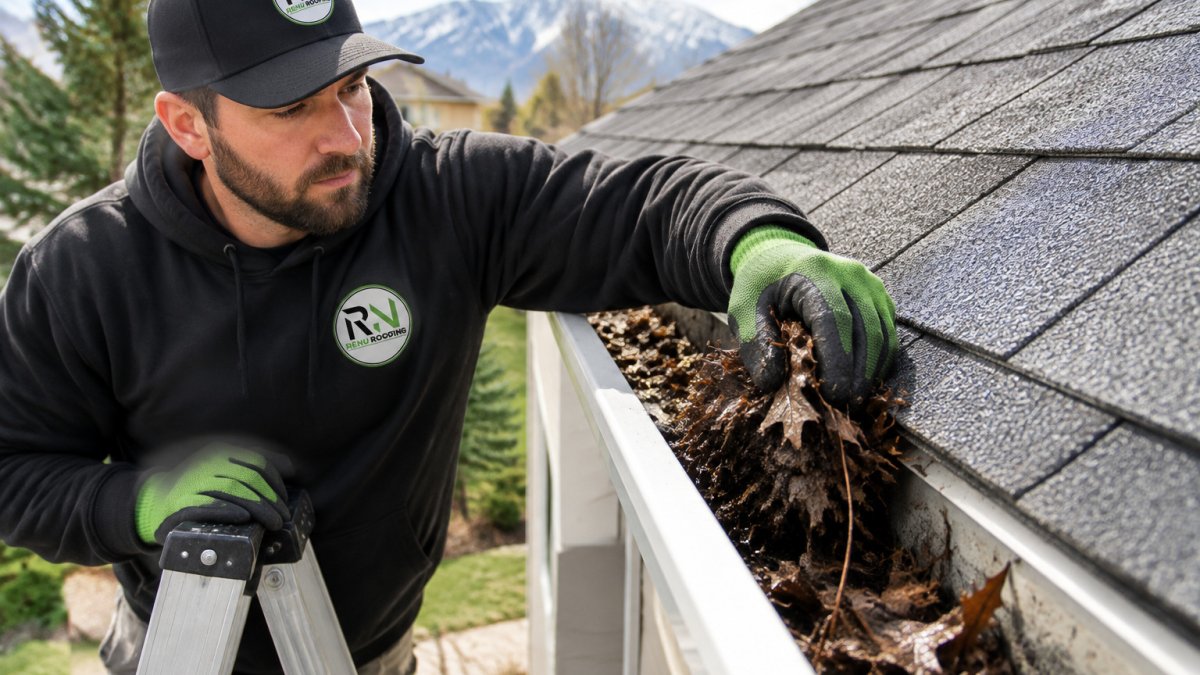
- Clear gutters and downspouts. Keep meltwater flowing off the roof edge.
Watch out: never chip ice off the roof with tools. You can puncture shingles and create new leaks.
Attic Insulation and Ventilation for Ice Dams: The Causes Coatings Cannot Fix
When it comes to roof coatings ice dams, remember that coatings sit on the outside of the roof, but the heat that melts snow comes from inside the house. If warm air leaks into the attic, the roof deck warms no matter what covers it. That is why attic insulation and ventilation matter more than any surface treatment.
Check these three things first:
- Insulation depth in the attic floor, especially around the edges where it often thins out.
- Blocked soffit vents, which stop cold air from reaching the underside of the roof.
- Recessed lights and exhaust fans that pull warm air into the attic.
Fixing these problems lowers the melt that feeds the dam. Coatings cannot reach these causes.
Flat Roof Coating for Ice and Water Protection on Commercial Buildings
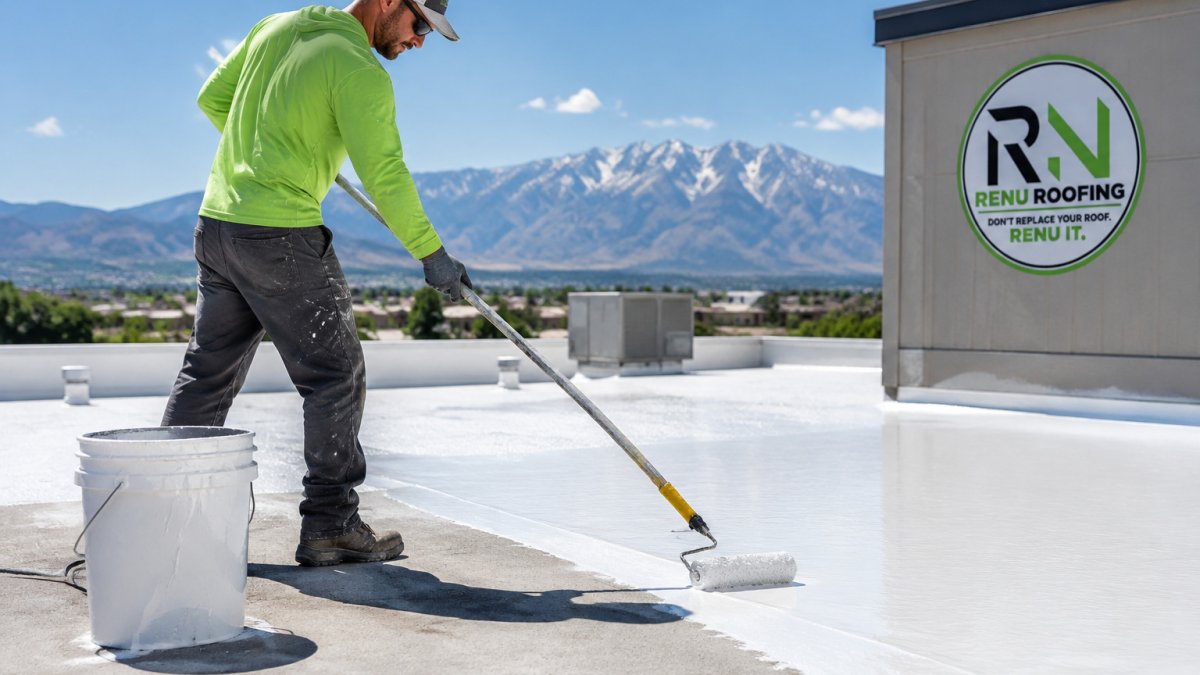
Flat commercial roofs deal with winter differently than pitched residential roofs. Water ponds instead of running off, snow sits for long stretches, and freeze-thaw cycles work on seams, flashing, and drains. A seamless coating can help keep that standing water out of the membrane and the building below, but only when the roof is a candidate for it. Our guide to preventing water damage on flat roofs covers drainage and coating benefits in more detail.
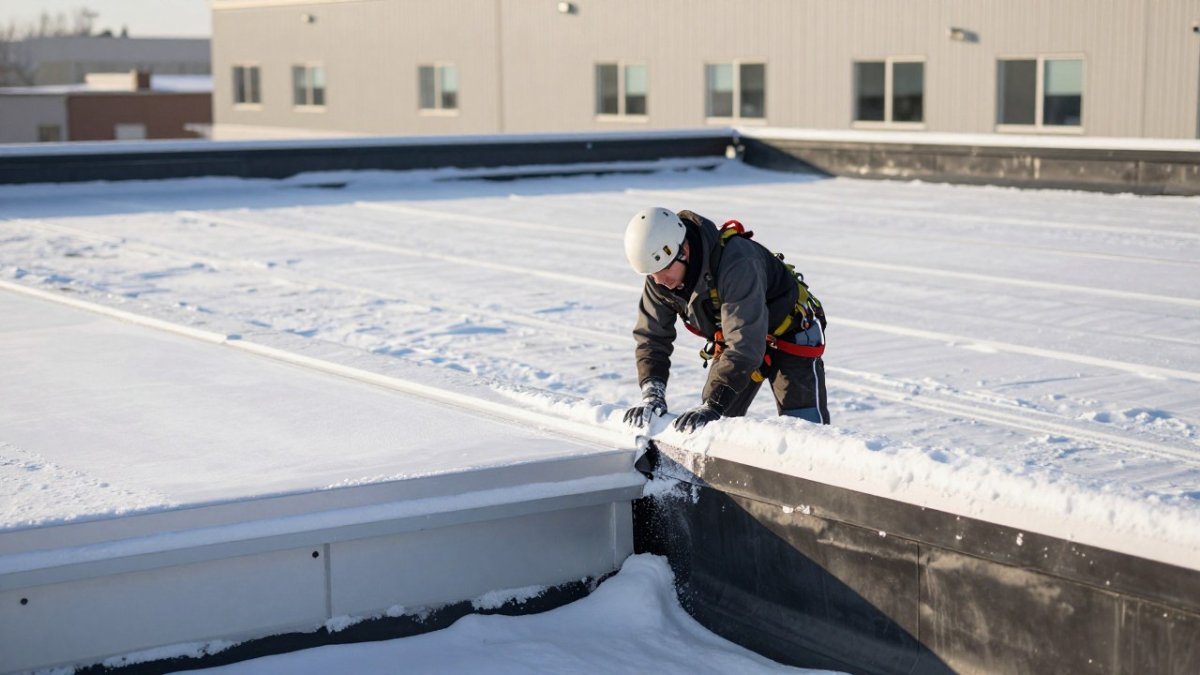
Coating types behave differently, and the right one depends on the existing roof:
- **
- **
- **
- **
Compatibility is the first question, not the last. A coating has to be approved for the existing membrane, and some roof systems, certain single-ply membranes, roofs with active leaks, saturated insulation, or widespread blistering, are not appropriate candidates for a coating at all. Coating over a wet roof traps moisture and shortens the life of the system.
Preparation and curing conditions decide the outcome:
- Inspection and moisture survey. Confirm the membrane is sound, the insulation is dry, and the deck is intact before any product is specified.
- Cleaning and repair. Remove dirt, chalk, and loose material, and repair seams, flashing, and blisters first. A coating is not a repair.
- Drainage check. Confirm drains, scuppers, and gutters move water off the roof. Coating a roof that ponds is a temporary patch, not a fix.
- Application within manufacturer limits. Temperature, dew point, surface moisture, and recoat windows all matter. Cold-weather application is possible with some products but only within the written limits.
- Curing before weather. Fresh coating needs to cure before snow or heavy rain, so scheduling matters in fall and early winter.
On the warranty side, flat-roof coatings can carry up to a 20-year warranty. Ask for the written warranty before work begins.
Asphalt Shingle Roof Rejuvenation for Residential Homes in Utah
On a residential asphalt roof, we do not apply coatings. If you want practical steps for extending asphalt roof life, including rejuvenation as an alternative to replacement, start there. We use rejuvenation, which restores the flexibility of aging shingles and reduces granule loss.
Rejuvenation carries a 6-year transferable warranty. That makes it a practical option for a homeowner trying to delay a full replacement. If your roof is near the end of its life, it is still worth getting an honest inspection, because rejuvenation only works on shingles that are in suitable condition.
Diagnosing Ice Dam Damage and Choosing Your Next Step with ReNu Roofing
Start by looking for signs of water getting in: staining on ceilings near exterior walls, peeling paint, damp insulation in the attic, or water dripping from light fixtures. Ice build-up at the eaves is a warning sign even before a leak shows up.
If you see these signs, call a professional before the next storm. A roofer can tell whether the problem is ventilation, insulation, a roof surface issue or all three. Once you know the cause, you can choose the right fix.
ReNu Roofing offers roof rejuvenation, repairs, maintenance and protective coatings for Utah homes and commercial buildings. For a quote on rejuvenation or to talk through your roof, request a roof rejuvenation quote online for current pricing and options.
Frequently Asked Questions
Can roof coatings prevent ice dams?
Roof coatings do not stop ice dams on sloped residential roofs, where dams form when heat escaping from the attic melts snow that then refreezes at the cold eaves. For sloped asphalt shingle roofs, attic air sealing, insulation and ventilation are the measures that address the cause. A coating is a protective layer, not a substitute for those fixes.
What is the most effective way to prevent ice dams?
The most effective approach is to keep the roof deck cold and even. Seal attic air leaks around light fixtures, hatches and plumbing penetrations, add insulation to the attic floor, and make sure soffit vents and ridge vents allow air to move freely. Clearing heavy snow from the eaves with a roof rake after storms reduces the load. These steps address the heat loss that causes ice dams, which a coating alone cannot do.
Can a roof coating be applied to an asphalt shingle roof?
ReNu Roofing uses roof coatings only on flat roofs, which are mostly commercial buildings. For residential asphalt shingle roofs, we use roof rejuvenation instead. Rejuvenation restores flexibility and reduces granule loss in shingles and carries a 6-year transferable warranty. Contact ReNu Roofing through the website for a current quote.
What should you do if an ice dam forms on your roof?
Avoid chipping ice off the roof, since that can damage shingles and flashing. Keep gutters and downspouts clear so meltwater can drain. Use a roof rake to remove snow from the lowest few feet of the roof, and never climb onto an icy roof. If water is entering the home or the roof edge is damaged, have a qualified roofer inspect it promptly.