 how-to
Preventing Water Damage on Flat Roofs: 2026 Guide
Table of Contents
- Why Flat Roofs Are Prone to Water Damage
- Signs of Water Damage on Flat Roof
- Step 1: Keep the Roof Clean and Clear
- Step 2: Improve Flat Roof Drainage Solutions
- Step 3: Inspect Flashings and Seams Regularly
- Step 4: Understand Flat Roof Coating Benefits
- DIY vs. Professional: Know the Threshold
- Create a Maintenance Schedule That Protects Your Warranty
- Frequently Asked Questions
Last Updated: September 6, 2026
Why Flat Roofs Are Prone to Water Damage
Preventing water damage on flat roofs starts with understanding a simple fact: unlike sloped roofs that shed water quickly, a flat roof holds every drop until it evaporates or drains. That prolonged exposure makes the roof membrane, seams, and flashings work harder than any pitched system. Preventing water damage on flat roofs is a maintenance discipline, not a one-time fix, and it requires a proactive approach rather than a reactive one.
The geometry works against you. With little to no pitch, water moves slowly toward drains and scuppers, giving it time to find microscopic weaknesses. Add in thermal shock from intense sun followed by cold nights, and the membrane expands and contracts daily. According to the National Roofing Contractors Association guidance on low-slope roofs, this constant cycling accelerates degradation at seams, flashings, and penetrations. Over time, that is where moisture infiltration begins.
The pattern is consistent: water rarely enters through the middle of the field. It enters where the system changes, at a flashing, a seam, a penetration, or a drain. Preventing water damage on flat roofs means focusing your attention on those transition points first. The good news is that most damage is avoidable with a structured maintenance routine.
Signs of Water Damage on Flat Roof
The signs of water damage on a flat roof are often visible long before water reaches the interior ceiling. Catching them early separates a minor repair from a costly restoration project.
Look for these indicators during a walk-around inspection:
- Blistering and alligatoring on the surface, which signal the membrane is breaking down and losing flexibility
- Seam separation where membrane sheets meet, often appearing as lifted or curled edges
- Ponding water that remains 48 hours or more after a rain event
- Interior stains on ceilings, particularly near exterior walls or mechanical units
- Vegetation growth in low spots or along parapet walls, a sure sign of trapped moisture
The signs of water damage on flat roof surfaces can also be subtle. A slight discoloration in the membrane or a chalky residue may indicate UV degradation that precedes cracking. Interior moisture detection is more complex because water can travel laterally along the roof substrate before dripping. By the time a stain appears, the damaged area may be several feet from the entry point. This is why routine inspection matters more than waiting for visible leaks. For a detailed checklist of what to examine, the U.S. Department of Energy guide on roof maintenance recommends documenting findings with photos so you can track changes between seasons.
Step 1: Keep the Roof Clean and Clear
Debris is the silent killer of flat roofs. Leaves, dirt, and windblown sediment accumulate in corners and around drains, forming a dam that holds water against the membrane. Preventing water damage on flat roofs begins with removing this material on a schedule, not just when you notice a problem.
A common mistake is focusing only on the roof surface while ignoring the drainage path. Gutters, downspouts, and scuppers must flow freely for water to exit the roof. Clogged gutters cause water to back up under the membrane edge, and that is where many leaks originate. Debris removal should include the roof field, the perimeter, and every drain basket.
Plan for seasonal cleaning. In autumn, leaves fall continuously, and a single storm can undo months of good maintenance. In spring, pollen and seeds create a fine layer that holds moisture against the membrane. The Federal Emergency Management Agency guidance on roof maintenance notes that keeping drains clear is one of the most cost-effective steps a building owner can take to prevent storm damage. A clean roof also allows you to spot developing issues during the same visit, turning maintenance into an inspection opportunity.
Step 2: Improve Flat Roof Drainage Solutions
Effective flat roof drainage solutions combine two goals: moving water off the roof quickly and preventing it from pooling in the first place. The best system is the one your roof was designed with, so the priority is keeping it functional, not redesigning it.
Start by understanding your roof's drainage components. Interior drains collect water at low points and carry it through pipes inside the building. Scuppers are openings in the parapet wall that allow water to exit at the roof edge. Gutters and downspouts handle the perimeter runoff. Each component needs to be clear and correctly sized for the roof area it serves.
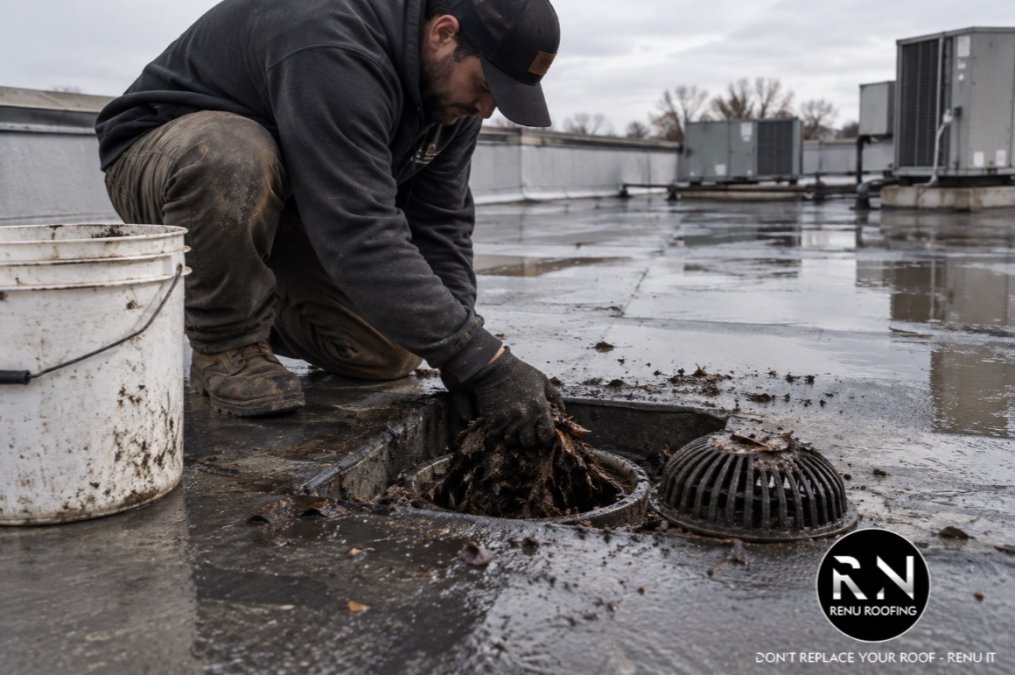
Contractor clearing debris from a roof drain, preventing water damage on flat roofs by removing standing water.
A roofing professional clears debris from a commercial roof drain to improve drainage and help prevent standing water and water damage.
If you find ponding water in areas that lack drainage, you have a few options. Adding additional drains or scuppers is a structural change that requires a roofing professional. A less invasive approach is to install a tapered insulation system during a future re-covering, which creates slope without altering the deck. For immediate relief, some building owners use a roof coating to smooth out minor low spots, though this only works for shallow depressions.
Step 3: Inspect Flashings and Seams Regularly
Flashings and seams are the most vulnerable points on any flat roof, and preventing water damage on flat roofs depends heavily on their condition. Flashing is the material that seals transitions, where the roof meets a wall, a parapet, a vent pipe, or a mechanical unit. Seams are the joints where membrane sheets overlap and bond together.
Inspect flashings for cracks, gaps, or separation from the substrate. Pay special attention to the corners and edges where flashing bends, as these areas experience the most stress from thermal expansion. Seams deserve the same scrutiny. Look for bubbles, lifting, or areas where the seam tape has lost adhesion. A small seam separation can admit water that travels along the membrane for feet before finding a path into the building.
Schedule Your FREE Roof Inspection Today →
The frequency of inspection depends on your climate and roof age. A newer roof in a mild climate may need only a bi-annual check. An older membrane or one exposed to harsh sun, hail, or extreme temperature swings like Utah does, warrants a quarterly review. The U.S. General Services Administration maintenance standards for roofing recommends documenting flashing and seam conditions as part of a preventative maintenance plan, because consistent records help you spot deterioration trends before they become failures. When you find damage, address it immediately. Waiting for the next rain event to test the repair is a gamble you do not want to take.
Step 4: Understand Flat Roof Coating Benefits
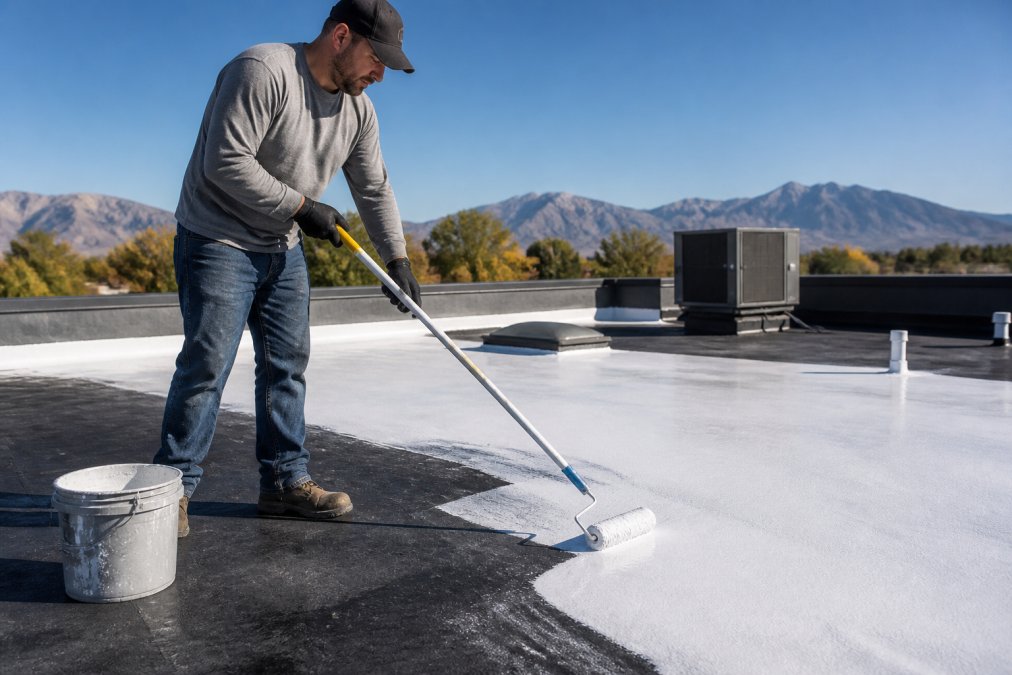
Flat roof coating benefits extend beyond simple waterproofing. A quality coating creates a seamless, reflective barrier that protects the underlying membrane from UV degradation, thermal shock, and minor physical damage. For aging roofs, a coating can add years of service life at a fraction of replacement cost.
The primary benefit is a watertight seal. Unlike a membrane that has seams and flashings, a coating is applied as a continuous liquid layer that cures into a single, unified surface. This eliminates the seam separation problem entirely. The reflective properties of many coatings also reduce heat absorption, lowering cooling costs and reducing the temperature swings that cause the membrane to expand and contract.
ReNu Roofing applies premium Gaco roof coatings for flat roofs, a silicone-based system that excels in ponding water conditions. The coating also restores flexibility to aged membranes, reducing the risk of cracking during thermal cycles. With a 20-year warranty on coatings, the protection is designed to last.
DIY vs. Professional: Know the Threshold
Preventing water damage on flat roofs is partly a owner responsibility and partly a professional one. Knowing where that line sits saves you money and prevents accidental damage.
DIY tasks are limited to visual inspection, debris removal, and gutter cleaning. These activities require no special equipment and carry minimal risk. You can also document conditions with photos and monitor changes between professional visits. What you should not do is attempt membrane repairs, flashing replacement, or coating application yourself. These tasks require specialized tools, adhesives, and training, and mistakes can void your roof warranty or create new leak paths.
The threshold is safety and warranty preservation. Working on a flat roof involves fall risks, and the Occupational Safety and Health Administration guidance on fall protection emphasizes that roof work is a leading cause of workplace injuries. Even a single-story commercial roof can produce a serious fall. Additionally, most roof warranties require professional installation and maintenance. DIY repairs often void coverage, leaving you fully responsible for future damage. If you are unsure whether a task is within your skill level, it is not. Schedule a professional inspection instead.
Create a Maintenance Schedule That Protects Your Warranty
A documented maintenance schedule is the single best tool for preventing water damage on flat roofs, and it is often a warranty requirement. Most manufacturers and contractors require proof of regular inspections to keep coverage valid.
Build your schedule around the seasons. Inspect and clean in early spring after the last frost, then again in late autumn after the leaves have fallen. Add a mid-summer check for UV damage and a post-storm inspection after any severe weather event. This four-point annual cycle catches problems at every stage of the year. Document every visit with photos and notes, including the date, the weather conditions, and any findings or repairs.
Maintenance Task | Frequency | Best Time | Impact on Warranty |
|---|---|---|---|
Visual inspection and debris removal | 2-4 times per year | Spring and autumn | Maintains coverage |
Gutter and downspout clearing | After major storms | Year-round | Prevents backup damage |
Flashing and seam check | Quarterly | Seasonal change | Catches early failures |
Professional coating inspection | Annually | Before winter | Confirms watertight seal |
Roof coating reapplication | Per manufacturer schedule | Dry season | Extends roof life |
The schedule protects your investment in two ways. It catches small issues before they become large ones, and it gives you a documented history if you ever need to file a warranty claim. If you are working with a professional provider, ask whether they offer a maintenance program. ReNu Roofing includes comprehensive maintenance with its coating services, including gutter cleaning, roof cleaning, small repairs, and guard installation. A roof that is inspected, cleaned, and documented on schedule will outlast one that is ignored and only addressed after a leak appears.
Flat roofs demand more attention than their sloped counterparts, but that attention pays off in extended service life and avoided interior damage. The routine is straightforward: keep the roof clear, verify drainage, inspect flashings and seams, and apply a protective coating before the membrane fails. When you are unsure whether a task is DIY or professional, err on the side of professional. ReNu Roofing provides roof repairs, and protective coatings designed to extend roof life by two or more decades, all backed by a 20-year warranty on most coatings. Get started with ReNu Roofing and give your flat roof the protection it needs to perform like new.
Frequently Asked Questions
How long can water sit on a flat roof?
Standing water should not remain on a flat roof for more than 48 hours. Ponding water adds significant weight, and prolonged exposure accelerates UV degradation and can compromise the roof membrane. If water pools for longer than two days after a storm, your drainage system is likely insufficient. Addressing this quickly is a critical part of preventing water damage on flat roofs. Improving drainage or adding roof coating can help eliminate these problem areas.
What is the best waterproofing product for a flat roof?
The best waterproofing product depends on your roof's material and condition. For many flat roofs, a high-quality liquid-applied roof coating, such as silicone or acrylic, creates a seamless waterproof barrier. These flat roof coating benefits include protecting against ponding water and UV damage. However, the product only works if the surface is properly prepared. A professional inspection can determine if a coating is suitable or if repairs are needed first.
Where do flat roofs leak most?
Flat roofs most commonly leak at the seams, flashing, and penetrations. Seam separation occurs where membrane sheets meet, and flashing around vents, skylights, or parapet walls often fails due to thermal shock. A lesser-known sign of water damage on flat roof areas can be interior stains that don't align with the exterior leak point, as water travels along the roof deck. Regular inspections of these vulnerable spots are essential.