 How-to
7 Ways to Clean Gutters Without Damaging Shingles
Quick Summary
To clean gutters without damaging shingles, use plastic scoops and soft-bristle brushes, keep water pressure low, and never lean a ladder against the gutter or drag metal tools across the roof edge. Cleaning from the ground with gentle tools is the safest option for most single-story homes.
- Use a curved plastic scoop instead of metal trowels or wire brushes.
- Keep the hose on a wide, low-pressure setting and aim it into the gutter.
- Use a ladder stabilizer or standoff so the ladder never rests on the gutter.
- Wait several weeks before cleaning a new roof, and never walk on the shingles.
- Clean gutters at least twice a year, in late spring and late fall.
Table of Contents
- Why Gutter Cleaning Can Damage Shingles
- Gutter Cleaning Tools That Protect Your Roof
- How to Clean Gutters From the Ground
- Is There a Tool to Clean Gutters From the Ground?
- Choosing Between Ladder, Ground, and Professional Cleaning
- Safety Precautions and Shingle Protection Tips
- How to Clean Gutters on a New Roof
- Scheduling Your Next Gutter Cleaning With ReNu Roofing
- Frequently Asked Questions
Why Gutter Cleaning Can Damage Shingles
Last Updated: November 19, 2026
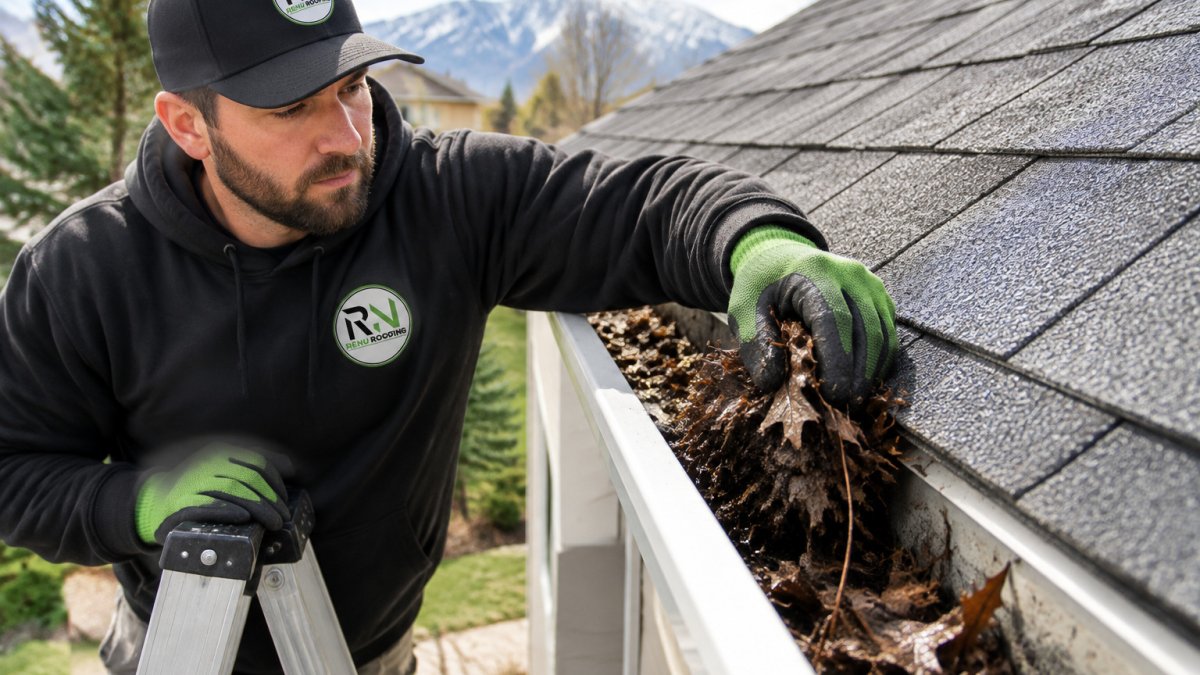
Clogged gutters cause real trouble for a roof, but the cleaning itself can cause damage too. Most of that damage comes from ladders that slip, tools that scrape shingles, and water pressure that lifts granules off the surface.
Gutter cleaning can leave residential asphalt roofs with the same kinds of problems again and again. The gutter may look fine afterward, while the shingles near the edge have lost granules or cracked.
Shingles protect the roof with a layer of mineral granules. When a scoop, a wire brush, or a blast of water hits the shingles, those granules can break loose. Once they wash into the gutter, the shingle underneath is more exposed to sun and weather.
Common causes of shingle damage during gutter work include:
- Metal scoops or trowels dragged across the roof edge
- Pressure washers aimed up under the shingles
- Ladders leaned against the gutter, which can crush or bend the edge
- Walking on brittle or wet shingles
- Dropping debris and tools onto the roof surface
Gutter Cleaning Tools That Protect Your Roof
The right tools make gutter cleaning safer for both you and your shingles. The goal is to remove debris without dragging anything abrasive across the shingle surface or levering against the roof edge.
Recommended tools and what each one protects:
- Plastic gutter scoop with a curved edge. The curve lets you pull debris toward you instead of scraping the shingle edge.
- Soft-bristle gutter brush. Useful for sweeping light debris along the channel. Stiff or wire bristles break granules loose, so keep the brush labeled soft.
- Work gloves with a good grip. Gloves let you pull twigs and matted leaves by hand, which is often gentler than any tool near the roof edge.
- Garden hose with an adjustable nozzle. A gentle spray pushes debris toward the downspout without lifting granules. Set the nozzle to a wide, low-pressure pattern, not a jet.
- Ladder stabilizer or standoff. This is the single most important shingle-protection tool. A standoff holds the ladder away from the gutter and roof edge so the ladder's weight does not rest on the fascia or crush the gutter lip.
- Bucket with a hook. Hanging the bucket from the ladder keeps you from setting it on the roof, where it can slide and scratch shingles.
- Tarp for the ground. Catches debris so you are not raking wet leaves out of landscaping later.
Avoid metal trowels, wire brushes, and high-pressure washers near the roof edge. These tools scrape granules and can tear the shingle surface.
Watch out: Even a plastic scoop can damage shingles if you use it as a lever against the roof edge.
Matching tools to your roof material. Not every roof surface tolerates the same handling:
- Asphalt shingles. The mineral granule layer is the vulnerable part. Plastic scoops, soft brushes, and low-pressure water are appropriate; anything that drags or blasts granules is not.
- Clay and concrete tile. Tiles crack and shift under point loads, so never rest a ladder or tool on them. Work from the gutter line only and keep all contact off the tile field.
- Metal roofs. The painted finish scratches easily, and scratches become corrosion points. Use tools with rubber or plastic contact surfaces and avoid dragging anything across the panels.
- Older or fragile roofs. If shingles are brittle, curling, or already losing granules, the safest tool is often no tool at all near the edge, clear what you can reach from the ground and have the rest inspected.
If you are unsure what your roof can tolerate, have it looked at before you start. Granules in the gutter after a cleaning are a sign the tools or water pressure were too aggressive.
How to Clean Gutters From the Ground
Cleaning from the ground keeps you off the ladder and away from the roof. This method works best for single-story homes and gutters that are not badly packed.
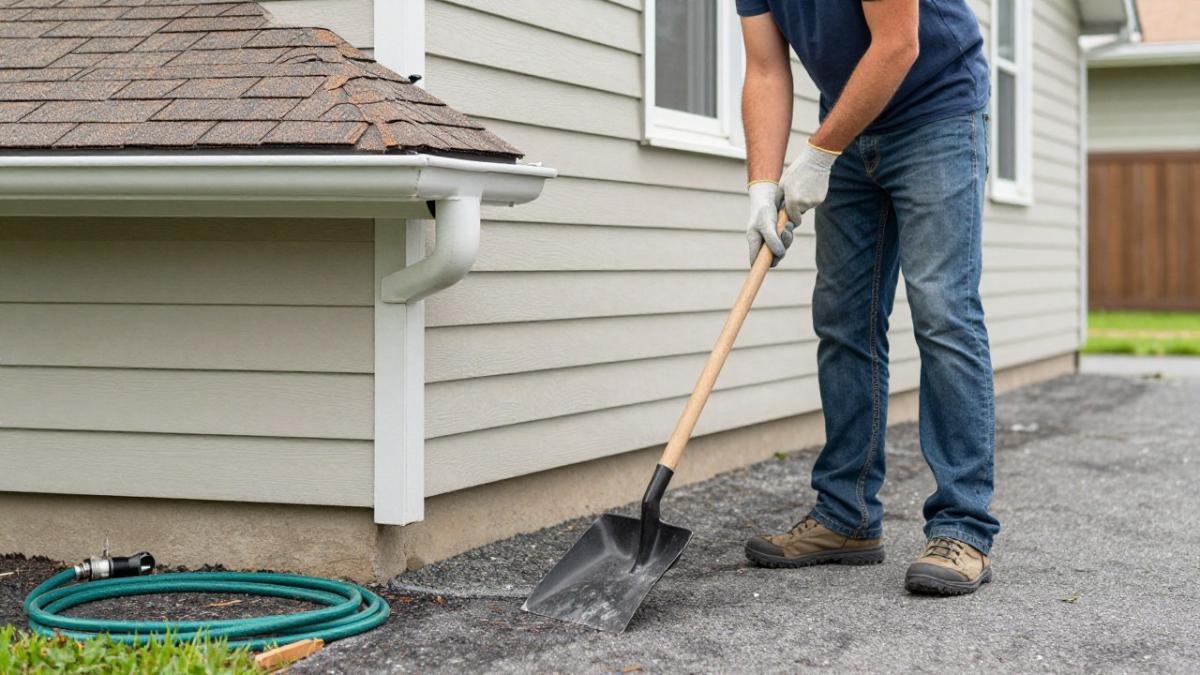
- Set up a sturdy stepladder only if you can reach the gutter from the base safely. Otherwise, skip the ladder.
- Use a plastic scoop on an extension pole to lift leaves and twigs out of the gutter.
- Drop the debris into a bucket or onto a tarp below.
- Run a garden hose slowly through the gutter from the far end toward the downspout. Keep the spray gentle.
- Watch the downspout to confirm water flows freely. If it backs up, the clog is further down.
- Check the downspout outlet and clear any debris with a flexible wand or hose.
A common mistake is aiming the hose straight at the roof edge. Angle the spray into the gutter, not up under the shingles.
Is There a Tool to Clean Gutters From the Ground?
Yes. Several tools are made to clear gutters without climbing. These options are widely sold, and their quality varies a lot, so pick one that matches your home's height and gutter depth.
Gutter Vacuums and Extension Wand Systems
Gutter vacuums use a long wand and a suction motor to pull debris out of the gutter from the ground. They work well for dry leaves and light debris. Wet, packed material is harder to remove, and the wand can still scrape the gutter lip if you push too hard.
Extension wand systems attach a scoop, brush, or nozzle to a long pole. They cost less than a vacuum and give you more control, but they need steady hands and patience on taller homes.
Before buying, check the reach. Measure the height from the ground to your gutter and make sure the wand reaches with room to spare.
Choosing Between Ladder, Ground, and Professional Cleaning
Not every home suits the same method. The decision comes down to roof height, roof pitch, debris volume, and your own comfort on a ladder. Use this guide to decide before you set up anything:
| Option | Best for | Main risk | Shingle risk |
|---|---|---|---|
| Ladder cleaning | Two-story homes, heavy or packed debris | Falls, ladder slips | Moderate if the ladder touches the gutter |
| Ground cleaning | Single-story homes, light to moderate debris | Low | Low when using plastic tools |
| Professional cleaning | Steep roofs, multi-story homes, repeat clogs, fragile roofs | Low for you | Low with trained crews |
When to stay on the ground. Ground cleaning is the right call for most single-story homes and any gutter you can reach with an extension pole while standing on firm, level ground.
When a ladder is reasonable. A ladder makes sense for two-story homes with heavy debris, but only with a stabilizer or standoff so the ladder does not rest on the gutter.
Troubleshooting a clogged downspout. If water backs up in the gutter even after you clear the channel, the blockage is in the downspout. Work through it in order:
- Check the outlet at the bottom first. Many clogs are just a mat of leaves or a bird's nest at the discharge point.
- Tap the downspout gently along its length. A dull thud instead of a hollow ring usually marks the clog.
- Feed a flexible drain wand or a garden hose down from the top with the water on low. High pressure can separate the downspout joints.
- If water still will not flow, disconnect the downspout at the nearest joint and clear it by hand or with a plumber's snake.
- Reconnect and run water through to confirm it discharges freely and away from the foundation.
Watch out: Never direct a hose up under the shingle courses to flush a downspout. Water forced under shingles has no drainage path and can rot the decking. Keep all water inside the gutter channel and the downspout.
Safety Precautions and Shingle Protection Tips
Gutter work involves real fall risks. Follow these steps whenever you climb or work near the roof edge:
- Set the ladder on firm, level ground.
- Use a stabilizer or standoff so the ladder does not rest on the gutter.
- Never lean sideways off the ladder. Move it instead.
- Do not work on wet, icy, or frosted roofs.
- Keep tools in a bucket or tool belt so they do not slide onto the shingles.
- Never step onto the shingles to reach the gutter.
Shingle protection matters too. Wear gloves, keep metal tools off the surface, and use gentle water pressure. If you see granules collecting in the gutter after cleaning, reduce the pressure next time.
Watch out: Working on a wet or steep roof is where most serious falls happen. If the roof is damp, wait for it to dry or call a professional.
How to Clean Gutters on a New Roof
A new roof needs extra care. Fresh shingles have more granules that can loosen if they are scraped or blasted. The surface also needs time to settle.
- Wait until the roof has had several weeks to settle before any cleaning.
- Use only plastic scoops and a soft brush.
- Keep the hose on a low setting and aim it into the gutter.
- Do not walk on the roof surface during cleaning.
- Check the shingles afterward for any new scrapes or loose granules.
If a new roof shows damage after cleaning, contact the installer or a qualified roofer before the problem spreads.
Scheduling Your Next Gutter Cleaning With ReNu Roofing
Gutters should be cleaned at least twice a year, usually in late spring and late fall. Homes near many trees may need cleaning more often.
If you would rather not handle the work yourself, you can contact ReNu Roofing to ask about having your gutters and roof edge checked. For roofs that need more than cleaning, you can get a roof rejuvenation quote online to compare options before deciding on a replacement.
Gutter cleaning is one part of keeping your asphalt roof in good shape. Learn how to extend asphalt roof life with regular maintenance, and if you notice brittle shingles, see our guide on how to repair brittle shingles.
Frequently Asked Questions
Can you clean gutters from the ground?
Yes. Many gutters can be cleared from the ground using a long-handled gutter scoop, a gutter vacuum with an extension wand, or a garden hose with a flush attachment. Start at the downspout end and work toward the corner, keeping the pole tip inside the gutter and away from shingles. Ground cleaning works best on single-story homes where the gutters are within reach. For taller roofs or heavy clogs, a professional with proper fall protection may be the safer choice. Pricing for professional service depends on home size and access, so contact ReNu Roofing for a current quote.
What tools can clean gutters without touching roof shingles?
Plastic gutter scoops, gutter vacuums with extension wands, and telescoping gutter brushes can clear debris without anyone stepping onto the roof. Use plastic rather than metal tools, since metal can scrape the gutter finish and loosen shingle granules at the edge. A garden hose with a flush attachment helps confirm that water drains freely through the downspouts once debris is removed. Wear work gloves and eye protection, and keep the ladder, if one is used, on stable ground with a stabilizer.
How can you tell whether gutter cleaning has damaged shingles?
Look for shingle granules collecting in the gutters or at downspout outlets, cracked or lifted tabs along the roof edge, and fresh scrapes on the shingle surface near the eaves. Granule loss that increases after cleaning often signals that a tool or ladder touched the roof. Check the roofline from the ground with binoculars if you cannot safely see it up close. If you find damage, have a roofing professional inspect it before water begins to enter the home.
How to clean gutters on a new roof, and is it safe?
A new asphalt roof still needs gentle handling, so avoid walking on it and keep tools and ladder feet off the shingles. Clean gutters from the ground with a plastic scoop or vacuum, and use low water pressure when flushing. Avoid pressure washers, which can strip granules from new shingles. Check the manufacturer's installation guidance and your roofing warranty before doing any work, since rough cleaning can affect coverage.