 Ultimate guide
How Long Do Asphalt Shingles Last?
Last Updated: October 25, 2026
Quick Summary
Most asphalt shingles last between 15 and 30 years, though real service life depends on climate, attic ventilation, and installation quality more than the manufacturer rating. Architectural shingles typically outlast 3-tab shingles, often by a decade or more.
- A 30-year rated shingle can fail in 12 years on a poorly ventilated roof.
- 3-tab shingles typically last 15 to 20 years in real-world conditions.
- Sustained attic temperatures above roughly 150°F dry out asphalt and speed granule loss.
- Nailing high or overdriving fasteners voids most warranties and creates wind-lift points.
- ReNu Roofing backs rejuvenation with a 6-year transferable warranty.
Table of Contents
- How Long Do Asphalt Shingles Last? The Honest Range
- Architectural Shingles Lifespan vs. 3-Tab Shingles
- What Shortens Asphalt Shingle Life: Climate, Ventilation, and Installation
- How to Tell If Shingles Need Replacing: An Inspection Checklist
- Asphalt Shingle Roof Maintenance That Actually Adds Years
- Repair or Replace Asphalt Shingle Roof: How to Decide
- Schedule a Roof Assessment Before the Damage Spreads
- Frequently Asked Questions
How Long Do Asphalt Shingles Last? The Honest Range
Most asphalt shingles deliver between 15 and 30 years of service, and the spread inside that range has less to do with the shingle and more to do with everything around it. At ReNu Roofing, we walk Utah roofs every week and see the same pattern: two houses on the same street, same shingle, wildly different outcomes.
Start with the number that matters least: the one on the wrapper.
Manufacturer Rating vs. Warranty vs. Real Service Life
Three different numbers get quoted as "how long asphalt shingles last," and they almost never agree.
- Manufacturer rating is a lab-based estimate of durability under ideal conditions. It assumes correct ventilation, sound decking, and professional installation.
- Warranty term is a legal promise, not a lifespan. Most shingle warranties are prorated, cover manufacturing defects rather than wear, and require proof of proper ventilation and maintenance to stay valid.
- Real service life is what your roof actually delivers in your climate, on your deck, under your attic conditions.
A shingle rated for 30 years can fail in 12 on a poorly ventilated roof. A 25-year shingle on a shaded, well-vented, correctly nailed deck can still be serviceable at 28. Understanding how the FTC requires shingle warranties to be disclosed helps you read the fine print before you rely on a term in a sales conversation.
Architectural Shingles Lifespan vs. 3-Tab Shingles
Architectural shingles generally outlast 3-tab shingles, often by a decade or more, because they carry more asphalt and a heavier mat. The asphalt shingle category splits into two main products, and the gap between them is real:
| Shingle Type | Typical Rating | Real-World Range | Best For |
|---|---|---|---|
| 3-tab shingles | 20-25 years | 15-20 years | Budget reroofs, rentals |
| Architectural (dimensional) shingles | 25-30+ years | 20-30 years | Most homes, resale value |
| Premium/luxury architectural | 30-50 years | 25-40 years | High-end homes, steep pitches |
3-tab shingles are flat, uniform, and thinner. They shed water fine but have less material to lose to granule wear and UV exposure, so they age faster. Architectural shingles, also called dimensional shingles, use a thicker mat and a layered profile. That extra mass buys time against heat, hail, and sun. If you're comparing quotes, ask which shingle type is specified, because the price difference is smaller than the lifespan difference.
What Shortens Asphalt Shingle Life: Climate, Ventilation, and Installation
The biggest lifespan killer isn't weather. It's a hot, damp attic sitting under a roof that can't breathe. But climate and installation each play a distinct role, and understanding the mechanism behind each one helps you predict which roofs fail early and why.
Ventilation and attic moisture: the hidden accelerator
Roof ventilation and attic moisture do more damage than most homeowners realize. When attic heat and humidity can't escape, they cook the shingle from underneath, drying out the asphalt and accelerating granule loss. The mechanism is straightforward: asphalt shingles rely on volatile oils to stay flexible. Sustained attic temperatures above roughly 150°F drive those oils out faster, and the shingle stiffens, curls, and sheds granules.
Schedule Your FREE Roof Inspection Today →
Climate and weather exposure: how each factor ages a roof
Climate and weather exposure layer on top of ventilation. The table below breaks down the primary mechanisms and their relative impact:
| Factor | Mechanism | Typical effect on lifespan |
|---|---|---|
| UV exposure and heat | Bakes out oils that keep shingles flexible; accelerates granule loss | Can shorten life by 5-10 years in hot, sunny climates |
| Freeze-thaw cycles | Water works into hairline cracks, expands, and widens them | Most damaging in climates with frequent winter freeze-thaw |
| Hail and wind | Strips granules, lifts or creases shingles, exposes mat | Single severe storm can remove years of remaining life |
| Humidity and moisture | Feeds moss, algae, and rot along the eaves and in shaded areas | Chronic moisture accelerates granule loss and deck deterioration |
A roof in a hot, sunny climate with poor ventilation may fail a decade earlier than the same shingle on a shaded, well-vented roof in a milder climate. That's why two houses on the same street with the same shingle can have wildly different outcomes.
Installation quality: the factor you can't see from the ground
Installation quality ties it together. A common mistake is nailing high or overdriving fasteners, which voids most warranties and creates wind-lift points. Underlayment installed incorrectly or skipped at the valleys shows up as a roof leak years later, long after the crew is gone. When we inspect a roof that failed early, workmanship is usually part of the story. The key installation variables that affect lifespan are:
- Fastener placement: nails driven too high or too deep compromise holding power and void warranties.
- Underlayment integrity: skipped or improperly lapped underlayment at valleys and eaves leads to leaks before the shingles fail.
- Deck preparation: soft or delaminated decking should be replaced before new shingles go down; otherwise the new roof inherits the old problem.
If you're evaluating a roof that's aging faster than expected, check ventilation and installation details before blaming the shingle itself. For a deeper walkthrough of how these factors interact, our guide on how to prevent asphalt shingle granule loss covers the maintenance steps that slow each of these down.
How to Tell If Shingles Need Replacing: An Inspection Checklist
You can read a roof's condition from the ground and the gutters in about 15 minutes. Use this checklist and grade each item by urgency.
- Granule loss, grit in the gutters or bald spots on shingles. Early granule loss is manageable; widespread bald patches mean the shingle is near the end. Learn to identify early signs of shingle granule loss before it spreads.
- Curling or clawing, edges lifting away from the deck. A few is normal wear; whole slopes curling signals failure.
- Cracked or missing shingles, any missing shingle is an open door for water. High urgency.
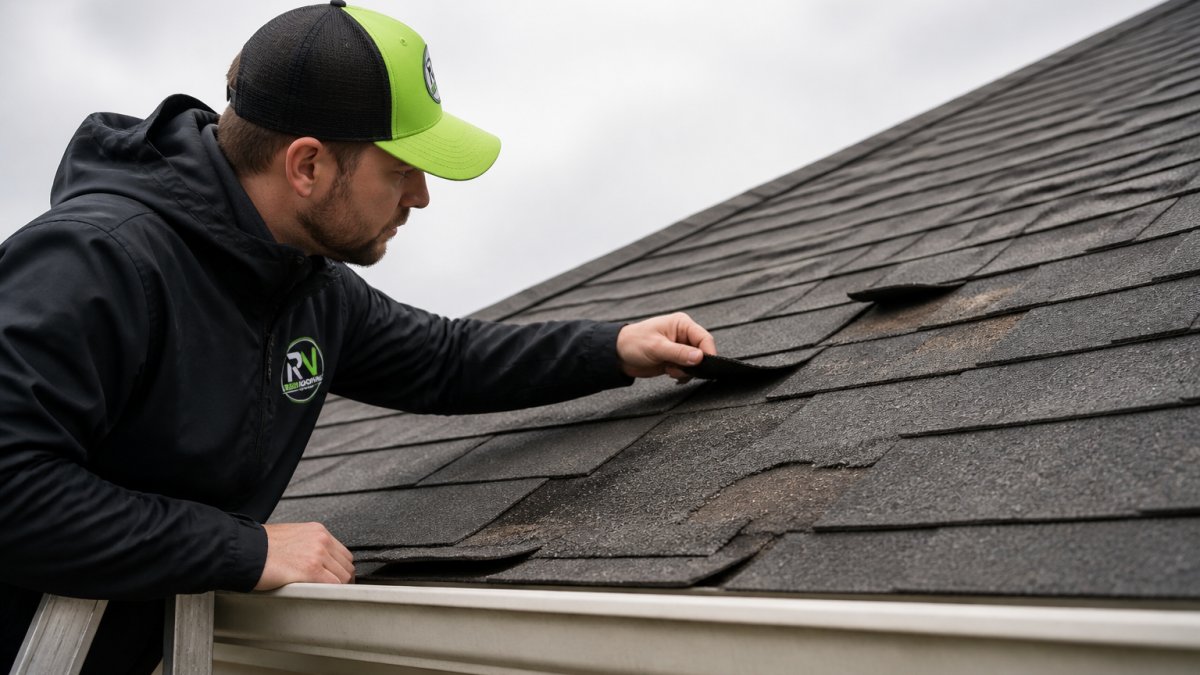
Severity guide: scattered granules and one curled edge = watch and maintain. Multiple bald spots, widespread curling, or any interior leak = get an assessment now. Missing shingles after a storm = call immediately.
Asphalt Shingle Roof Maintenance That Actually Adds Years
Routine care is the cheapest lifespan you'll ever buy. Asphalt shingle roof maintenance won't make an old roof new, but it slows the clock on the shingles you have.
- Clear the gutters twice a year and after heavy storms. Backed-up water rots the fascia and wicks under the bottom course.
- Trim overhanging branches to keep shade, debris, and abrasion off the roof.
- Check the attic for moisture, condensation, or blocked vents. Fixing airflow protects the deck and the shingles above it.
On aging but structurally sound residential roofs, professional roof rejuvenation restores flexibility to the shingles and reduces further granule loss, which is how a roof that's "on its way out" can pick up years of usable life. For a full schedule you can follow season by season, see our guide on how to extend asphalt roof life.
Repair or Replace Asphalt Shingle Roof: How to Decide
The repair-or-replace call comes down to three questions: how much of the roof is affected, how old is the rest of it, and what does your insurer or local code require. But the decision is rarely black and white, and a structured framework helps you compare the real options.
A practical decision framework
Use this framework to sort your situation into one of three paths:
Schedule Your FREE Roof Inspection Today →
| Situation | Likely path | Why |
|---|---|---|
| Isolated damage on a roof with years of rated life remaining | Repair | Patching a small area preserves the rest of the roof and delays replacement cost |
| Widespread granule loss, multiple leaks, or roof near end of rated life | Full replacement | Patching a failing roof just moves the problem around; underlying deck and underlayment may also be compromised |
| Aging but structurally sound roof with no active leaks | Roof restoration or rejuvenation | Restores flexibility and reduces further granule loss, buying usable years without full replacement cost |
Small, isolated problems on a roof with years left are repair candidates. Widespread granule loss, multiple leaks, or a roof near the end of its rated life points toward replacement, because patching a failing roof just moves the problem around. Building codes also matter here: many jurisdictions tie repair-versus-replace decisions to how much of the roof is being worked on, and the International Code Council's building codes are the reference many local codes adopt. Our breakdown of the 25% rule for roofing explains how repair percentage thresholds and insurance claims factor in.
Overlay vs. full replacement
An overlay (installing new shingles over the existing layer) is sometimes proposed as a cheaper alternative to a full tear-off. It's rarely the better long-term choice. Overlays trap heat and moisture, add weight to the roof structure, and often void manufacturer warranties on the new shingles. Many local codes also limit the number of layers allowed, so an overlay may not be permitted if a roof already has two layers.
The third path: roof restoration
There's a third path many homeowners never hear about: roof restoration on a sound roof that's aging but not failing. It buys time without the cost of a full replacement, and it's worth asking about before you sign a replacement contract.
Before you commit to any path, get an assessment that documents the roof's condition, age, and remaining life. That documentation also helps with insurance claims and warranty conversations.
Schedule a Roof Assessment Before the Damage Spreads
The roofs that cost the most are the ones nobody looked at until water was coming through the ceiling. A short assessment now tells you where your roof sits on that 15-to-30-year curve, whether it's a repair, a rejuvenation, or a replacement, and what to document for insurance or a warranty claim. Get started with ReNu Roofing and contact us to schedule your roof assessment before the next storm decides for you.
Frequently Asked Questions
Is a 20-year-old asphalt shingle roof too old?
Not automatically. A 20-year-old roof is near the end of its expected range for 3-tab shingles but can still have years left if it is an architectural shingle roof that was installed well and maintained. Age alone is not the deciding factor. Check for granule loss, curling, cracked or missing shingles, and interior staining. If the surface is still flat and granules are intact, a professional assessment can tell you whether repair or rejuvenation makes sense before you commit to replacement.
Can asphalt shingle roof maintenance extend the life of the shingles?
Yes. Routine asphalt shingle roof maintenance addresses the things that age a roof fastest: trapped debris, clogged gutters, poor attic ventilation, and small leaks that go unnoticed. Clearing debris, keeping gutters flowing, and fixing minor flashing issues early all slow wear. Rejuvenation treatments are also used on residential asphalt roofs to restore flexibility and reduce granule loss. Combined with annual inspections, this kind of care is how homeowners push a roof closer to the top of its lifespan range instead of the bottom.
Can asphalt shingles be repaired instead of replaced?
Often, yes. Isolated problems such as a few cracked or missing shingles, a failed pipe boot, or localized flashing damage are repair candidates. The repair or replace decision turns on scale and condition: if damage covers a small area and the rest of the roof is sound, repair is the sensible move. If shingles across the roof are curling, losing granules, or failing in multiple spots, patching becomes a cycle of repeat fixes. An inspection that documents the roof's overall condition gives you a clear answer.
How often do you need to replace asphalt shingles?
Most asphalt shingle roofs are replaced somewhere between 15 and 30 years, depending on shingle type, climate, installation quality, and maintenance. 3-tab shingles tend to land at the lower end, while architectural shingles often reach the upper end. Harsh sun, hail, wind, and freeze-thaw cycles shorten that window, and poor attic ventilation shortens it further. Regular inspections and maintenance help you get the most years out of the roof you already have.