 Ultimate guide
How Long Does a Roof Last? Lifespan by Material
Last Updated: October 24, 2026
Quick Summary
Most asphalt shingle roofs last 20 to 25 years, but how long a roof last depends on material, installation quality, and maintenance. Architectural shingles typically deliver 20 to 30 years, while metal roofing can serve 40 to 70 years.
- Three-tab asphalt shingles typically reach 15 to 20 years, while thicker architectural shingles commonly deliver 20 to 30 years.
- A warranty period is not a lifespan guarantee, and most material warranties are prorated as the roof ages.
- Clean gutters twice a year and schedule a professional roof inspection every two to three years.
- Rejuvenation restores flexibility to aging asphalt shingles and works best before shingles are already cracked.
- Our rejuvenation service on residential asphalt roofs carries a 6-year transferable warranty.
Table of Contents
- How Long Does a Roof Last? The Short Answer
- Roof Lifespan by Material: A Complete Comparison
- How Long Do Asphalt Shingles Last?
- Signs You Need a New Roof (and What to Check First)
- Warranty Period vs. Real-World Service Life
- How to Extend the Life of a Roof
- Schedule a Roof Assessment Before You Replace
- Frequently Asked Questions
How Long Does a Roof Last? The Short Answer
Most asphalt shingle roofs last 20 to 25 years, though the real answer to how long does a roof last depends on material, installation quality, and how the roof is treated over its service life. At ReNu Roofing, we tell homeowners the same thing we tell property managers: the calendar is a rough guide, not a verdict. A well-maintained architectural shingle roof can outlast a neglected one by a decade, and a cheap three-tab job installed over a poorly vented deck can fail in half its rated time. Below, we break down expected lifespan by roofing material, the warning signs that matter, and how to add years to the roof you already have. The Asphalt Roofing Manufacturers Association publishes baseline guidance that aligns with what we see in the field.
Roof Lifespan by Material: A Complete Comparison
Here is the practical range for each common roofing material, assuming professional installation and normal maintenance:
| Roofing Material | Typical Lifespan | Best For | Watch Out For |
|---|---|---|---|
| Three-tab asphalt shingles | 15-20 years | Budget re-roofs | Thin profile, faster granule loss |
| Architectural asphalt shingles | 20-30 years | Most homes | Weight requires solid decking |
| Metal roofing (steel, aluminum) | 40-70 years | Long-term ownership | Dents from hail on lighter panels |
| Copper and zinc roofing | 60-100 years | Premium builds | High upfront cost |
| Wood and cedar shingles | 25-40 years | Historic and rustic homes | Rot in damp, shaded areas |
| Rubber (EPDM) flat roofing | 20-30 years | Flat and low-slope roofs | Seam failures, ponding water |
Metal, Wood, and Flat Roof Systems
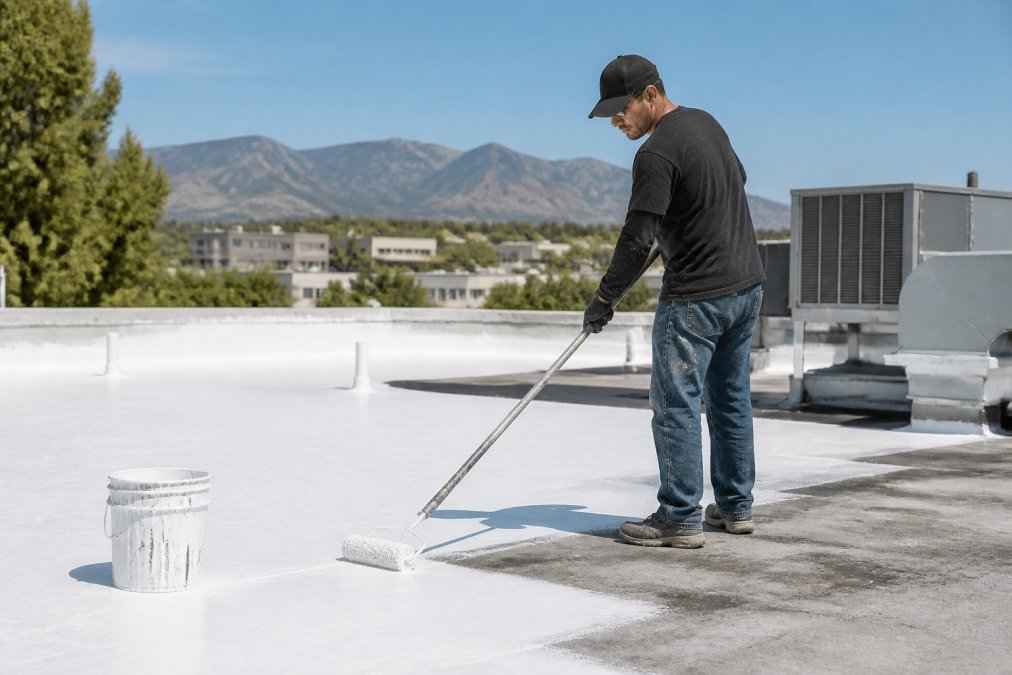
Metal roofing holds up well against wind and hail, and steel or aluminum panels commonly deliver several decades of service. Wood shingles need more attention: cedar can last 25 to 40 years, but only if it dries between storms and stays clear of debris. Flat roofs are their own category. Ponding water is the main enemy, and protective coating systems are what keep low-slope membranes from breaking down at the seams.
How Long Do Asphalt Shingles Last?
Asphalt shingles last 15 to 30 years depending on the shingle type. Three-tab shingles, the lighter and cheaper option, typically reach 15 to 20 years. Architectural shingles, also called composite or dimensional shingles, are thicker and commonly deliver 20 to 30 years. The gap comes down to construction: heavier mats hold granules longer and resist curling. Orientation matters too. A south-facing roof takes more UV exposure and heat cycling than a shaded north slope, so it usually ages faster. The U.S. Department of Energy roofing guidance notes that proper attic ventilation helps shingles shed heat, which slows that wear.
Signs You Need a New Roof (and What to Check First)
The clearest signs a roof may need replacement are curling, cracked, or missing shingles, granule buildup in gutters, and leaks that keep returning after repairs. But symptoms alone don't tell you whether to repair or replace. What separates a cosmetic problem from a structural one is where the failure sits in the roof system and how many layers are involved. Use the framework below to sort what you're seeing before you call anyone.
Step 1: Separate surface wear from system failure
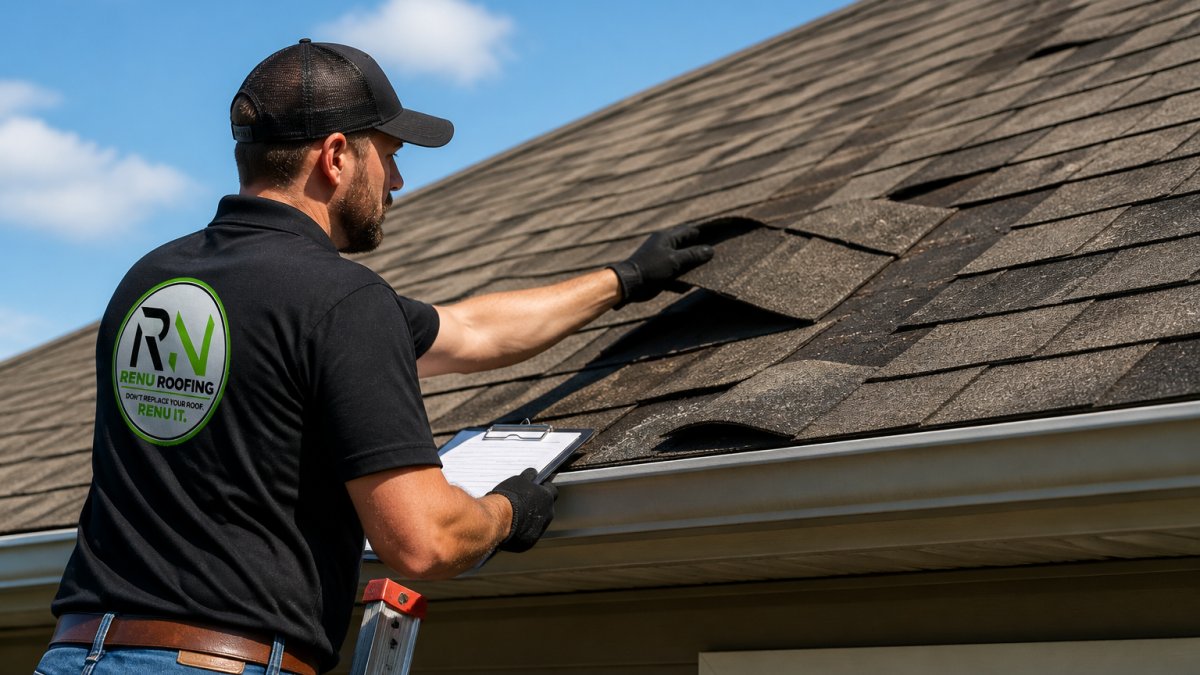
Surface wear is visible from the ground: granule loss, faded color, minor curling on sun-facing slopes. System failure shows up in places the shingles can't hide, soft decking underfoot, rusted or lifted flashing, daylight in the attic, sagging ridgelines. A roof with surface wear but a sound deck, intact flashing, and dry attic is a candidate for restoration. A roof with system failure is a replacement conversation regardless of how good the shingles look from the street.
Step 2: Check the components on their own timelines
The visible covering is only one layer. Underlayment, flashing, decking, ventilation, and drainage each fail on a different schedule, and the oldest component sets the real ceiling on the roof's life.
- Underlayment: typically the first hidden layer to go. It can dry out and crack well before the shingles above it show obvious wear, which is why a roof can look fine and still leak at the fasteners.
- Flashing: chimney, skylight, and vent flashing is where most leaks start. Lifted, rusted, or tar-patched flashing is a repair item, not automatically a replacement trigger.
- Decking: soft spots, delamination, or bounce underfoot mean the substrate is compromised. Shingles installed over a failing deck will not last, no matter their rating.
- Ventilation and drainage: poor attic ventilation cooks shingles from below, and clogged gutters or ponding water back up under the edges. Both accelerate every other failure mode.
Step 3: Weigh age against leak history
A 22-year-old architectural shingle roof with one repaired flashing leak is a different decision than a 12-year-old roof that has leaked in three places. Age sets the baseline; leak history tells you whether the roof is failing at the system level or at isolated points. A common pattern is a roof that crosses its expected lifespan with no leak history and a sound deck, that roof often has years left and is a strong candidate for rejuvenation rather than replacement.
Step 4: Get an inspection that looks past the shingles
A useful inspection checks the shingles, flashing, underlayment condition at penetrations, decking, attic ventilation, and drainage together, then reports which components are near end of life. Ask for that component-level read, not just a pass/fail verdict. For a closer look at shingle wear, see our guide on identifying early signs of shingle granule loss.
Warranty Period vs. Real-World Service Life
A warranty period is not a lifespan guarantee, and the two numbers measure different things. A lifespan estimate describes how long a roof typically serves under normal conditions. A warranty describes what a manufacturer or contractor will pay for if a covered defect appears. Confusing the two is where most homeowners get surprised.
Schedule Your FREE Roof Inspection Today →
What warranties actually cover
Material warranties cover manufacturing defects, premature cracking, granule loss beyond a stated threshold, or mat failure, not normal wear from sun, hail, or age. Workmanship warranties cover installation errors such as improper fastening or flashing. Most material warranties are prorated: the payout shrinks as the roof ages, so a 30-year warranty does not mean a full replacement at year 25. Common exclusions include damage from storms, foot traffic, poor ventilation, and failure to maintain the roof. Read the exclusions before you read the term length.
Why a warranty length isn't a lifespan
A roof rated for 30 years can fail in 15 if it was installed over a poorly vented deck, and a roof with a 20-year warranty can serve 25 years with good maintenance. The warranty term reflects the manufacturer's risk on defects, not a promise about service life. That gap between the paper promise and the real service life is where most homeowners get surprised.
How we keep the two timelines separate
At ReNu Roofing, we keep those timelines separate on purpose. Our rejuvenation service on residential asphalt roofs carries a 6-year transferable warranty, so it moves with the house if you sell. Our premium Gaco roof coatings, used on flat roofs and mainly commercial buildings, can carry up to a 20-year warranty. Separating the two means each product's coverage matches what it actually does, and a homeowner never has to guess which warranty applies to which service. If you want to see how rejuvenation affects real-world roof life, read our breakdown of roof rejuvenation results and lifespan.
How to Extend the Life of a Roof
Routine maintenance is the highest-return habit a homeowner has. A simple schedule works:
- Clean gutters and downspouts twice a year, spring and fall
- Trim overhanging branches that scrape shingles or drop debris
- Inspect flashing around chimneys, skylights, and vents each fall
- Check attic ventilation so heat and moisture escape properly
- Remove moss and debris from shaded slopes
- Schedule a professional inspection every two to three years
For asphalt roofs, rejuvenation is the maintenance step most homeowners overlook. It restores flexibility to aging shingles and reduces granule loss, which is the process that makes roofs look old before their time. A common mistake is waiting until shingles are already cracked; rejuvenation works best on a roof that still has life left in it. Our full guide on how to extend asphalt roof life walks through a shingle care schedule and the rejuvenation options we recommend.
Schedule a Roof Assessment Before You Replace
Before you accept a replacement quote, get an honest assessment of what your roof actually needs. Many roofs written off as finished still have years of service left, and rejuvenation or targeted repair can delay replacement without cutting corners. Our team inspects the shingles, flashing, and deck, then tells you plainly whether restoration makes sense or whether replacement is the right call. You can see our completed roof projects to get a sense of the work we do, or contact ReNu Roofing to schedule your assessment.
Frequently Asked Questions
How often should a roof be replaced?
It depends on the material and how well the roof has been maintained. Asphalt shingles typically last 15 to 30 years, metal roofing 40 to 70 years, and flat roof coatings can add up to 20 years of protection. Instead of replacing on a fixed schedule, have the roof inspected every few years and after major hail or wind events. An inspection shows whether the roof still has service life left or whether repairs and rejuvenation can extend it.
What factors affect how long a roof lasts?
Installation quality, attic ventilation, roof slope, sun exposure, and local weather all shape service life. South-facing slopes take more UV damage, poor ventilation traps heat and shortens shingle life, and repeated hail or wind storms speed up wear. Routine maintenance, including gutter cleaning and prompt leak repair, also matters. Two roofs of the same material can age very differently based on these conditions.
Can roof maintenance extend the life of a roof?
Yes. Regular maintenance addresses the small problems that turn into big ones: clogged gutters, loose flashing, and minor leaks. For residential asphalt roofs, rejuvenation treatments restore flexibility and reduce granule loss, which can add years of service. For flat commercial roofs, protective coatings seal seams and improve water resistance. Pairing maintenance with periodic inspections gives you the best chance of avoiding a full replacement.
How can I tell if my roof needs to be replaced?
Watch for curling, cracked, or missing shingles, granules collecting in gutters, water stains on ceilings, and daylight showing through the roof deck. On flat roofs, look for ponding water, blisters, and seam separation. Age matters too: a 20-year-old asphalt roof is near the end of its typical range. An inspection separates repairable issues from signs you need a new roof, so you can decide with facts instead of guesswork.
If your roof is showing its age and you're weighing replacement against restoration, we can help you make that call with real information instead of a sales pitch. ReNu Roofing offers roof rejuvenation backed by a 6-year transferable warranty, premium Gaco coatings for flat roofs with up to a 20-year warranty, and maintenance services including gutter cleaning and guard installation. Get started with ReNu Roofing and add years of service to the roof you already have.