 Ultimate guide
Flat Roof Coating Life Expectancy: What to Expect
Table of Contents
- How Long Flat Roof Coatings Actually Last
- Silicone vs Acrylic Roof Coating: Which Lasts Longer?
- A Flat Roof Maintenance Schedule That Extends Coating Life
- Frequently Asked Questions
Last Updated: September 15, 2026
How Long Flat Roof Coatings Actually Last
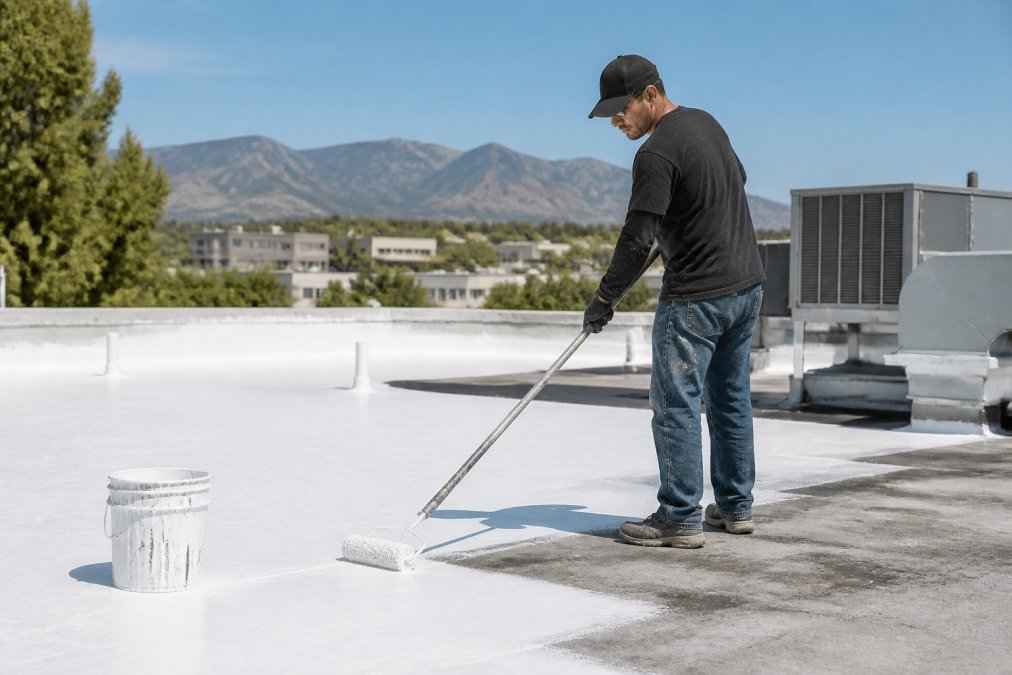
Flat roof coating life expectancy is the number of years a protective coating continues to seal, reflect sunlight, and prevent water intrusion before it needs re-coating. Most quality coatings last 10 to 20 years with proper installation and maintenance (Keeping The Heat In - Section 5: Roofs and attics). The lifespan can swing wildly based on what's underneath the coating.
Three variables decide the outcome:
- Coating type - silicone, acrylic, or elastomeric each age differently
- Substrate condition - a coating bonds only as well as the surface allows
- Maintenance - annual inspections catch ponding water before it ruins adhesion
A coating applied over a wet, dirty, or cracked substrate will fail early no matter how good the product is. That's the uncomfortable truth behind every lifespan claim you'll read.
Silicone vs Acrylic Roof Coating: Which Lasts Longer?
Silicone roof coating generally outlasts acrylic, especially on flat roofs that hold water. Silicone resists ponding water and UV degradation far better (Roofing Standards - Standards Products - Standards & Publications). Acrylic breaks down faster when water sits on it, though it costs less upfront and handles foot traffic well.
Here's how the three main options compare:
| Coating Type | Typical Lifespan | Best For | Watch Out For |
|---|---|---|---|
| Silicone | 15-20 years | Ponding water, high UV | Slippery when wet |
| Acrylic | 8-12 years | Budget projects, moderate climates | Poor ponding resistance |
| Elastomeric | 10-15 years | Crack bridging, flexibility | Needs thick application |
The silicone vs acrylic roof coating debate usually comes down to drainage. If your flat roof ponds water every spring, acrylic will fail at the water line while silicone keeps going. If your roof drains clean and you're watching the budget, acrylic does the job.
What most guides miss: mil thickness matters more than brand. A thin coat of premium silicone underperforms a properly thick acrylic every time.
A Flat Roof Maintenance Schedule That Extends Coating Life
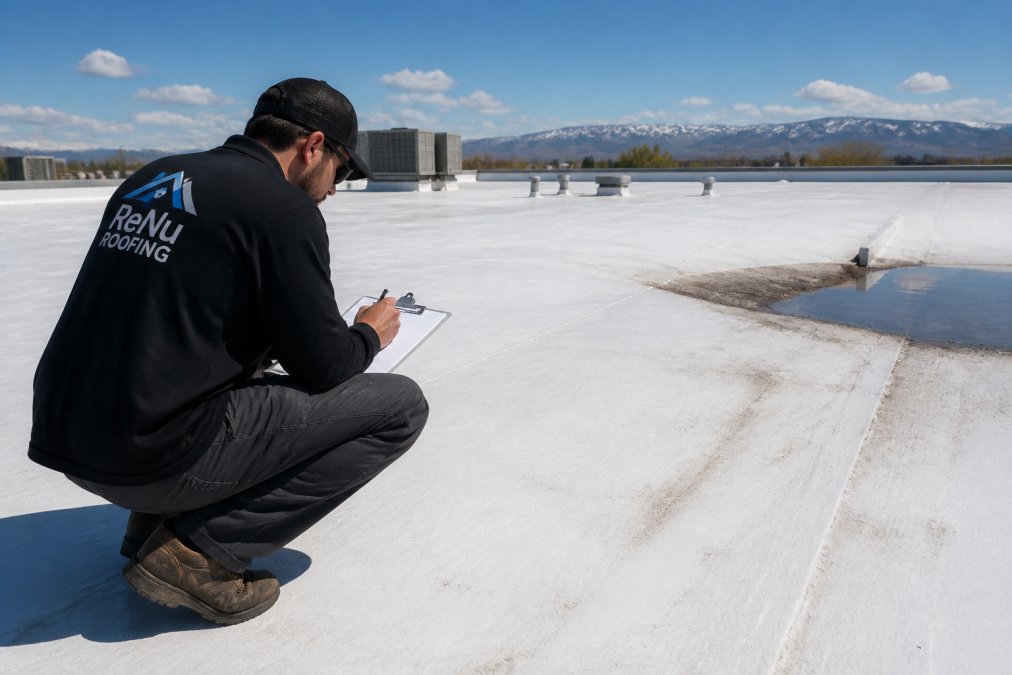
A flat roof maintenance schedule is the single cheapest way to add years to your coating. Most failures trace back to skipped inspections, not bad products. Twice a year is the baseline (nibs.org).
Signs your roof coating is failing show up early if you look:
- Chalking or powdering on the surface
- Blisters, bubbles, or peeling edges
- Standing water that lingers more than 48 hours
- Visible seams pulling apart
- Dark patches where reflectivity has worn off
Catch these in spring and fall and you'll re-coat small sections instead of the whole roof. Miss them and you'll pay for a full restoration.
Frequently Asked Questions
How often should a flat roof be recoated?
Most flat roof coatings need a recoat every 10 to 15 years, though silicone coatings often push past 15 while acrylic coatings typically need attention sooner. Your actual interval depends on the coating type, how much ponding water sits on the roof, and how much direct sun the surface gets. Inspecting the roof twice a year and after major storms helps you catch thinning or cracking early, so you recoat before the membrane underneath is exposed.
What factors reduce the life expectancy of a roof coating?
Ponding water is the biggest one. Standing water works against the coating from below through hydrostatic pressure and breaks down the film where it sits. Other factors include poor surface preparation before application, too-thin mil thickness, UV exposure, thermal shock from hot days and cold nights, and skipped maintenance. A coating applied over a dirty or damp substrate can fail in a couple of years instead of lasting a decade.
Does a roof coating add years to a flat roof?
Yes. A properly applied coating restores the roof's moisture barrier and reflective properties, which can add 10 to 15 years of serviceable life to a flat roof that is still structurally sound. The key word is properly. Surface preparation, primer application, and correct mil thickness decide whether you get that full extension or a coating that peels within a few seasons.
A flat roof coating only delivers its full lifespan when the surface prep, product choice, and maintenance all line up. If you're managing an aging flat roof and want to avoid a full replacement, ReNu Roofing applies premium Gaco roof coatings backed by a 20-year warranty, plus a 6-year transferable warranty on rejuvenation services. Get started with ReNu Roofing and extend your roof's life by 5 to 15 years.