 Ultimate guide
How Much Does a New Roof Cost? 2026 Pricing Guide
Last Updated: October 23, 2026
Quick Summary
A new roof cost depends on roof size, pitch, material, and the condition of the deck underneath, so most homeowners see totals ranging from a modest repair budget to a figure rivaling a kitchen remodel. Collect itemized bids and compare them line by line before you commit.
- Roofers price in squares, where one square equals 100 square feet of roof surface.
- Ask your contractor for the roof's measured square count in writing before you compare bids.
- Material choice is the biggest lever on cost after roof size, and cost per year of service is the useful comparison.
- A complete quote should itemize materials, labor, tear-off, deck repair, permits, and a stated contingency.
- Residential rejuvenation carries a 6-year transferable warranty, while Gaco flat-roof coatings can carry up to 20 years.
Table of Contents
- How Much Does a New Roof Cost? The Short Answer
- What Drives New Roof Cost: Size, Pitch, and Complexity
- Roof Replacement Cost by Material
- Using a Roof Replacement Cost Estimator
- The Line Items Behind Every Quote
- Roof Repair vs. Replacement: Which Makes Financial Sense?
- Roof Warranty Coverage and What It Actually Protects
- Conclusion
- Frequently Asked Questions
How Much Does a New Roof Cost? The Short Answer
A new roof cost depends on roof size, pitch, material, and the condition of the deck underneath.
The frustrating part? According to the Federal Trade Commission's guidance on home improvement contracts, a written contract should spell out what's included before work begins, and that principle applies just as much to the estimate stage.
Below, we break down what actually moves the number, how to read an itemized quote, and when restoring an aging asphalt roof beats tearing it off entirely.
What Drives New Roof Cost: Size, Pitch, and Complexity
Three variables do most of the work: how big the roof is, how steep it is, and how hard it is to reach. Everything else is a modifier on top of those.
Why Roof Area Isn't the Same as Home Floor Area
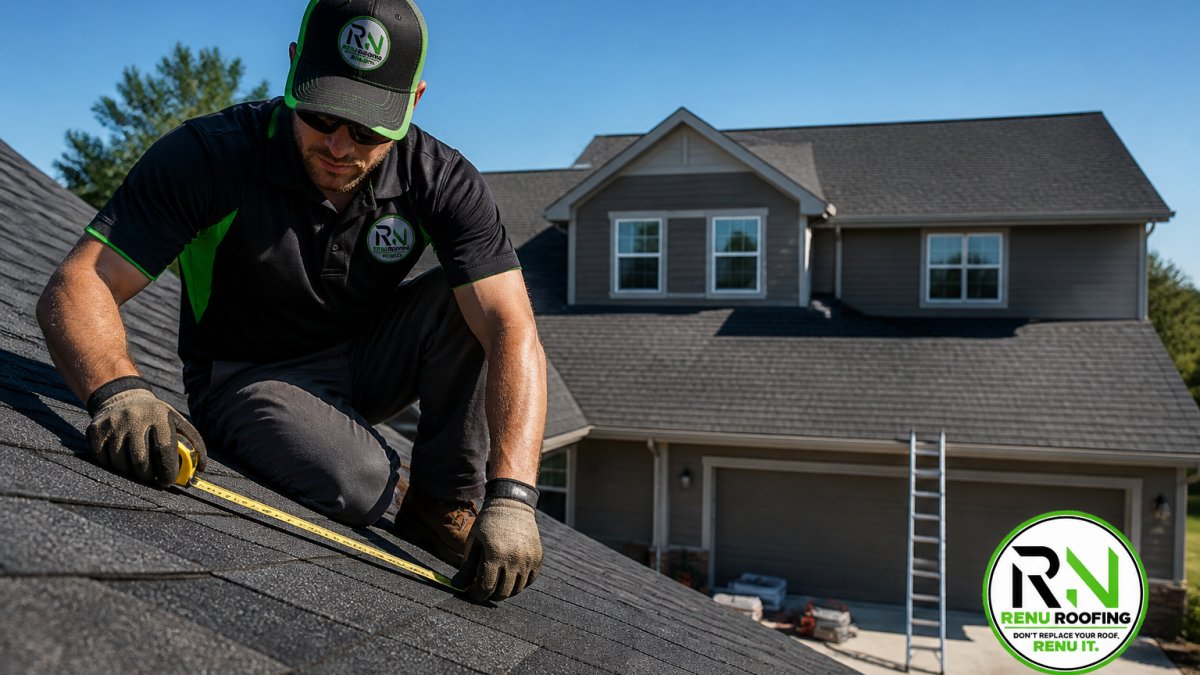
Roofers price in squares, where one square equals 100 square feet of roof surface. A 2,000-square-foot home does not have a 2,000-square-foot roof. Pitch, overhangs, and garage tie-ins push actual roof area higher, often by a meaningful margin.
Pitch, Stories, and Access
Steep slopes slow crews down and require more safety equipment. A two-story home means more setup, more ladder work, and more careful material staging. Complex rooflines with valleys, dormers, and multiple planes take longer to flash and seal correctly. Labor cost rises with each of these factors, and it should, because rushing a complicated roof is how leaks start.
Roof Replacement Cost by Material
Material choice is the single biggest lever on a new roof cost after roof size. The same 25-square roof can swing by several multiples depending on what goes on top of it. Rather than quote a single national number, it helps to understand why each material sits where it does, because the reasons are what let you sanity-check any bid you receive.
| Material | Relative Cost | Typical Lifespan | Maintenance Profile | Best For |
|---|---|---|---|---|
| Asphalt shingles (3-tab) | Lowest | 15-20 years | Low; granule loss, occasional flashing reseal | Tight budgets, short hold periods |
| Asphalt shingles (architectural) | Low to mid | 25-30 years | Low; heavier mat, better wind rating | Most homes, best value per year |
| Metal (standing seam) | Mid to high | 40-70 years | Very low; fasteners and sealant checks | Homeowners planning to stay long-term |
| Tile (clay/concrete) | High | 50+ years | Low, but brittle under foot traffic | Warm climates, heavy roofs |
| Slate | Highest | 75-100+ years | Low, but specialized repair labor | Historic and premium homes |
| Flat roof systems (coating/membrane) | Varies by system | Varies | Depends on system; recoating cycles | Commercial and low-slope |
Why the Material Premium Isn't Just the Material
The sticker price of slate versus asphalt is only part of the gap. The rest comes from three hidden multipliers:
Schedule Your FREE Roof Inspection Today →
- Weight and structural load. Tile and slate can require a structural evaluation and, in some cases, reinforcement before installation. That engineering and carpentry work shows up in the bid but not in the material line.
- Specialized labor. A crew that installs architectural shingles every day may not be certified for standing-seam metal or experienced with slate. Specialty labor commands a premium, and the pool of qualified installers is smaller.
- Underlayment and flashing systems. Premium roofs typically require premium underlayment, ice-and-water shield in specific zones, and metal flashing details that match the roof's expected lifespan. Putting a 50-year roof over a 15-year underlayment is a false economy.
The Full-Lifespan Math
The useful comparison isn't upfront price, it's cost per year of service. A roof that costs roughly twice as much but lasts three times as long is the cheaper roof over its life, provided you plan to stay.
Flat Roofs Are a Different Calculation
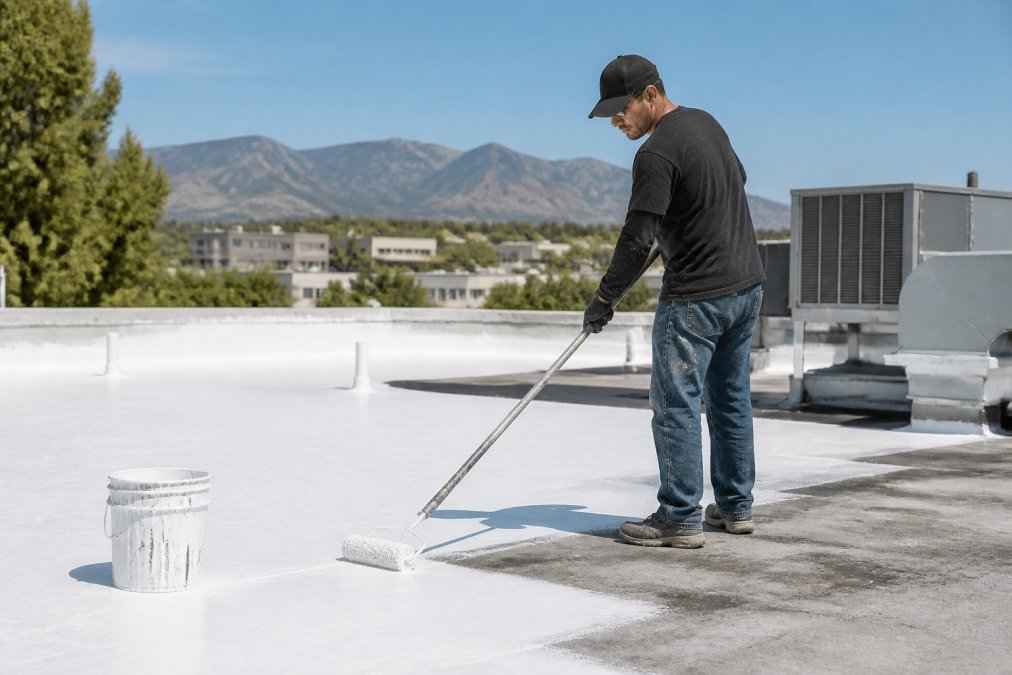
Flat and low-slope roofs on commercial buildings don't follow the residential material ladder at all. They're priced by system, coating versus membrane, and by the prep work required before either goes down. We apply Gaco coatings on flat roofs, and those systems can carry a warranty of up to 20 years. If you're weighing restoration against replacement on an asphalt roof, get a roof rejuvenation quote online to see whether your roof qualifies.
Using a Roof Replacement Cost Estimator
Online estimators give you a range, not a quote. They typically ask for home square footage, material choice, and roof pitch, then apply regional averages.
Treat the result as a ceiling check. If an in-person quote comes in far below the estimator's low end, ask what's missing. If it comes in far above, ask what's included that the estimator ignored.
The Line Items Behind Every Quote
A transparent estimate separates the work into visible pieces. Here's what a complete quote should show:
- Materials: shingles or coating, underlayment, flashing, ridge vent, fasteners
- Labor and installation: crew time, steep-slope or multi-story adjustments
- Tear-off and old roof removal: disposal fees, dumpster rental, haul-away
If a bid is one lump sum with no breakdown, you can't compare it to anything. Ask for the itemization before you sign.
Roof Repair vs. Replacement: Which Makes Financial Sense?
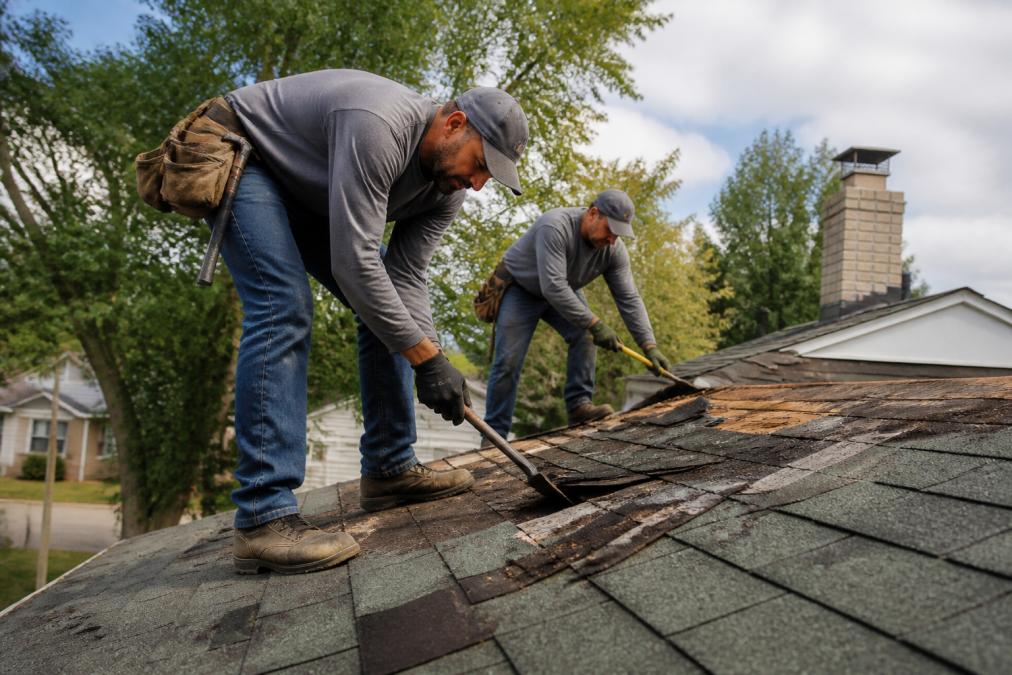
Replacement isn't always the answer, and that's where most quotes go wrong. If the shingles are aging but the deck is sound, rejuvenation can extend the roof's service life and restore granule loss without a tear-off.
Before deciding, understand what roof rejuvenation costs compared with replacement, and review how rejuvenation and replacement compare on lifespan and results. If a contractor has told you a repair threshold triggers full replacement, read up on the 25% rule for roofing to see how codes and insurers actually apply it.
| Situation | Better Fit | Why |
|---|---|---|
| Sound deck, aging shingles | Rejuvenation | Lower cost, extends life |
| Widespread rot or storm damage | Replacement | Structural repair needed |
| Flat commercial roof, ponding | Coating system | Seamless barrier, long warranty |
| Isolated leak, intact field | Repair or patching | Targeted fix, minimal disruption |
Roof Warranty Coverage and What It Actually Protects
Warranty coverage splits into two very different things: the manufacturer's warranty on materials and the contractor's warranty on workmanship. Homeowners routinely conflate them, and that confusion is exactly what a low bid relies on. A 30-year shingle warranty means little if the installer's labor coverage expires in one year and the leak traces back to flashing, because the manufacturer will point to installation, and the installer will point to the product.
Material Warranty vs. Workmanship Warranty
| Warranty Type | Who Backs It | What It Covers | Typical Structure |
|---|---|---|---|
| Manufacturer material warranty | Shingle or system maker | Defective product, manufacturing flaws | Prorated or non-prorated; limited |
| Contractor workmanship warranty | The installing company | Installation errors, flashing, fastening, sealing | Usually shorter; varies widely by firm |
| System or extended warranty | Manufacturer, via certified installer | Material and labor together | Requires certified installation and registration |
A prorated material warranty is the detail most homeowners miss. In the early years the manufacturer may cover the full replacement cost of defective shingles; as the roof ages, the payout declines on a schedule. By year 20 of a 30-year warranty, the coverage may be a fraction of the original value. Non-prorated coverage is stronger and worth asking about specifically.
Schedule Your FREE Roof Inspection Today →
The Three Questions That Matter Before You Sign
- What does the workmanship warranty cover, and for how long? Get the number of years in writing, and ask whether it covers labor only or labor plus materials.
- Is the warranty transferable if you sell the home? Transferability has real resale value. A buyer's inspector will ask, and a transferable warranty can be a negotiating point.
- What maintenance voids it? This is the trap. Most manufacturers require reasonable upkeep, clearing debris, addressing isolated damage promptly, and in some cases periodic inspection. Skipped maintenance can void a claim years later, when you need it most.
How Transferability Works in Practice
A transferable warranty usually requires the original homeowner to register the roof and, at sale, submit a transfer form within a set window, often 30 to 60 days. Miss the window and the coverage may not follow the house.
Our residential rejuvenation carries a 6-year transferable warranty, which separates cleanly from our flat-roof coating warranties, which can run up to 20 years.
What a Warranty Doesn't Cover
Even strong coverage excludes certain things: damage from neglect, storm events (that's insurance), foot traffic, improper ventilation, and alterations by other trades. Read the exclusions page, not just the headline term. If a roofer can't explain the exclusions in plain language, that's a signal about how the claim process will go.
Conclusion
The honest answer to what a new roof costs is that the number lives in the details: measured squares, pitch, deck condition, and what the quote actually includes. Collect itemized bids, compare line by line, and ask whether restoration is a fit before you commit to tear-off.
ReNu Roofing helps homeowners and property managers across Utah extend roof life by 5 to 15 years through rejuvenation, repairs, maintenance, and Gaco coating systems for flat roofs. We quote the work in writing, explain every line, and back rejuvenation with a 6-year transferable warranty. Contact our team to find out whether your roof qualifies for restoration instead of replacement.
Frequently Asked Questions
How do I estimate how much a new roof will cost before calling anyone?
Start with the size of your roof, not your home's square footage. Roofers measure in squares, where one square equals 100 square feet of roof surface. A two-story home with a steep pitch can have far more roof area than its floor plan suggests. Multiply your roof's square count by the per-square rate for your chosen material, then add tear-off, disposal, and any deck repairs. Most contractors will give a free written estimate, so use that to check your math rather than relying on online calculators alone.
Is roof replacement tax deductible for homeowners?
Usually not for a primary residence. The IRS generally treats a new roof as a capital improvement, which adds to your home's cost basis and reduces capital gains when you sell, rather than giving you an immediate deduction. If you run a business from home or own a rental property, different rules may apply, so confirm with a tax professional. Some states and utilities also offer incentives for energy-efficient roofing materials, so check what applies in your area.
When is roof repair or rejuvenation a better choice than full replacement?
If your asphalt shingles are aging but the deck is sound, granules are shedding, and leaks are isolated, rejuvenation can extend roof life by 5 to 15 years at a fraction of replacement cost. Rejuvenation restores shingle flexibility and reduces granule loss, and it comes with a 6-year transferable warranty. Full replacement makes more sense when there is structural damage, widespread leaks, or the roof is at the end of its service life. A professional inspection should decide it, not a sales pitch.
How does roof size affect replacement cost?
Roof size is the single biggest cost driver because materials, labor, and disposal all scale with square footage. A larger roof needs more shingles, underlayment, flashing, and nails, and it takes crews longer to tear off and install. Complexity matters too: a simple gable roof costs less per square than one with dormers, valleys, and multiple penetrations. Ask your contractor how many squares your roof measures so you can compare quotes on equal footing.