 How-to
What Happens If You Delay Roof Replacement in Utah
Table of Contents
- What Happens If You Delay Roof Replacement, Step by Step
- Signs You Need a New Roof Before Damage Spreads
- How Long Can You Delay Roof Replacement Safely?
- Roof Repair vs. Replacement: How to Decide
- Cost Progression: What a Delayed Roof Can Really Cost
- Temporary Roof Leak Repair While You Wait
- Rejuvenation or Coatings: How the Warranties Differ
- Booking Your Roof Assessment With ReNu Roofing
- Frequently Asked Questions
Last Updated: November 16, 2026
What Happens If You Delay Roof Replacement, Step by Step
Delaying roof replacement rarely causes a sudden disaster. Instead, small problems grow quietly until they become expensive ones. The same pattern shows up again and again across Utah homes and commercial buildings. Here is what usually happens, in order.
- Shingles lose their protection. Granules wear off and shingles curl, crack or lift. The roof no longer sheds water the way it should.
- Water finds a way in. Wind-driven rain and snowmelt slip under damaged shingles and reach the roof decking.
- Moisture spreads. Wet decking softens, and water travels along rafters, into insulation and down into ceilings and walls.
- Mold and mildew start to grow. Damp attic air and wet materials create the conditions mold needs, which can affect indoor air quality.
- Structural wood begins to rot. Repeated wetting weakens decking and framing, which can lead to sagging.
- Repair scope grows. A small patch turns into replacing sections of decking, drywall and insulation, and that drives up the bill.
Each step makes the next one more likely. Catching the problem early keeps the job small.
Signs You Need a New Roof Before Damage Spreads
Some warning signs point to a roof that needs attention soon. Look for these:
- Curling, cracked or missing shingles after storms or high wind
- Bare patches where granules have washed into the gutters
- Dark streaks or moss that hold moisture against the surface
- Water stains on ceilings or along walls near exterior corners
- Daylight visible through the roof boards in the attic
- Sagging along the roofline or the ridge
- Musty smells in the attic or upper rooms
If you see several of these at once, the roof is likely past simple fixes. Rejuvenation can extend the life of a sound asphalt shingle roof, but a roof with structural damage usually needs replacement. A professional inspection can tell the difference.
How Long Can You Delay Roof Replacement Safely?
There is no single safe number of years. The answer depends on the roof's age, its condition, the local weather and whether leaks have already started.
A roof that is still watertight with only minor wear may hold for a while with regular maintenance. A roof that already shows leaks, soft spots or missing shingles should not wait. Waiting a season can turn a manageable repair into a full tear-off.
A useful rule: if water is getting inside, the clock is already running. Schedule an inspection before the next heavy storm season.
Roof Repair vs. Replacement: How to Decide
Choosing between repair and replacement is not a coin flip. It comes down to a short set of checks that most roofing practitioners run in the same order. Use this framework to sort your situation into one of three buckets: repair now, rejuvenate and monitor, or plan replacement.
Step 1: Age and remaining service life. Asphalt shingle roofs typically carry a manufacturer-rated service life, and most homeowners get a sense of it from the original installation paperwork. If the roof is in the last quarter of its rated life and already showing wear across multiple slopes, repairs buy little time.
Step 2: Extent and pattern of damage. Isolated damage, such as a few lifted shingles after a wind event or a single failed flashing detail, often suits a targeted repair. Widespread curling, granule loss across sun-facing slopes, or repeated leaks in different spots point toward replacement or, where the shingles are still structurally sound, rejuvenation.
Step 3: Condition of the decking. Soft, spongy, or rotted decking means repairs will not hold, because the fasteners have nothing solid to bite into. A professional inspection that checks the deck from the attic side is the only reliable way to know. If decking is sound, repair and rejuvenation remain on the table.
Step 4: Repair history. One repair in five years is normal wear. Three repairs in two years in the same area usually means the underlying problem was never fixed, and another patch is money spent on a roof that is already failing.
Step 5: Water already inside. If water is reaching ceilings, insulation, or interior finishes, the clock is running. That is the point where the decision shifts from "repair or replace" to "protect now and replace on a schedule."
A practical triage guide. Not every delay carries the same risk. Sort your symptoms into three tiers:
- Act now (emergency protection): active water dripping inside, sagging roofline, daylight visible through roof boards, or a leak after a storm. These call for temporary protection and a professional inspection within days, not weeks.
- Schedule promptly (inspection within a few weeks): water stains on ceilings or walls, musty attic smells, curling or missing shingles across a slope, or granules collecting in gutters. These are early warnings that a repair or rejuvenation decision can still head off.
- Plan and monitor (routine inspection): minor granule wear, dark streaks, or moss on a roof that is otherwise watertight. These justify a maintenance plan and a replacement budget, not panic.
Where rejuvenation fits. Rejuvenation sits between simple repair and full replacement. It restores flexibility and granule protection on asphalt shingles that are still structurally sound, and it can help avoid the cost of a full tear-off. It is not a fix for rotted decking or active leaks. A professional inspection determines whether a roof qualifies.
Watch out: treating a tier-one symptom as a tier-three item is the most common way a manageable repair becomes a full replacement. If water is inside, do not wait for the next storm season to schedule an inspection.
Cost Progression: What a Delayed Roof Can Really Cost
Roof costs rarely stay flat, and the reason is mechanical, not mysterious. A delayed roof does not fail all at once.
Stage 1: Surface wear. Granules wear off, shingles curl, and flashing seals degrade. At this stage the fix is small: replace a few shingles, reseal flashing, clear debris.
Stage 2: Water reaches the decking. Once water slips under damaged shingles, it wets the roof deck. Wet wood softens, and soft wood will not hold fasteners.
Stage 3: Water travels. Water does not stay where it lands. It runs along rafters, soaks into insulation, and reaches ceilings and wall cavities. Insulation that stays wet loses its insulating value and often has to be removed and replaced.
Stage 4: Biological growth and structural strain. Damp attic air and wet materials create the conditions mold needs. Remediation is a separate scope with its own containment and clearance steps.
Stage 5: Interior finishes and belongings. Water that reaches living space damages paint, trim, flooring, and stored items. Each of those is a separate repair line, and each one is added on top of the roof work rather than instead of it.
How the stages compound. The key point is that later stages do not replace earlier ones. A late-stage job still includes the roof work from stage one and two, plus decking, plus insulation, plus interior repair, plus possibly remediation.
What drives the actual number. Pricing depends on the size and pitch of the roof, the materials selected, the extent of decking and interior damage, access, and local labor rates. For current prices or a quote, visit the ReNu Roofing website.
Where rejuvenation changes the math. For an asphalt shingle roof that is still structurally sound, rejuvenation restores flexibility and granule protection and can help avoid the cost of a full replacement.
Watch out: the most expensive line item in a delayed roof is usually not the shingles. It is the decking, insulation, and interior work that a small leak sets in motion, and those costs are avoidable when the problem is caught early.
The table below sums up how the damage grows at each stage of a delayed roof, so you can see where a small fix becomes a larger job.
| Stage | What is happening | What the job includes |
|---|---|---|
| Surface wear | Granules wear off, shingles curl, flashing degrades | Replace a few shingles, reseal flashing, clear debris |
| Water reaches decking | Water slips under damaged shingles and wets the deck | Remove failed shingles, replace sections of decking |
| Water travels | Water runs along rafters and soaks insulation and ceilings | Replace insulation, repair or cut out drywall |
| Biological and structural strain | Mold grows and repeated wetting weakens framing | Mold remediation and structural repair |
| Interior finishes | Water reaches living space | Repair paint, trim, flooring and damaged belongings |
Temporary Roof Leak Repair While You Wait
If a leak appears before permanent work can be scheduled, these steps can limit damage:
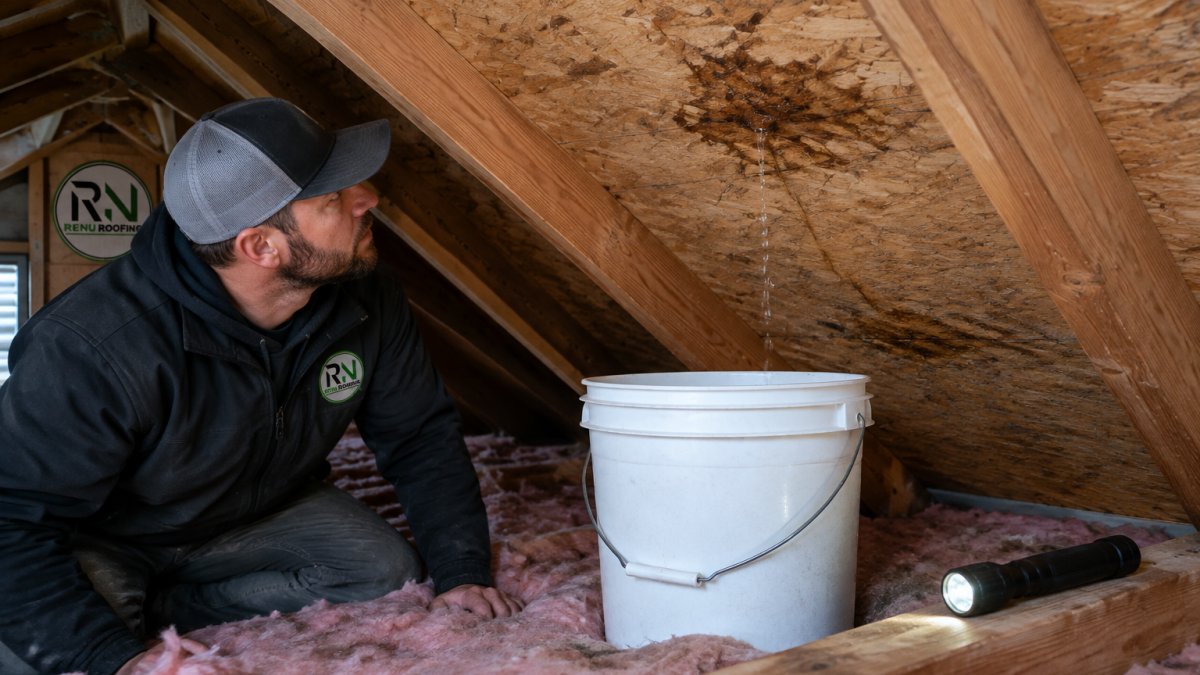
- Place a bucket or tarp under the drip and move valuables out of the way.
- Check the attic with a flashlight to find the wet area and the likely source.
- Photograph any damage for your records and insurance paperwork.
- Avoid walking on a wet or steep roof. Call a professional for roof access.
Temporary measures slow the damage but do not fix the roof. Treat them as a stopgap, not a solution.
Rejuvenation or Coatings: How the Warranties Differ
ReNu Roofing offers two different approaches, and they carry different warranties.
Residential asphalt shingle roofs use roof rejuvenation rather than coatings. Rejuvenation restores shingle flexibility and granule protection, and it comes with a 6-year transferable warranty. Learn more about roof rejuvenation in Utah, including how it compares with replacement and how long it lasts.
Flat roofs, mainly on commercial buildings, use Gaco roof coatings. Professional roof coating services can extend roof life on suitable flat roofs, and coatings can carry a warranty of up to 20 years. Check how roof coating warranty transfers work before you sell or change ownership, since transfer terms and voiding conditions matter.
Because the two systems are used on different roof types, the warranties stay separate. Confirm which applies to your building before you decide.
Booking Your Roof Assessment With ReNu Roofing
The best time to act is before water reaches the inside of your home or building. ReNu Roofing can inspect the roof and recommend the option that fits your situation, whether that is repair, rejuvenation, coating or replacement.
To see whether your asphalt shingle roof qualifies for rejuvenation, you can get a roof rejuvenation quote online. When you are ready to schedule a visit, contact ReNu Roofing to request an assessment.
One customer wrote that ReNu Roofing's process was "smooth, professional, and stress-free," and another said the work helped them avoid the cost of a full replacement. Your roof's situation is unique, so start with an inspection. Inquire Now to book your assessment.
Frequently Asked Questions
Can a small roof leak lead to serious damage?
Yes. A small leak can let water reach the roof decking, insulation and ceiling below. Wet insulation loses its ability to insulate, wood decking can soften and rot, and trapped moisture encourages mold growth in the attic. Because the damage often starts hidden, a stain on a ceiling may signal problems that have been developing for months. Have a roofer inspect the area as soon as you spot any water entry, even if the leak seems minor, and document the damage with dated photos in case you need to file an insurance claim.
What are the signs that a roof needs to be replaced?
Common signs include curling, buckling or missing shingles, granules collecting in gutters, daylight visible through the roof boards from the attic, sagging roof lines, and recurring leaks after repairs. On asphalt shingle roofs, age is also a factor, since shingles lose flexibility over time. If you see several of these signs together, or the roof is near the end of its expected life, it is time to get a professional opinion on whether replacement or rejuvenation makes more sense for your home.
Can you repair a roof instead of replacing it?
Often, yes. When damage is limited to a few areas and the underlying decking is sound, targeted repairs or rejuvenation can restore flexibility, reduce granule loss and extend the roof's service life. Replacement becomes the better choice when damage is widespread, the decking is rotting, or the shingles are too brittle to repair without causing more breakage. ReNu Roofing offers roof rejuvenation and repair for residential asphalt roofs in Utah, and a professional assessment can help you determine which path fits your roof's condition.
What should you do if your roof is leaking while you wait for replacement?
Start by moving belongings away from the leak and placing a bucket or tarp to catch water. Photograph any staining and check the attic for wet insulation. Turn off electrical fixtures near the leak if water is reaching them. A temporary patch may slow the damage, but it does not fix the underlying problem. Schedule a professional inspection promptly, and keep records of every repair and inspection for both your insurance provider and any future buyer.