 How-to
How to Prevent Ice Dams on Asphalt Roofs?
Quick Summary
To prevent ice dams, stop the heat loss that melts snow on the roof. Seal air leaks around fixtures, plumbing and the attic hatch, add insulation, and keep soffit and ridge vents open. Clear gutters before winter, and avoid chipping ice or using salt on shingles.
- Heat escaping into the attic is the main driver of ice dams.
- Seal air leaks around recessed lights, bath fans, plumbing stacks and the attic hatch.
- Keep soffit and ridge vents open so insulation never blocks airflow.
- Clean gutters in late fall and direct downspouts away from the foundation.
- Never chip ice or use salt; use a roof rake from the ground instead.
Table of Contents
- How to Prevent Ice Dams on Asphalt Roofs
- What Causes Ice Dams on Roofs
- Diagnosing Your Roof Before Winter: A Prioritized Checklist
- Sealing Air Leaks, Adding Insulation and Improving Attic Ventilation
- Keeping Gutters and Downspouts Clear
- How to Remove Snow From a Roof Safely
- Roof Heating Cables for Ice Dams: When They Help and When They Don't
- Scheduling Your Asphalt Roof Prevention Plan with ReNu Roofing
- Frequently Asked Questions
How to Prevent Ice Dams on Asphalt Roofs
Last Updated: October 29, 2026
Ice dams are one of the most common winter problems for asphalt roofs, and knowing how to prevent ice dams can save you costly repairs. A few smart steps before the first freeze can help keep water out of your attic and off your ceilings. This guide walks through the causes, a prioritized checklist, and the prevention options that fit asphalt shingles.
Most homeowners only notice ice dams after water stains appear. By then, the damage has already started.
What Causes Ice Dams on Roofs
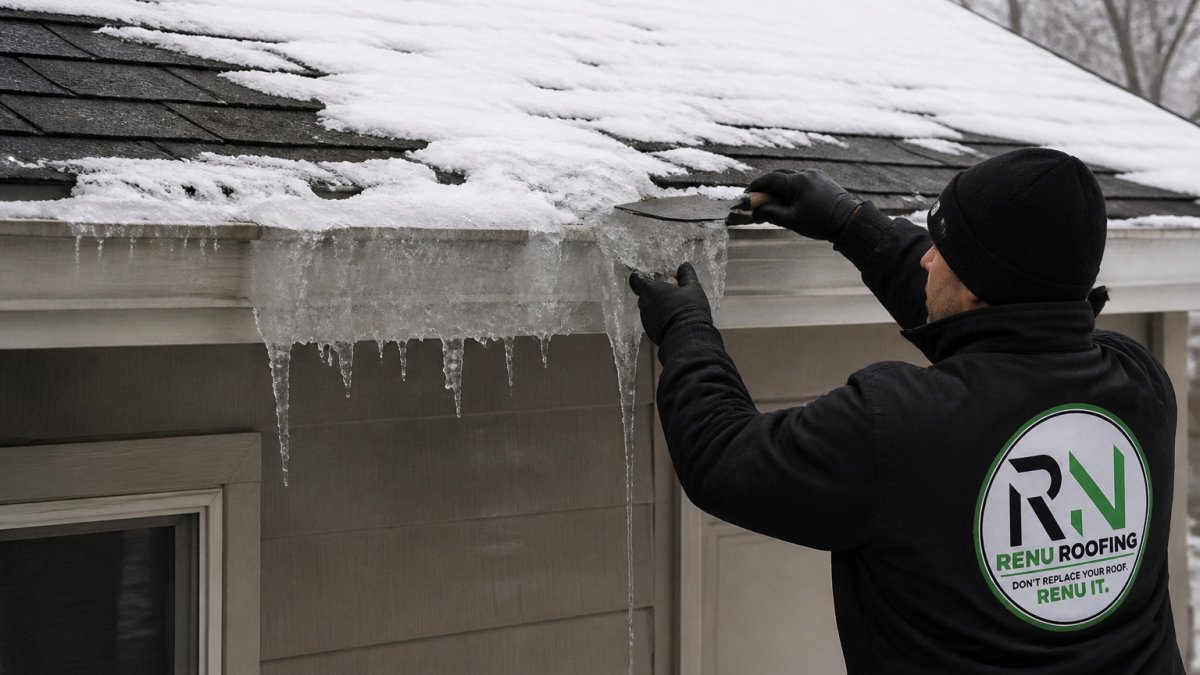
An ice dam is a ridge of ice that forms at the roof edge and blocks melting snow from draining off. Water pools behind it and can seep under shingles. Understanding the process makes prevention much easier.
How Snowmelt and Refreezing Build an Ice Dam
Heat escaping from the living space warms the roof deck and melts snow from below. That meltwater runs down the roof toward the eaves, which are colder because they overhang the house. There, the water refreezes.
Over days of repeated melting and refreezing, the ice builds into a dam. Water then backs up behind it, under the shingles, and into the home.
Why Heat Loss Through the Attic Makes It Worse
Warm air leaking into the attic is the main driver. Gaps around light fixtures, plumbing penetrations, and the attic hatch let heat rise and warm the roof deck unevenly. Insulation that is thin or compressed lets even more heat through.
Keeping the roof surface uniformly cold prevents the snowmelt that feeds the dam.
Schedule Your FREE Roof Inspection Today →
Diagnosing Your Roof Before Winter: A Prioritized Checklist
Most ice-dam advice jumps straight to fixes. The right fix depends on whether your problem is heat loss, ventilation, drainage, or a roof condition that needs repair.
Step 1: Confirm the problem is heat loss, not just weather
Start in the attic on a cold day. Look for these signals:
- Frost or condensation on the underside of the roof deck. This means warm, moist air is reaching the deck and condensing before it can vent out.
- Melted or matted insulation around chimneys, hatch covers, and recessed lights.
- Daylight or staining at the roof deck seams. Gaps let warm air through and also let water in.
- Icicles that form mainly over heated rooms rather than uniformly along the whole eave. Uneven icicle patterns point to uneven heat loss.
If you see these, your priority is air sealing and insulation, not cables or salt.
Step 2: Check ventilation continuity
Ventilation only works when air can travel from the soffit to the ridge without obstruction. In the attic:
- Confirm soffit vents are open and not buried under insulation. A common failure is insulation pushed tight against the roof deck at the eaves, which blocks the intake.
- Confirm ridge vents are clear of debris and not painted shut.
- Look for baffles at the eaves. Without them, insulation tends to drift and block airflow.
Step 3: Inspect the asphalt shingles at the eaves
This is where the query's asphalt focus matters. Ice dams stress shingles in specific ways:
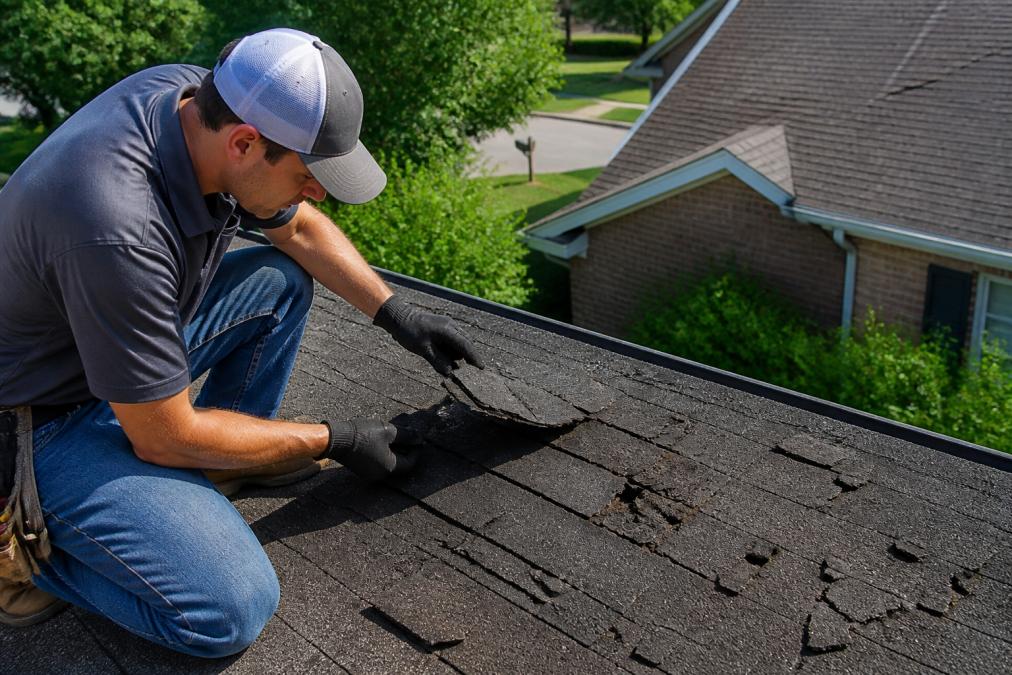
- Curling or lifting at the eave edge. Repeated freeze-thaw cycles pry shingle tabs up.
- Missing granules in a band along the eave. Granule loss exposes the asphalt and shortens shingle life.
- Cracked or brittle tabs. Cold shingles crack easily; if they are already brittle, any ice removal is risky.
- Lifted or damaged drip edge and underlayment. Water that backs up behind a dam finds these first.
If you see these signs, treat the roof as fragile. Do not chip ice. Plan for repair before the next winter.
Step 4: Check drainage and interior symptoms
- Gutters and downspouts: Clear them in late fall.
- Downspout discharge: Make sure water is carried well away from the foundation, not dumped at the wall.
- Ceilings near exterior walls: New stains, bubbling paint, or a musty smell mean water has already moved inside. That is a repair issue, not just a prevention issue.
How to use the results
- Heat loss signals plus blocked ventilation: prioritize air sealing, then insulation, then ventilation.
- Clear attic but persistent dams: look at drainage, roof-edge details, and whether heating cables are a reasonable supplement.
- Damaged or brittle shingles: repair or plan replacement before adding any prevention system.
- Interior staining already present: call a roofer for an assessment rather than trying to manage it yourself.
Sealing Air Leaks, Adding Insulation and Improving Attic Ventilation
- Seal air leaks around recessed lights, bath fans, plumbing stacks, and the attic hatch using caulk or foam.
- Add or top up insulation on the attic floor so it reaches the recommended depth for your climate.
- Confirm soffit and ridge vents are open. Insulation should never block the airflow from eave to ridge.
Keeping Gutters and Downspouts Clear
Clean gutters in late fall, and make sure downspouts carry water well away from the foundation.
How to Remove Snow From a Roof Safely
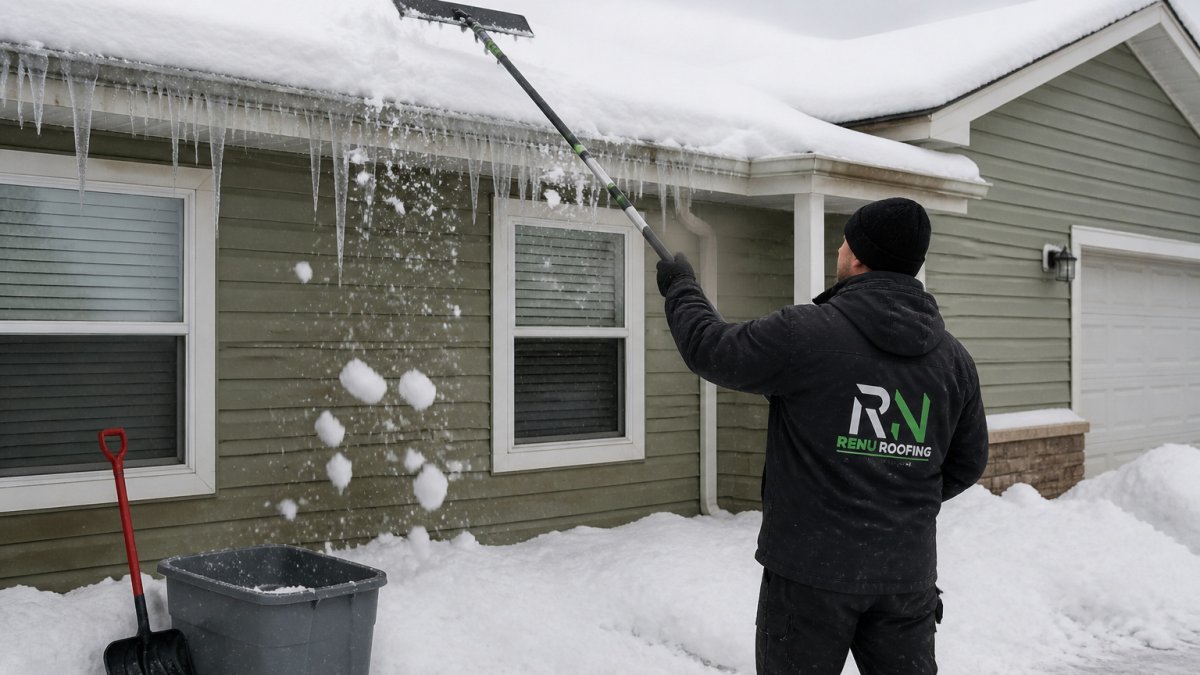
Snow removal is where most ice-dam injuries and shingle damage happen. The goal is to reduce load and cut off meltwater at the source, not to clear the roof perfectly. Know your limits before you start.
What you can safely do from the ground
- Use a roof rake with a soft or plastic head. Pull snow down from the eave edge while keeping both feet on the ground. Work in small pulls rather than dragging heavy loads.
- Stay back from power lines. Look up before you raise any tool.
- Leave a thin layer of snow. Scraping down to the shingles does more harm than good. A light residual layer is fine.
- Work from a stable position. Do not stand on a ladder to reach farther up the roof. If the rake cannot reach it, stop.
What damages asphalt shingles
- Metal shovels and ice choppers. They gouge the shingle surface and knock off granules.
- Axes, hammers, and chisels. Chipping ice off a roof almost always damages shingles and can crack the deck.
- Pressure washers. They strip granules and force water under the shingles.
- Rock salt and calcium chloride on the roof. These can stain shingles, corrode metal flashings and gutters, and harm landscaping below. They also do not fix the underlying heat-loss problem.
- Walking on the roof in winter. Cold shingles crack under foot traffic, and the roof is slippery.
Prevention versus emergency response
These are two different jobs, and mixing them up causes damage.
Schedule Your FREE Roof Inspection Today →
- Prevention (before winter): air sealing, insulation, ventilation, clear gutters, and a fall inspection. This is the durable fix.
- Emergency response (active ice dam): remove snow from the eave edge with a roof rake, and keep the area below clear. Do not chip ice. Do not apply salt. Do not climb on the roof.
When to call a professional
Call a roofer when:
- Snow depth on the roof is more than you can safely reach from the ground.
- You see sagging, cracking, or water entering the home.
- Ice has built up heavily at the eave and you cannot clear it safely.
- The shingles are already brittle, curled, or missing granules.
Roof Heating Cables for Ice Dams: When They Help and When They Don't
They are a temporary measure, though. Cables use electricity all winter and do nothing about the heat loss that causes the dam. Treat them as a supplement, not a substitute, for sealing and insulating the attic.
Heating cables can help in some situations, but they are a temporary measure that does not fix the underlying heat loss.
| Option | Best for | Key difference |
|---|---|---|
| Air sealing and insulation | Stopping heat loss at the source | Durable fix that addresses the cause |
| Heating cables | Temporary relief at problem eaves | Use electricity all winter and do nothing about heat loss |
Scheduling Your Asphalt Roof Prevention Plan with ReNu Roofing
For residential asphalt roofs, ReNu Roofing offers roof rejuvenation rather than coatings. Rejuvenation carries a 6-year transferable warranty. Our coatings are reserved for flat commercial roofs. Contact us for a quote. To see what affects pricing and how rejuvenation compares to replacement, read how much roof rejuvenation costs.
If you want to learn how rejuvenation works for an aging shingle roof, read our guide on how to extend asphalt roof life. You can get a roof rejuvenation quote online. If you spot brittle or damaged shingles during your inspection, see our guide on how to repair brittle shingles. Ready to plan your winter prep? Contact ReNu Roofing.
Frequently Asked Questions
Are ice dams bad for an asphalt roof?
Yes. Water backed up behind an ice dam can work under shingles, soak the underlayment and reach the roof deck, the attic and interior ceilings. Repeated freeze-thaw cycles can also lift and crack shingles and loosen granules, which shortens the roof's service life. Catching the problem early with a diagnostic check and proper attic air sealing and insulation is far cheaper than repairing interior water damage afterward. If you see staining on ceilings or walls after a thaw, have a qualified roofer inspect the area promptly.
Will homeowners insurance cover ice dam damage or removal?
Coverage varies by policy and by insurer, so review your declarations page and ask your agent directly. Many standard policies cover sudden water damage that results from a covered peril, but they often exclude the cost of preventing ice dams or removing ice from the roof itself, and they may deny claims tied to long-term neglect or poor maintenance. Keep photos, dated maintenance records and any contractor invoices, since documentation makes any claim much easier to evaluate.
Do roof heating cables prevent ice dams?
Heating cables can keep a channel open through ice and help meltwater drain, but they treat the symptom rather than the cause. They work best as a supplement to proper attic air sealing, insulation and ventilation, not as a replacement for them. Cables also draw continuous electricity during cold weather and must be installed and maintained correctly to avoid fire and shingle damage. Many homeowners find they are most useful for problem areas like north-facing eaves or low-slope sections.
Can attic insulation and ventilation help prevent ice dams?
Yes, and they are the most durable prevention measures available. Ice dams form when heat escapes from the living space into the attic and warms the roof deck, melting snow from below. Air sealing gaps around recessed lights, plumbing penetrations and attic hatches, adding insulation to the recommended level for your region, and providing balanced soffit-to-ridge ventilation keep the roof deck cold and the snow in place. A qualified contractor can use a thermal camera to locate the worst leaks.