 How-to
Do You Need a Roof Inspection Near Me in Utah?
Quick Summary
A roof inspection is worth scheduling at least once a year, and again after severe weather like hail, high wind, or heavy snow. A professional inspection covers the shingles, flashing, and roof deck, plus the attic, which ground checks cannot reveal.
- Inspect annually for roofs under 10 years old, and twice a year for roofs 10 to 20 years old.
- Schedule an inspection after any hail larger than 1 inch or wind gusts above 50 mph.
- Never climb onto a roof yourself; limit ground checks to looking with binoculars.
- Ask for a written quote that covers shingles, flashing, attic, gutters, and report delivery.
- Look for a report that rates findings as immediate repair, monitor, or routine maintenance.
Table of Contents
- What a Professional Roof Inspection Covers
- Roof Inspection Checklist: What You Can Check From the Ground
- How Often to Inspect a Roof in Utah
- Roof Inspection After a Storm: Hail, Wind and Leaks
- Reading Your Roof Inspection Report
- Inspection Costs and How to Choose a Local Inspector
- Booking Your Roof Inspection With ReNu Roofing
- Frequently Asked Questions
What a Professional Roof Inspection Covers
A professional roof inspection looks at every layer that keeps water out of your home, not just the surface you can see from the street. Your inspector checks the shingles, the flashing around chimneys and vents, and the roof deck underneath. Each part can fail on its own, and a small problem in one area often points to a larger one elsewhere.
Shingles, flashing and the roof deck
Shingles are the first line of defense. An inspector looks for cracks, curling, missing pieces and granule loss, which is the gritty coating that protects the shingle from UV light. Flashing is the metal sealing the joints around chimneys, skylights and valleys, and it is a frequent source of leaks. The roof deck, the wood sheathing under the shingles, is checked from the attic for soft spots, staining and daylight coming through. Water damage in the deck is often hidden until it is serious, which is why a thorough inspection covers the attic as well as the roof itself.
Roof Inspection Checklist: What You Can Check From the Ground
You can spot some warning signs safely from the driveway or sidewalk with binoculars. Never climb onto a roof to inspect it yourself. Falls are a leading cause of serious injury in home maintenance, so limit yourself to looking.
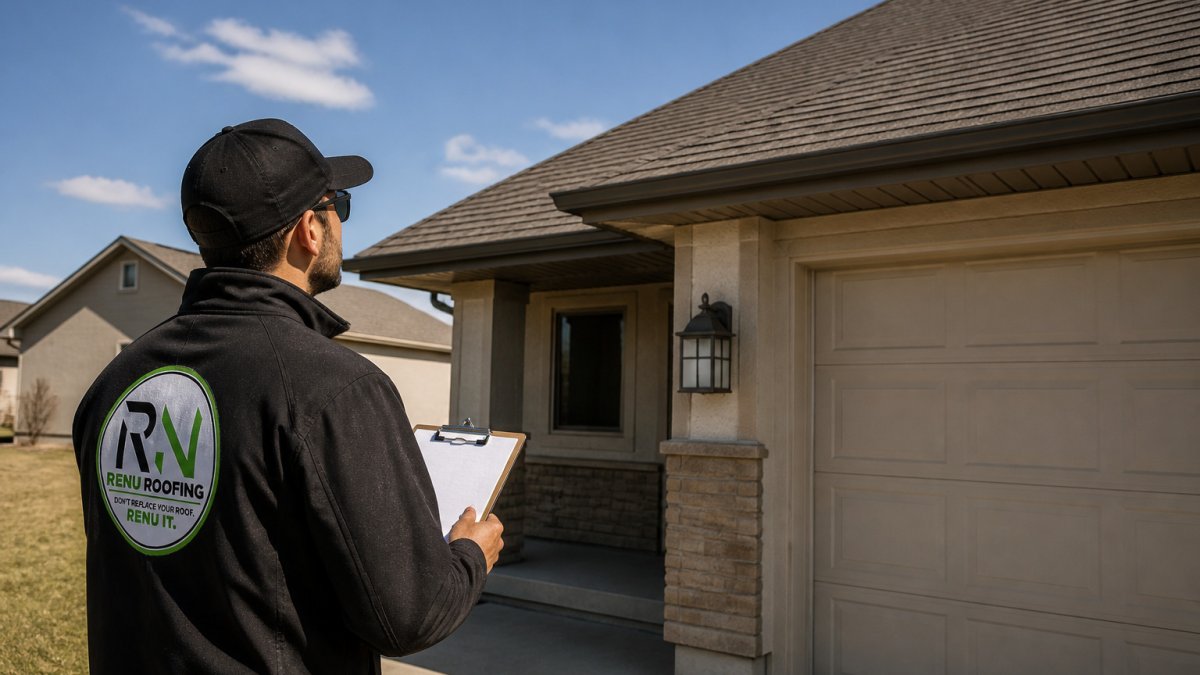
- Missing, cracked or curling shingles along the edges and ridge
- Dark streaks or bald patches, which can signal granule loss
- Sagging ridgelines or uneven roof lines
- Damaged gutters, loose downspouts or gutter grit after rain
- Moss, algae or debris that holds moisture against the roofing
- Stains or peeling paint on soffits, fascia and siding below the eaves
If you notice any of these, schedule a professional inspection. Ground checks show only the obvious, so they cannot replace an inspection that includes the flashing, the attic and the deck. To catch wear early, learn to identify early signs of shingle granule loss such as bald spots and gutter grit.
How Often to Inspect a Roof in Utah
Most roofing professionals recommend a professional roof inspection at least once a year, and again after any severe weather event such as hail, high wind, or heavy snow. But frequency should flex with the roof's age, material, and history. A common pattern is to inspect annually for roofs under 10 years old, twice a year for roofs 10-20 years old, and after every major storm for any roof showing existing wear.
Seasonal timing matters. In this region, spring and fall are the best times because moderate temperatures make it easier to spot freeze-thaw damage, loose flashing, and granule loss without snow cover. Late winter is a good time to check for ice dam damage, and late summer is ideal for catching hail bruises and UV-related cracking before winter sets in. Commercial flat roofs benefit from inspections in early spring (to check for ponding after snowmelt) and late fall (to clear drains before freeze).
Use these triggers to schedule an inspection beyond the annual cadence:
Schedule Your FREE Roof Inspection Today →
- After any hail event larger than 1 inch in diameter, even if you see no leaks.
- After wind gusts exceeding 50 mph, especially if shingles or flashing are lifted.
- When you notice granules accumulating in gutters or at downspout outlets.
- After a roof repair or replacement, to confirm the work and maintain warranty coverage.
- Before buying or selling a home, or before filing an insurance claim.
For older asphalt shingle roofs, ask during the inspection whether rejuvenation is a viable option. Rejuvenation is backed by a 6-year transferable warranty. Commercial flat roofs with ponding water should be checked for drainage each inspection, as standing water can accelerate deterioration.
Roof Inspection After a Storm: Hail, Wind and Leaks
Storms can damage a roof in ways that are not obvious from the ground. Hail can bruise shingles and crack their mat even when they look intact, and high wind can lift tabs and break seals. Schedule an inspection after any significant hail or wind event, even if you see no leaks yet.
If you plan to file an insurance claim, photograph visible damage and keep dated records before any repairs. Ask the inspector for a written report that describes what they found and where. Insurers and contractors both rely on this documentation.
Reading Your Roof Inspection Report
A good inspection report is organized by roof section and rates each finding by severity. Look for three categories: items that need immediate repair, items to monitor, and routine maintenance. Photos of each problem area should accompany the written notes.
Ask the inspector to explain anything you do not understand. If the report flags brittle or cracked shingles, learn how to repair brittle shingles before deciding on next steps. Pay particular attention to flashing, deck condition and any mention of water intrusion, because these findings affect the rest of the roof. If the report recommends repair rather than replacement, ask what the expected service life is afterward. That answer will help you compare options fairly.
Inspection Costs and How to Choose a Local Inspector
Inspection pricing varies widely based on roof size, pitch, material, accessibility, and whether the inspection includes the attic, a written report, and photos. Many contractors offer inspections at no charge or apply the fee toward repair work, but always confirm what is included before booking. When comparing providers, ask for a written quote that itemizes the scope: roof surface, flashing, attic, gutters, and report delivery. A low-cost inspection that skips the attic or flashing is not a bargain.
When choosing a local inspector, verify these credentials and practices:
- Licensing and insurance: ask for proof of licensing and insurance coverage.
- Sample report: request a redacted sample to see if findings are organized by roof section with severity ratings and photos.
- References: ask for recent local references, especially for roofs similar to yours.
- Service area: confirm they regularly work in your area and understand local weather patterns.
- Conflict of interest: be cautious if the inspector also sells repairs and recommends immediate replacement without photo evidence or a second opinion.
A good inspection report should include: a summary of findings by roof component (shingles, flashing, deck, gutters, ventilation), severity ratings (immediate repair, monitor, routine maintenance), photos of each issue, and a clear statement of what was not inspected (e.g., areas under snow or inaccessible attic sections). Ask the inspector to explain any terms you do not understand, and pay particular attention to flashing, deck condition, and any mention of water intrusion.
Schedule Your FREE Roof Inspection Today →
For homeowners with aging asphalt shingles, ask during the inspection whether rejuvenation is a viable alternative to replacement. Rejuvenation carries a 6-year transferable warranty. Commercial flat roofs may be candidates for Gaco roof coatings, which can carry up to a 20-year warranty. Our team can explain inspection findings and repair options in plain terms so you can decide with confidence.
Here is a quick summary of what a good inspection report should cover and what to check when comparing inspectors.
| Item | What to check | Why it matters |
|---|---|---|
| Licensing and insurance | Proof of both | Confirms the inspector is qualified and covered |
| Sample report | Findings by roof section with severity ratings and photos | Shows how organized the report will be |
| Service area | Regular work in your area | Local weather knowledge matters |
| Scope of quote | Shingles, flashing, attic, gutters, report delivery | A cheap inspection that skips the attic or flashing is not a bargain |
| Severity categories | Immediate repair, monitor, routine maintenance | Helps you prioritize repairs |
| Conflict of interest | Immediate replacement with no photos or second opinion | Be cautious of pressure to replace |
Booking Your Roof Inspection With ReNu Roofing
ReNu Roofing provides roof rejuvenation, repairs and maintenance for residential and commercial properties across Utah. For homeowners with aging asphalt shingles, rejuvenation is a cost-effective alternative to full replacement. Commercial flat roofs can receive Gaco roof coatings, which can carry up to a 20-year warranty. Our rejuvenation work carries a 6-year transferable warranty, and our coatings can carry up to a 20-year warranty.
To find out which option fits your roof, request a roof rejuvenation quote online or contact the ReNu Roofing team to schedule an inspection. You can also review the full range of services on the ReNu Roofing services page. Our team will explain the inspection findings and the repair options in plain terms so you can decide with confidence.
Frequently Asked Questions
How much does a roof inspection cost?
Roof inspection pricing depends on the size and pitch of the roof, the type of roofing material, and whether the inspector writes a detailed written report. Because ReNu Roofing has not published set prices for inspections in this article, the best way to get an accurate figure is to contact ReNu Roofing directly through its website for a current quote. When comparing quotes from any provider, ask whether the price includes a written report with photos and whether any follow-up visit is extra. A clear, itemized quote makes it easier to avoid surprise charges once the crew is on the roof.
How often should you have your roof inspected?
Most homeowners benefit from a roof inspection at least once a year, and again after any severe weather such as hail, high winds, or heavy snow. Older asphalt shingle roofs and flat commercial roofs with ponding water deserve closer attention, because small problems like granule loss, cracked flashing, or soft spots in the deck can grow quickly. Scheduling an inspection each spring, after the freeze-thaw season, is a practical habit that catches winter damage early.
Should I get a roof inspection after a storm?
Yes. Hail and high winds can crack shingles, lift edges, and dislodge flashing without causing an obvious leak right away. A post-storm inspection documents any damage with photos and a written report, which is useful if you need to file an insurance claim. Inspect the roof as soon as it is safe to do so, and avoid walking on the roof yourself if the surface is wet, icy, or damaged.
Can a roof inspection find leaks before they cause damage?
A thorough inspection can identify warning signs such as lifted or missing shingles, failed sealant around vents and chimneys, cracked flashing, and areas of ponding water on flat roofs. Finding these early often means a small repair rather than replacing damaged decking or insulation later. An inspection cannot guarantee that a leak will never happen, but it reduces the risk by flagging weak points before water gets in.