 Ultimate guide
Benefits of Roof Coatings for Commercial Buildings Explained
Quick Summary
Roof coatings protect commercial flat roofs by forming a seamless, waterproof layer that seals small cracks and seams, reflects sunlight, and resists UV damage. They can extend roof life, reduce leaks, lower cooling demand, and avoid the disruption of a full replacement.
- Coatings seal small cracks and open seams, keeping water from working into the membrane.
- Reflective coatings lower the surface temperature, reducing how hard cooling systems must work.
- Coatings are not suitable when the deck is soft, rotted, or insulation is saturated.
- Eligible commercial flat-roof coatings can carry a warranty of up to 20 years.
- A physical inspection should come first to decide between coating and replacement.
Table of Contents
- How Roof Coatings Protect Commercial Flat Roofs
- Core Benefits of Roof Coatings for Commercial Buildings
- Commercial Roof Coating Lifespan and Warranty Terms
- Silicone Roof Coating: Where It Fits
- Roof Coating vs. Roof Replacement: Which Makes Sense
- Limits of Roof Coatings and When to Skip Them
- Maintaining a Coated Commercial Roof
- Scheduling a Roof Assessment for Your Building
- Frequently Asked Questions
Benefits of Roof Coatings for Commercial Buildings Explained
Last Updated: November 16, 2026
Flat commercial roofs take a beating. Sun, ponding water, hail and foot traffic wear down the membrane year after year, and the bill for a full tear-off can climb fast. At ReNu Roofing, we work on the flat roofs of commercial buildings across Utah, and roof coatings are one of the most practical ways to extend what an existing roof can deliver. This guide explains what coatings do, where they fit, how warranties work, and when a coating is the wrong choice.
How Roof Coatings Protect Commercial Flat Roofs
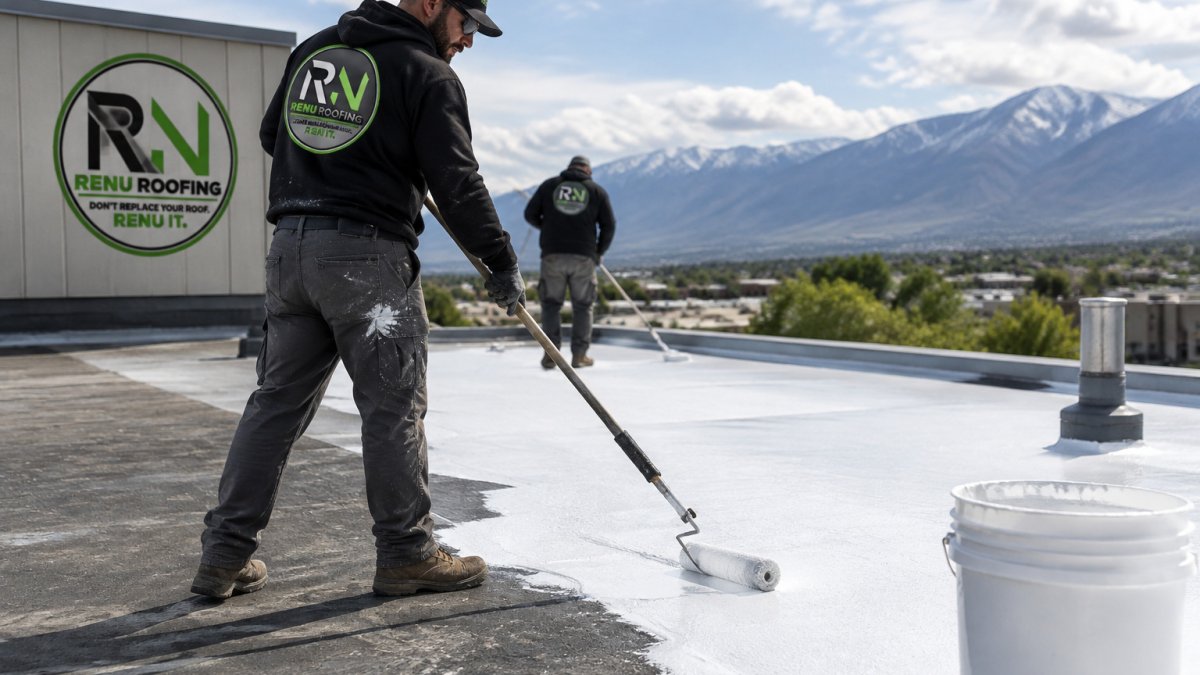
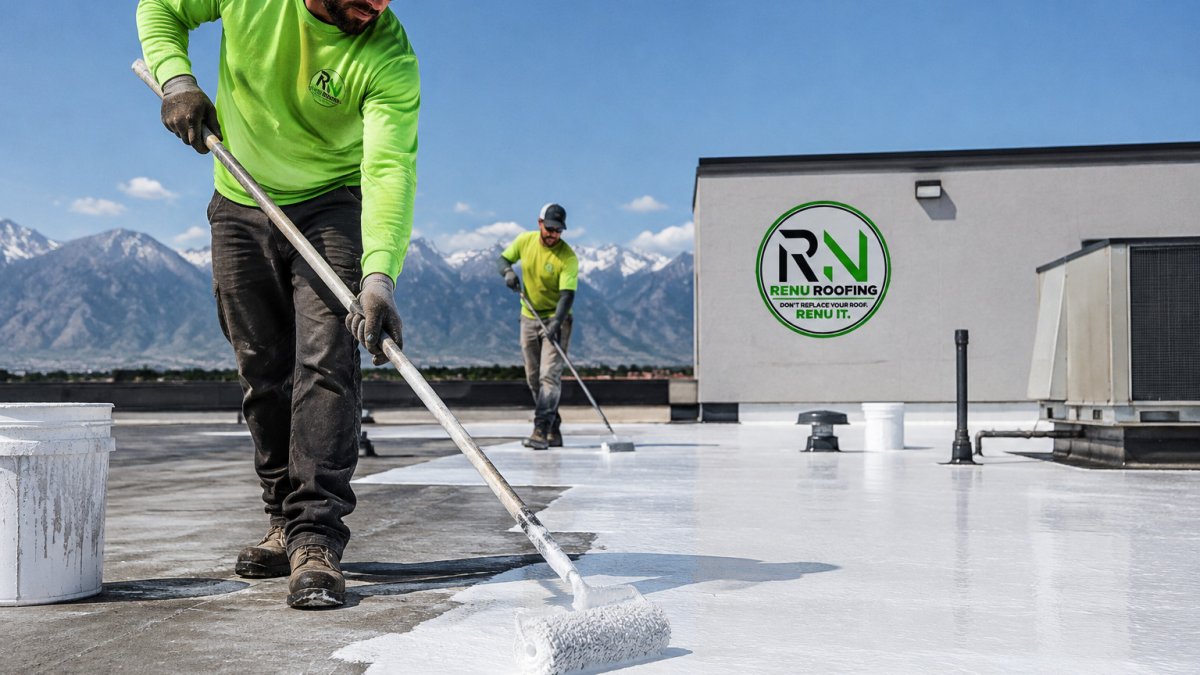
A roof coating is a liquid-applied layer that bonds to the existing roof surface and forms a seamless, waterproof barrier. Flat roofs are a good fit because water has nowhere to run off, so a continuous membrane keeps it from working into seams and penetrations. We apply Gaco coatings on flat commercial roofs only, since that is where the system performs as designed.
The protection comes from three things: the coating seals small cracks and open seams, it reflects a share of the sun's heat, and it resists UV breakdown of the surface underneath.
Core Benefits of Roof Coatings for Commercial Buildings
Coatings earn their place on commercial roofs for a few reasons. The main ones are listed below.
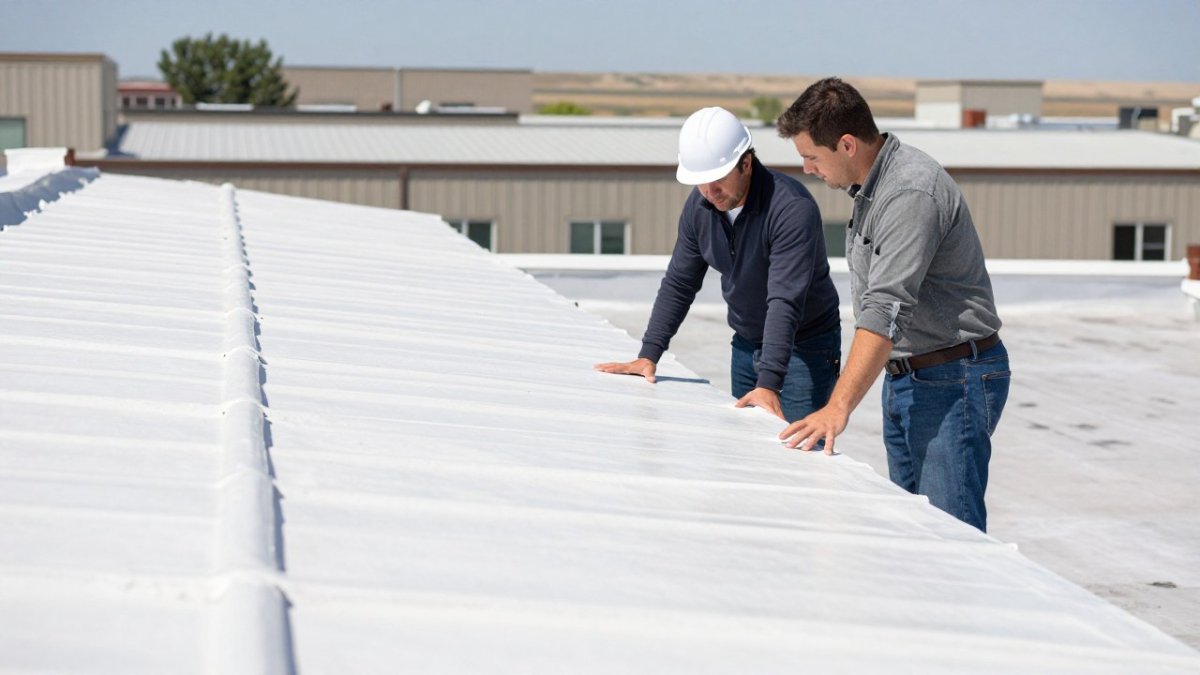
- Longer roof life. A coating renews the protective surface and can delay the need for replacement.
- Better leak protection. A seamless layer closes minor openings and keeps water from ponding into the membrane.
- Lower cooling demand. Reflective coatings reduce the heat the roof pushes into the building.
- Less disruption than replacement. Coating work typically avoids the tear-off, dumpster and extended closure that a full replacement requires.
- Support for existing infrastructure. The roof you already have stays in place, so the investment in the structure is preserved.
Extending Roof Lifespan and Delaying Replacement
Most commercial roofs fail gradually, not all at once. Surface weathering opens up small cracks, and those cracks let water reach the layers underneath. A coating restores a continuous surface that sheds water and resists UV, which is what slows that decline.
The practical question for a building owner is whether the existing roof is still structurally sound. If the deck and membrane are in reasonable condition, coating can extend service life at a lower cost than replacement. If the substrate is soft, rotted or heavily delaminated, a coating will not fix it, and replacement is the appropriate path. A physical inspection is the right first step before deciding either way.
Reducing Heat Absorption and Cooling Costs
Dark roof surfaces absorb a large share of incoming sunlight and conduct that heat into the top floor. A reflective coating lowers the surface temperature, which reduces how hard the building's cooling system has to work during summer.
Commercial Roof Coating Lifespan and Warranty Terms
Coating lifespan depends on the substrate condition at application, the coating thickness applied, the traffic and weather the roof sees, and how well it is maintained afterward. A coating on a sound, properly prepared roof will last far longer than one applied over neglected surfaces.
Warranties matter here, and they are easy to misread. Our coatings on eligible commercial flat roofs can carry a warranty of up to 20 years. Warranty terms depend on the specific system, the scope of work and the conditions the roof is kept under, so read the written terms before you assume coverage. Ask whether the warranty is transferable if the building is sold, what fees apply to a transfer, and which conditions would void coverage, such as unapproved repairs or foot traffic over unprotected areas.
Residential asphalt roofs are handled differently. For those, we use rejuvenation rather than coatings, and rejuvenation carries its own 6-year transferable warranty. Keeping the two services separate is what allows each warranty to be documented correctly, so the two should never be treated as interchangeable.
Silicone Roof Coating: Where It Fits
Silicone is one of several coating chemistries used on flat commercial roofs, and understanding where it fits means comparing it against the others rather than judging it in isolation. The main families are acrylic, silicone, polyurethane, and elastomeric blends, and each behaves differently on the same roof.
Silicone. Silicone coatings are known for strong UV resistance and for shedding ponding water, which makes them attractive on low-slope roofs that hold water for long periods. They stay flexible across temperature swings and tolerate standing water better than most alternatives. The trade-offs are higher material cost, weaker adhesion on some substrates, and a surface that can be slippery when wet. Silicone also tends to accumulate dirt, which gradually dulls reflectivity unless the roof is cleaned.
Acrylic. Acrylic coatings are lower in cost and easy to apply, and they work well on roofs that drain properly and see moderate weather. Their weakness is water resistance under prolonged ponding and lower tolerance for freeze-thaw cycling, so they are a poor fit where water stands or winters are harsh.
Polyurethane. Polyurethane coatings offer good abrasion resistance and toughness, which suits roofs with foot traffic or mechanical exposure. They are less reflective than silicone or acrylic unless a reflective topcoat is added, and they can be less forgiving during application because moisture during curing affects the finish.
Elastomeric blends. Elastomeric coatings stretch and recover, which helps them bridge small cracks that open and close with temperature. They are often used as part of a system rather than as a single product, and performance depends heavily on the base coat and reinforcement used with them.
Matching the coating to the substrate matters as much as matching it to the climate. A coating that bonds well to one membrane may not bond to another, and adhesion should be tested on a sample area before the full roof is coated. On the flat commercial roofs we coat, we use Gaco systems, and the specific product is selected after the existing membrane and roof condition are inspected. Silicone is not automatically the right choice; on roofs with heavy foot traffic or aggressive chemical exposure, a tougher system may perform better.
Roof Coating vs. Roof Replacement: Which Makes Sense
Coating makes sense when the substrate is sound and the leaks are caused by surface failure. Replacement makes sense when the deck is compromised or insulation is saturated. A proper inspection is the way to tell which situation applies.
Limits of Roof Coatings and When to Skip Them
Most guides list the benefits of coatings and stop there. The more useful question is when a coating is the wrong call, because a coating applied to an unsuitable roof costs more later than it saves now. The limits fall into a few categories, and each has a mechanism behind it.
Trapped moisture. If water has already entered the roof assembly, a coating seals the surface and can trap that moisture inside. A moisture survey before coating is the way to rule this out.
Structural damage. Soft, rotted, or delaminated decking and saturated insulation are replacement conditions, not coating conditions. A coating restores a surface; it does not restore structure. If the substrate flexes underfoot or the membrane is extensively delaminated, the honest answer is replacement.
Poor drainage and ponding. A coating can tolerate occasional ponding, but it cannot correct a roof that was designed or built to hold water. Clogged drains, insufficient slope, and scuppers that back up are drainage problems. Coating over them hides the symptom while the water keeps working at seams and penetrations.
Incompatible existing membranes. Coatings bond to some substrates and not others. Applying a product to a membrane it does not adhere to leads to delamination, peeling, and failed warranty claims. Adhesion testing on a sample area, and confirmation from the coating manufacturer that the system is approved for that substrate, should come before any full application.
Steep slopes and residential asphalt shingles. Coatings are designed for low-slope and flat roofs. Steeply pitched roofs shed water differently and are not a coating application. Residential asphalt shingle roofs are handled with rejuvenation rather than coatings, which keeps the two service warranties documented separately.
Unrealistic expectations. A coating extends service life; it does not make an old roof new. Owners who expect a coating to correct a design flaw, stop a leak that originates above the roof, or match the service life of a new membrane will be disappointed.
A physical inspection is the reliable way to tell which situation applies to a given building.
Maintaining a Coated Commercial Roof
A coated roof still needs routine attention. Keep drains and scuppers clear so water does not pond. Schedule periodic inspections, particularly after severe storms or hail. Limit foot traffic to designated walkways, and do not let rooftop equipment be dragged across the surface. Small punctures and failed flashings should be repaired promptly, using materials compatible with the coating system so the warranty stays intact.
Document every inspection and any repair. That record is useful for maintenance planning and is often required to keep warranty coverage in good standing.
Routine attention keeps a coated roof performing and its warranty in good standing. The main upkeep tasks are summarised below.
| Task | Frequency | Why it matters |
|---|---|---|
| Clear drains and scuppers | Routinely | Prevents water from ponding |
| Inspect the roof | Periodically, and after severe storms or hail | Catches damage early |
| Limit foot traffic | Ongoing | Keeps traffic to designated walkways |
| Repair punctures and flashings | Promptly | Stops small failures from spreading |
| Document inspections and repairs | Every inspection and repair | Supports warranty coverage |
Scheduling a Roof Assessment for Your Building
The most useful next step is a physical inspection. We will look at the roof's condition and existing leak history, then tell you whether coating fits your roof or whether replacement is the better path. You can book an estimate for your commercial roof coating and get a clear recommendation on your building's options.
If you want to understand warranty transferability before you decide, review how roof coating warranties transfer and what conditions void coverage first. For flat roofs where water damage is the main concern, our guide to preventing water damage on flat roofs covers drainage and coating protection in more depth.
Call ReNu Roofing or request an inspection through our website, and we will help you work out the right path for your building.
Frequently Asked Questions
What are the benefits of roof coatings for commercial buildings?
Roof coatings on flat commercial roofs seal the surface against water intrusion, help prevent ponding damage, resist UV exposure and weather, and can extend the service life of an existing roof. Results depend on the roof's condition, surface preparation and coating thickness, so a site inspection is the first step.
How long does a commercial roof coating last?
Lifespan depends on the coating type, the thickness applied, the condition of the roof substrate and local weather. ReNu Roofing uses Gaco coatings on flat roofs, and coatings can carry a warranty of up to 20 years, with exact terms set by the written warranty for each project. Ask for the warranty terms in writing before work begins so you know exactly what is covered.
Can you apply a roof coating over an existing commercial roof?
In many cases, yes. A coating can be applied over a sound existing flat roof once the surface is cleaned, repaired and prepared for adhesion. The roof must be structurally sound and free of major blisters, open seams or saturated insulation, since coatings cannot fix underlying structural failure. A roofing professional should inspect the roof first to confirm it is a good candidate for coating rather than replacement.
Is silicone roof coating a good choice for commercial buildings?
Silicone roof coatings are one option for flat commercial roofs, valued for their UV resistance, reflectivity and ability to handle ponding water, which often makes them a strong fit where water sits on the surface. They are not appropriate for every roof, and compatibility with the existing surface must be confirmed before application. ReNu Roofing's flat-roof coating work uses Gaco systems, so ask about the right system for your specific roof during an assessment.