 How-to
How to Decide If Soy-Based Roof Treatment Fits Your Roof
Quick Summary
Soy-based roof treatments are a rejuvenation service applied to aging asphalt shingles to restore some lost flexibility, helping them resist cracking and keep water out. They slow damage rather than making an old roof new, so they suit intact but brittle shingles, while structural damage or widespread missing shingles call for replacement.
- Soy-based roof treatments restore flexibility to aging asphalt shingles but do not rebuild granules or repair structural damage.
- Rejuvenation is generally a lower-cost option than full replacement, with pricing depending on roof size and condition.
- Treatment is not suitable for cracked, curling, or patchy shingles, or roofs with damaged decking or active leaks.
- Repairs and a site inspection should come before treatment, and the surface must be dry during application.
- A rejuvenation warranty of 6 years is transferable if you sell your home.
Table of Contents
- How Soy-Based Roof Treatments Work on Aging Asphalt Shingles
- Benefits for Aging Shingles: Flexibility, Granule Loss and Water Protection
- Roof Rejuvenation vs. Roof Replacement: Which Makes Sense for Your Roof
- When Soy-Based Treatment Will Not Work
- Step-by-Step Application and Safety Precautions
- What Reviews and Independent Research Show About Soybean Oil Roof Treatments
- Booking Your Roof Assessment With ReNu Roofing
- Frequently Asked Questions
How to Decide If Soy-Based Roof Treatment Fits Your Roof
Last Updated: November 8, 2026
How Soy-Based Roof Treatments Work on Aging Asphalt Shingles
Soy-based roof treatments are a type of roof rejuvenation. They are applied to aging asphalt shingles to help restore some of the flexibility those shingles lose over time. Rejuvenation of this kind is a practical alternative to full replacement for many residential asphalt roofs. This guide is meant to help Utah homeowners decide whether it fits their roof.
Asphalt shingles get brittle as they age. Sun, heat, and weather slowly dry out the oils that keep the shingle soft and bendable. Once those oils are gone, small cracks and granule loss become more likely.
The goal of rejuvenation is to slow down the damage, not to make an old roof new.
- Soy oil penetrates the top layer of the shingle
- It helps replace some of the oils the sun has dried out
- The shingle becomes more flexible and less likely to crack
- It does not rebuild granules or repair structural damage
Benefits for Aging Shingles: Flexibility, Granule Loss and Water Protection
For most homeowners, the main benefit is a more flexible shingle. A softer shingle is less likely to crack when wind or temperature changes stress it. That protection helps keep water out.
Granule loss is another common problem. Granules protect the shingle from UV rays. When they wear away, the shingle ages faster.
Many homeowners find peace of mind in avoiding a full tear-off right away while protecting the roof they already have.
- Restores flexibility to aging shingles
- Helps keep water from getting under cracked shingles
- Can extend roof life by 5 to 15 years when the roof is a good candidate
The article's main points on what soy-based rejuvenation offers and where its limits lie are summarised below.
| Topic | What the article says | Note |
|---|---|---|
| Flexibility | Restores flexibility to aging shingles | Main benefit for most homeowners |
| Water protection | Helps keep water from getting under cracked shingles | Protects against leaks |
| Granule loss | Granules protect against UV; loss speeds aging | Treatment does not rebuild granules |
| Roof life | Can extend roof life by 5 to 15 years | Only when the roof is a good candidate |
Roof Rejuvenation vs. Roof Replacement: Which Makes Sense for Your Roof
Replacement is the right choice when a roof has major structural damage, widespread leaks, or shingles that are already curling or missing in large areas. Rejuvenation makes more sense when the shingles are still mostly intact but have lost their flexibility.
Cost is a big factor. Rejuvenation is generally a lower-cost option than a full replacement, and pricing depends on the size and condition of your roof. Rejuvenation is a practical option for homeowners on a fixed income or anyone who wants to stretch their budget.
Our rejuvenation service carries a 6-year transferable warranty, so the protection can carry over if you sell your home. Pricing depends on the size and condition of your roof, so contact ReNu Roofing for a quote tailored to your home.
- Choose rejuvenation if the shingles are intact but brittle
- Choose replacement if there is structural damage or many missing shingles
- Rejuvenation can help delay a replacement for years
- Get a site inspection before deciding
When Soy-Based Treatment Will Not Work
Rejuvenation is not a fix for every roof. If the shingles are cracked through, curling badly, or missing in patches, the treatment cannot rebuild them. Water damage to the decking underneath also needs repair first.
Roofs that are near the end of their life may not respond well. A treatment cannot add decades of life to a shingle that is already worn through. In those cases, replacement is the safer choice.
A good contractor should be willing to recommend replacement when that is what a home needs.
- Shingles that are cracked, curling, or missing in patches
- Roofs with damaged decking or active structural leaks
- Shingles near the end of their service life
- Roofs where the problem is ponding or poor drainage, not shingle condition
Step-by-Step Application and Safety Precautions
A soy-based treatment only performs as well as the prep and conditions allow. The steps below reflect how a professional rejuvenation job is typically sequenced on a residential asphalt shingle roof. The exact product label and the manufacturer's technical data sheet always govern; where the label and this guide differ, follow the label.
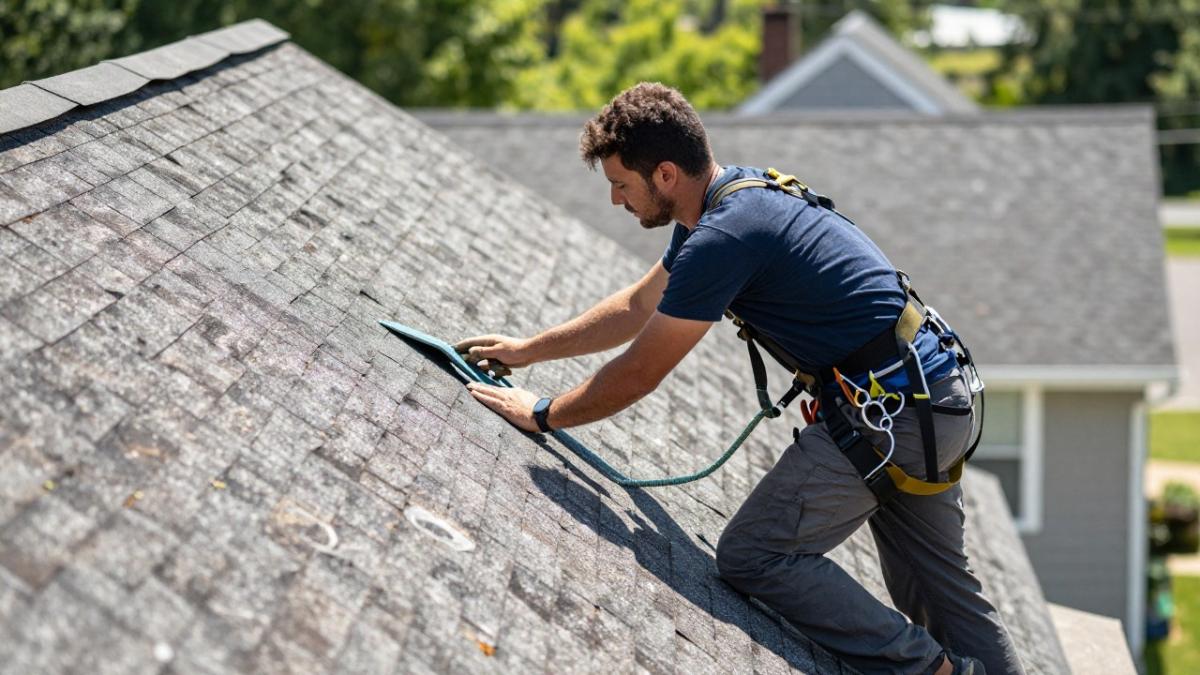
1. Inspection and suitability check. Before any product is opened, the roof is inspected for active leaks, damaged flashing, loose or missing shingles, soft decking, and severe granule loss. Any of those conditions means repairs come first, or the roof is not a candidate for rejuvenation at all. This is also the point to confirm the shingles are asphalt and still flexible enough to respond.
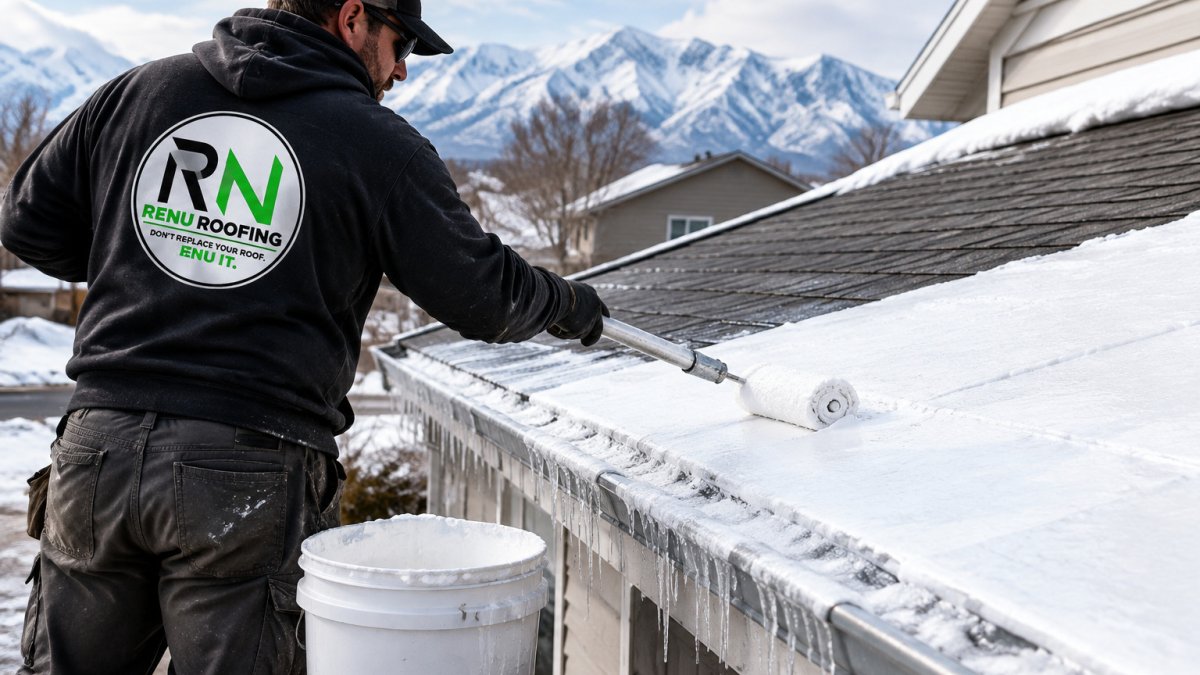
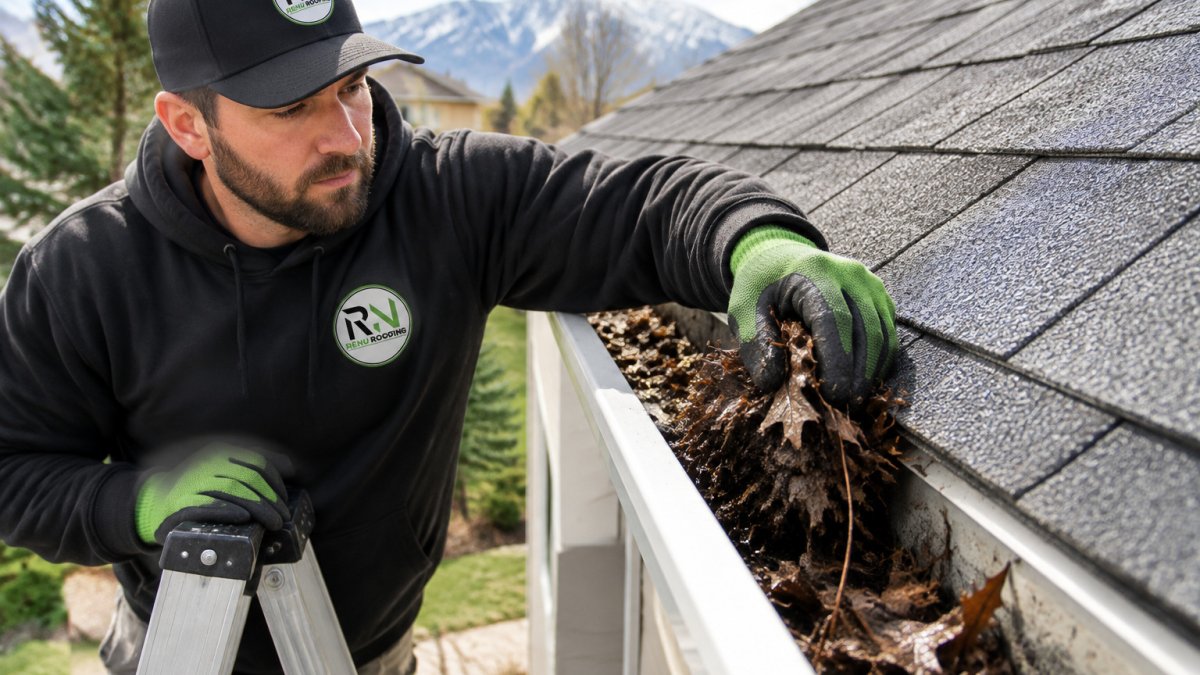
2. Surface preparation. The roof is cleared of debris, leaves, and moss. Moss and algae are removed rather than sprayed over, because a treatment soaked into a moss mat will not reach the shingle. Gutters and downspouts are cleared so runoff during and after application drains freely. The surface must be dry at the time of application; standing water or damp shingles prevent even penetration.
3. Weather window. Application is scheduled for a dry day with mild temperatures and no rain in the forecast for the product's specified cure window. Wind matters too, since overspray can drift onto siding, windows, landscaping, and vehicles. Most practitioners avoid application when surface temperatures are at the high or low ends of the label range, because penetration and cure both suffer.
4. Application. The treatment is applied evenly, usually by spray, working in sections so the product does not pool or run. Over-application wastes product and can leave tacky areas; under-application leaves dry patches that will not benefit. Coverage rates on the label are a starting point, not a guarantee, because porous or heavily weathered shingles absorb more.
5. Drying and cure. The roof is left undisturbed for the label's specified dry time before foot traffic or inspection. Cure time is longer than dry time, and the roof should be treated as off-limits to homeowners, children, and pets until the contractor confirms it is safe.
6. Cleanup. Equipment is cleaned per the label, and any overspray on siding, glass, or landscaping is addressed promptly. Runoff should be directed away from storm drains and garden beds where possible.
Safety precautions. Roof work is fall-risk work. Crews use harnesses, anchor points, and stable ladders, and the ground area below is kept clear. Personal protective equipment typically includes eye protection, gloves, and respiratory protection appropriate to the product's safety data sheet, especially during spray application.
- Inspect and repair before treating; suitability comes first
- Remove moss and debris; the surface must be dry
- Apply in a dry, mild weather window with no rain in the cure forecast
- Apply evenly at label coverage; avoid pooling and dry patches
- Respect dry and cure times before foot traffic
- Use fall protection and product-appropriate PPE; keep people and pets clear
- Clean equipment and manage overspray and runoff
What Reviews and Independent Research Show About Soybean Oil Roof Treatments
Most of what homeowners read about soybean oil roof treatments comes from product makers, contractors, and customer reviews. That does not make the claims false, but it does mean the evidence is weighted toward the people selling the service. A useful way to read it is to separate three things: what the product is designed to do, what testing has shown, and what real roofs have actually delivered.
What the product is designed to do. Soy-based rejuvenation is formulated to penetrate the upper layer of an asphalt shingle and replenish some of the oils that weathering has driven out. The intended outcome is restored flexibility and slower progression of brittleness and granule loss. It is not designed to replace missing granules, seal active leaks, or restore structural strength. Any claim beyond that scope deserves scrutiny.
Laboratory versus field results. Manufacturer testing tends to measure properties like shingle flexibility and oil retention under controlled conditions. Those results are useful for showing the mechanism works, but they do not predict how a specific roof will respond after years of sun, freeze-thaw cycles, and storm exposure. Field results vary with roof age, climate, shingle type, attic ventilation, and how much granule loss has already occurred. A treatment that performs well on a moderately aged roof in a mild climate may deliver much less on a heavily weathered roof in a harsh one.
What reviews can and cannot tell you. Customer reviews are useful for judging communication, scheduling, and cleanup, and for spotting patterns in satisfaction. They are weak evidence for long-term performance, because most reviews are written soon after the work is done, before the roof has been through several seasons. A cluster of five-star reviews posted within weeks of application says little about whether the roof is still performing years later.
How to evaluate a contractor's claims. Ask for the product's technical data sheet and any testing summaries the manufacturer publishes. Ask what results the contractor has seen on roofs similar to yours in age, pitch, and condition, and ask for references from jobs at least a few seasons old. Compare warranty terms line by line, what is covered, for how long, whether it transfers, and what voids it. Be cautious of guarantees that promise a specific number of added years without a documented basis, and of any provider who will not discuss limitations.
- Ask for the technical data sheet and testing summaries
- Distinguish lab results from field performance on real roofs
- Weight reviews for service quality, not long-term proof
- Request references from jobs several seasons old
- Read warranty terms line by line, including transfer and exclusions
- Treat specific added-year promises without documentation with caution
Booking Your Roof Assessment With ReNu Roofing
If you are unsure whether rejuvenation fits your roof, the next step is a professional inspection. The ReNu Roofing team can look at your roof and explain which option makes sense. You can request a roof rejuvenation quote online to learn whether your asphalt shingle roof qualifies.
We offer a 6-year transferable warranty on rejuvenation services and a warranty of up to 20 years on our coating work. Contact ReNu Roofing today to schedule your assessment.
Frequently Asked Questions
Does roof rejuvenation actually work on aging shingles?
Rejuvenation works best on shingles that still have enough material left to absorb a treatment. Rejuvenation is intended to restore some flexibility to shingles that have started to lose it. Results vary with the condition of each roof, so a professional inspection before treatment is the best way to judge whether it fits. Roofs with severe cracking, missing granules across large areas, or active leaks often need repair or replacement instead.
What is the difference between roof rejuvenation and a roof coating?
Rejuvenation treats the existing asphalt shingles and is intended for residential asphalt roofs. A coating, such as the Gaco coatings ReNu Roofing applies, forms a new protective membrane and is used on flat roofs, mostly on commercial buildings. The two services carry different warranties, which is why they are kept separate. Ask your contractor which service applies to your roof type before you compare quotes.
How long does roof rejuvenation last?
The duration depends on the shingles, the climate, and how well the roof was prepared before treatment. ReNu Roofing offers a 6-year transferable warranty on roof rejuvenation services, which lets a later owner keep the coverage if the property sells. Your roof's condition at the time of treatment will largely determine how long the results hold, so a regular maintenance schedule helps extend them.
Can roof rejuvenation replace a roof that needs repairs?
Rejuvenation does not replace structural repairs. Damaged decking, flashing problems, and areas with open leaks should be repaired first, because a treatment cannot seal a breach. Once those issues are fixed, rejuvenation may help the remaining shingles perform better. For current pricing on repairs combined with rejuvenation, contact ReNu Roofing directly for a quote.