 How-to
How to Fix Missing Roof Shingles Before They Cause Leaks
Quick Summary
Missing roof shingles should be replaced as soon as you notice them, because the exposed underlayment lets rain, snow, and sun reach the roof deck. Match the new shingle to the existing color, nail it in the nail zone, and seal the tabs. A single missing shingle is rarely an emergency, but a leak or several gaps means you should call a roofer.
- High winds, aging, and poor installation are the usual causes of missing shingles.
- Exposed underlayment lets water reach the roof deck, leading to leaks, rot, and mold.
- Watch for bare spots, curled or cracked shingles, ceiling stains, and granules in gutters.
- Match the replacement shingle to the surrounding color, using a donor shingle if the roof is older.
- Place roofing nails in the nail zone, four per shingle, six in high-wind areas.
Table of Contents
- Why Shingles Go Missing and Why It Matters
- Is a Missing Shingle an Emergency?
- How to Inspect Your Roof Safely Before Going Up
- Temporary Fix for Missing Shingles Until Repair
- How to Fix Missing Roof Shingles Step by Step
- How Long Can a Roof Go With Missing Shingles?
- Will Insurance Cover Missing Shingles?
- Booking a Roof Repair Assessment With ReNu Roofing
- Frequently Asked Questions
Why Shingles Go Missing and Why It Matters
Missing roof shingles usually come from wind, age, or poor installation. High winds lift the edges of a shingle until the sealant strip lets go, and then the wind takes the rest. Shingles that have aged also become brittle and crack, which makes them easy to lose.
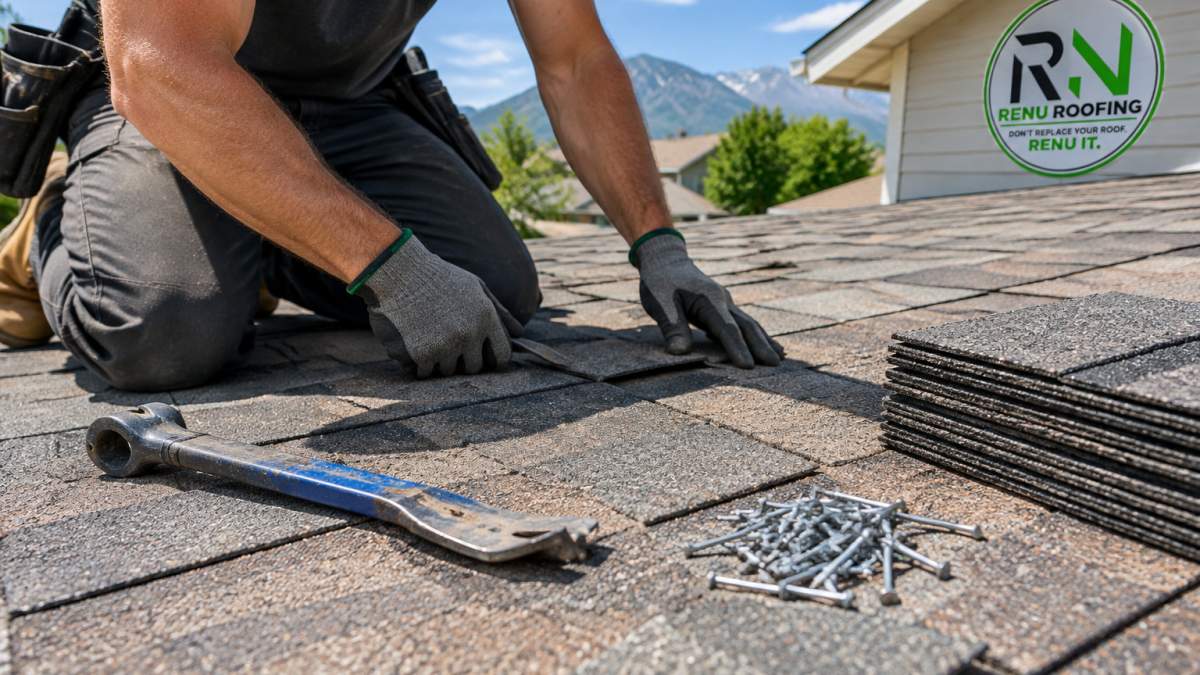
The bigger concern is what the gap leaves behind. Once a shingle is gone, the underlayment below is exposed to rain, snow, and sun. Water can then reach the roof deck, and over time that leads to leaks, rot, and mold.
Watch for these early warning signs:
- Bare spots where granules have worn away
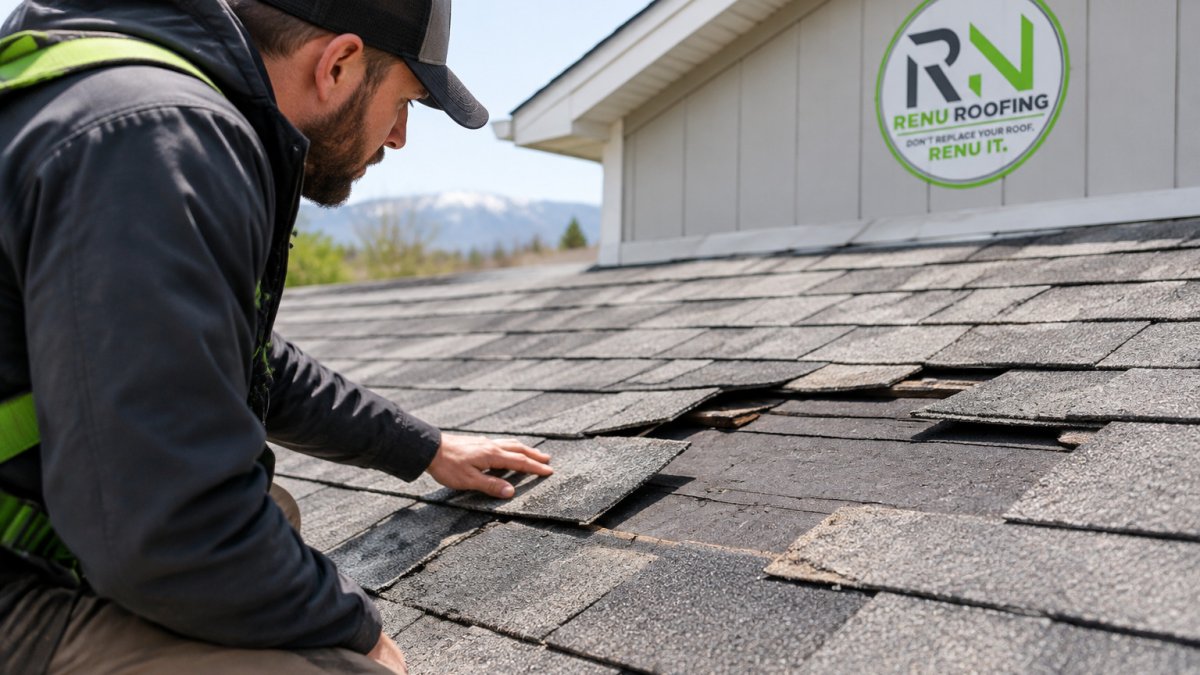
- Shingles that look curled, cupped, or cracked
- Dark streaks or stains on ceilings and walls
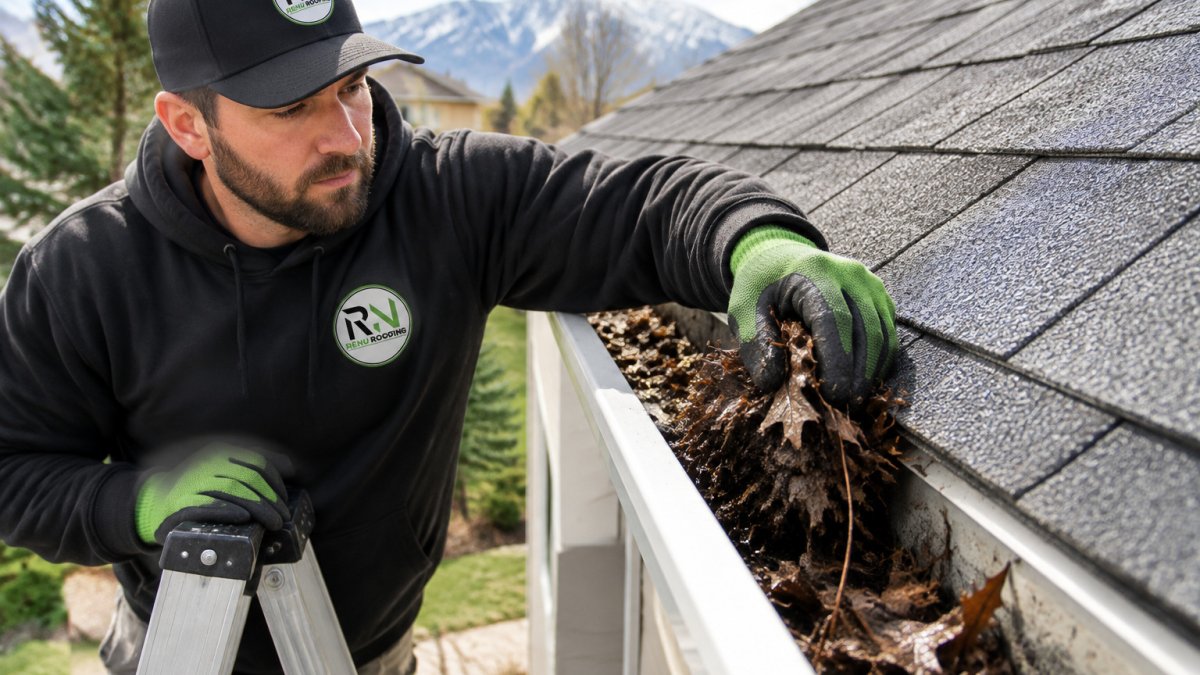
- Granules collecting in your gutters
Catching a gap early keeps a small repair from turning into a costly one.
Is a Missing Shingle an Emergency?
A single missing shingle is rarely an emergency on its own, but it should not wait. Leave it too long, and the exposed area can let in water during the next storm.
If the missing shingles are large in number, or if you see water coming through the ceiling, treat it as urgent. Call a roofer as soon as you can. For more background on how roof damage develops, see our ReNu Roofing roofing articles.
How to Inspect Your Roof Safely Before Going Up
Roof work carries real fall risk, so many homeowners should start from the ground. Look for missing shingles, curling edges, and bare patches. Look at the roof from several angles, and note anything that looks off.
From inside the house, check your attic for daylight coming through, damp insulation, or dark stains on the roof boards. These signs often point to a gap you cannot see from the yard.
If you do go up, use a sturdy ladder, wear shoes with good grip, and never work on a wet or steep roof. Fall protection and a harness are strongly recommended. When in doubt, hire a licensed roofer.
Temporary Fix for Missing Shingles Until Repair
A temporary fix can slow water intrusion until a full repair happens. Keep it simple and safe:
Schedule Your FREE Roof Inspection Today →
- Slide a replacement shingle or a small tarp under the surrounding shingles
- Seal the edges with roofing cement
- Cover the area with a tarp weighted down by sandbags or boards
Do not rely on a temporary fix for long. It is a bridge, not a permanent solution, and it should be replaced with a proper repair as soon as possible.
How to Fix Missing Roof Shingles Step by Step
A proper repair is manageable for a confident DIYer on a low-slope roof, but the details matter more than the broad strokes. Most failed DIY shingle repairs trace back to three things: a mismatched replacement shingle, nails driven in the wrong spot, or a sealant strip that never reactivates.
- Gather your tools and materials. You will need replacement shingles, a flat pry bar, a utility knife with a hook blade, roofing nails (typically 1-1/4 inch galvanized for asphalt shingles), a roofing hammer or a nail set, roofing cement, and a tube of asphalt roof sealant. A small piece of plywood to kneel on spreads your weight and protects the shingles you are not replacing.
- Match the replacement shingle. This is the step most guides skip and the one that decides whether the repair looks like a repair. Asphalt shingles fade and granulate with age, so a brand-new shingle from the same product line will often look noticeably darker than the surrounding field. Check the underside of an undamaged shingle or the original packaging for the manufacturer and color code. If the roof is more than about 10 years old, the exact color may be discontinued. In that case, pull a shingle from an inconspicuous area, behind a chimney, under a ridge vent, or on a rear slope, and use it as the patch, then fill the donor spot with the closest new match. A slightly mismatched shingle in a hidden spot is far less visible than a bright new one on the front slope.
- Break the seal and remove the damaged shingle. Slide the pry bar under the shingle in the course above the damaged one and lift gently to pop the sealant strip. Work from the tab end toward the nail line. Pull the nails with the pry bar or a claw hammer. Keep the old shingle, you may need it to match color or to confirm the nail pattern.
- Slide in the new shingle. Set the replacement so its bottom edge lines up with the course below and its tabs align with the neighboring shingles. On a three-tab shingle, the tab notches should line up vertically with the course below. On architectural shingles, match the shadow line.
- Nail it down correctly. Fasten with roofing nails placed in the nail zone, the manufacturer prints a nail line on most shingles, roughly 1 to 1-1/2 inches above the bottom edge of the shingle and about 1 inch in from each side. Four nails per shingle is standard; six is common in high-wind areas. Nail heads should sit flush, not countersunk, and should be covered by the course above. Watch out: nails driven too high or too low are the leading cause of blow-offs on repaired shingles, and they can also void the shingle manufacturer's wind warranty.
- Seal the tabs. Apply a dab of roofing cement under each tab and press the tab down. Do not over-apply, excess cement traps water and looks bad. On a warm day the sun will reactivate the factory sealant strip on its own; on a cold day you may need to hand-seal.
Repairs get harder when the surrounding shingles are brittle. If they crack when you lift them, stop and call a professional. Forcing them can cause more damage, and a cracked neighbor shingle turns a one-shingle repair into a multi-course repair.
A note on warranties. Many asphalt shingle manufacturers require professional installation or specific nailing and sealing practices for their material warranties to remain valid. A DIY patch that is later blamed for a leak can complicate a future warranty claim on the whole roof.
When to stop and call a pro. Stop if the deck feels soft underfoot, if you find more than a handful of missing shingles across multiple slopes, if the underlayment is torn or missing, or if the roof pitch is steep enough that you are not comfortable.
The steps below cover the key checkpoints and the failure points that most often undo a DIY shingle repair.
| Step | What to do | Time or frequency |
|---|---|---|
| Gather tools and materials | Get replacement shingles, pry bar, hook blade, roofing nails | Before going up |
| Match the replacement shingle | Check underside for manufacturer and color code | Before purchase |
| Remove the damaged shingle | Pop the sealant strip and pull nails | During repair |
| Slide in new shingle | Align bottom edge and tabs with neighbors | During repair |
| Nail it down correctly | Place nails in the nail zone, four per shingle | Four nails standard, six in high wind |
| Seal the tabs | Dab roofing cement under each tab, do not over-apply | Warm day reactivates sealant on its own |
How Long Can a Roof Go With Missing Shingles?
There is no safe fixed timeline. A roof with a few missing shingles may hold up through mild weather for a short time, but a single heavy storm can cause water damage.
The safer approach is to repair missing shingles as soon as you notice them. Waiting even a few weeks increases the chance of leaks, and leaks often cost much more to fix than the shingles themselves.
Will Insurance Cover Missing Shingles?
Most homeowners insurance policies cover shingles lost to a covered peril, typically wind, hail, or a fallen limb, but whether a claim makes sense depends on more than whether the damage is covered. The two questions that decide it are your deductible and the cause of the loss.
The deductible is usually the deciding factor. A typical homeowners policy carries a flat deductible, and many policies in hail- or wind-prone states carry a separate percentage deductible for wind and hail claims.
Cause of loss matters as much as the damage. Wind and hail losses are typically covered. Damage attributed to age, wear and tear, poor installation, or deferred maintenance is usually excluded.
Schedule Your FREE Roof Inspection Today →
What to do before you file:
- Photograph the damage from the ground and, if safe, from the roof, with something for scale.
- Note the date of the storm and keep any weather reports.
- Get a written repair estimate from a licensed roofer before calling the insurer, so you know whether the repair is above or below your deductible.
- Read your policy's declarations page to confirm your deductible, flat or percentage, and whether a separate wind/hail deductible applies.
- Do not sign anything from a door-knocking contractor before your insurer has inspected.
What not to do: Do not make permanent repairs before the adjuster sees the damage, beyond a temporary tarp to prevent further water intrusion. Document the temporary fix and keep receipts.
For a clear answer on your specific policy, ask your insurance agent directly, coverage language varies more than most homeowners expect, and the deductible structure is the number that decides whether a claim is worth filing.
Booking a Roof Repair Assessment With ReNu Roofing
If you are not sure whether a repair or a larger fix makes sense, a professional assessment can help. ReNu Roofing offers roof rejuvenation, repairs, and protective coatings for residential and commercial clients across Utah, and can help determine whether your existing shingles can be restored instead of replaced.
For residential asphalt roofs, we use rejuvenation, which comes with a 6-year transferable warranty. For flat commercial roofs, we apply Gaco coatings, which can carry up to a 20-year warranty. You can learn more about our affordable roof repair services in Utah or request an assessment through our contact page.
Last Updated: November 4, 2026
Frequently Asked Questions
How long can a roof go with missing shingles?
A roof with a few missing shingles can often go a season or two before water damage becomes serious, but the exposed underlayment and roof deck are vulnerable right away. Water that gets under the shingles can soak the underlayment, cause wood rot in the decking, and leak into the attic. The safest approach is to cover the gap temporarily and schedule a repair as soon as possible rather than waiting to see whether the leak gets worse.
Will insurance cover missing shingles?
Homeowners insurance may cover missing shingles when they were damaged by a covered event such as windstorm or hail. Coverage depends on your policy, your deductible, and whether the damage is sudden or the result of age and neglect, which most policies exclude. Take dated photos, keep records of any temporary repairs, and contact your insurer promptly. A licensed roofer or adjuster can help document the damage.
Can I replace missing roof shingles myself?
Many homeowners can replace a few missing asphalt shingles with basic tools, including a pry bar, a roofing hammer, roofing nails, and roofing cement. Work only in dry, calm conditions, use a safety harness on steep or high roofs, and never walk a roof you are unsure about. If the decking is soft, the damage is widespread, or the roof is steep, a professional roofer is the safer choice.
How can I tell if missing shingles have caused a roof leak?
Look for water stains on ceilings or walls near exterior corners, peeling paint, damp insulation, or a musty smell in the attic. Check the attic for dark or soft spots on the roof deck beneath the missing shingles and for daylight coming through the decking. Any of these signs means water has likely reached the underlayment, and a professional inspection is worth scheduling.