 Listicle
Signs Your Roof Needs Restoration (Not Replacement)
Learn how to identify roof damage, inspect aging shingles, compare restoration vs. replacement costs, and understand how roof rejuvenation can extend your roof's life.
Table of Contents
- 7 Warning Signs Your Roof Needs Restoration (Not Replacement)
- Curling, Buckling, and Missing Shingle Tabs
- Granule Loss and Gutter Buildup
- Water Stains, Attic Leaks, and Damaged Flashing
- Compromised Flashing Around Chimneys and Vents
- Moss, Algae Streaks, and Soft Spots on the Roof Deck
- Roof Rejuvenation Benefits: What Restoration Actually Fixes
- Cost of Roof Restoration vs Replacement: A Decision Framework
- How Long Does Roof Rejuvenation Last? Lifespan and Warranty Expectations
- How to Inspect Your Roof Safely: A Step-by-Step Checklist
- When Restoration Is Not Enough: Insurance, Age, and Structural Limits
- Frequently Asked Questions
Last Updated: September 14, 2026
7 Warning Signs Your Roof Needs Restoration (Not Replacement)
Most homeowners assume a failing roof means a five-figure replacement. That is often wrong: a roof with early to mid-stage wear frequently qualifies for restoration, which extends service life by 5 to 15 years at a fraction of replacement cost (pubmed.ncbi.nlm.nih.gov). This guide from ReNu Roofing walks through the seven signs your roof needs restoration rather than replacement.
The key distinction: replacement addresses a structurally failed roof; restoration addresses one that is aging but still sound.
Most guides list "curling shingles" as a single bullet. In practice, the pattern, location, and spread of the damage determine whether a roof is restorable: a few curled tabs on one slope is very different from curling across every plane.
Curling, Buckling, and Missing Shingle Tabs
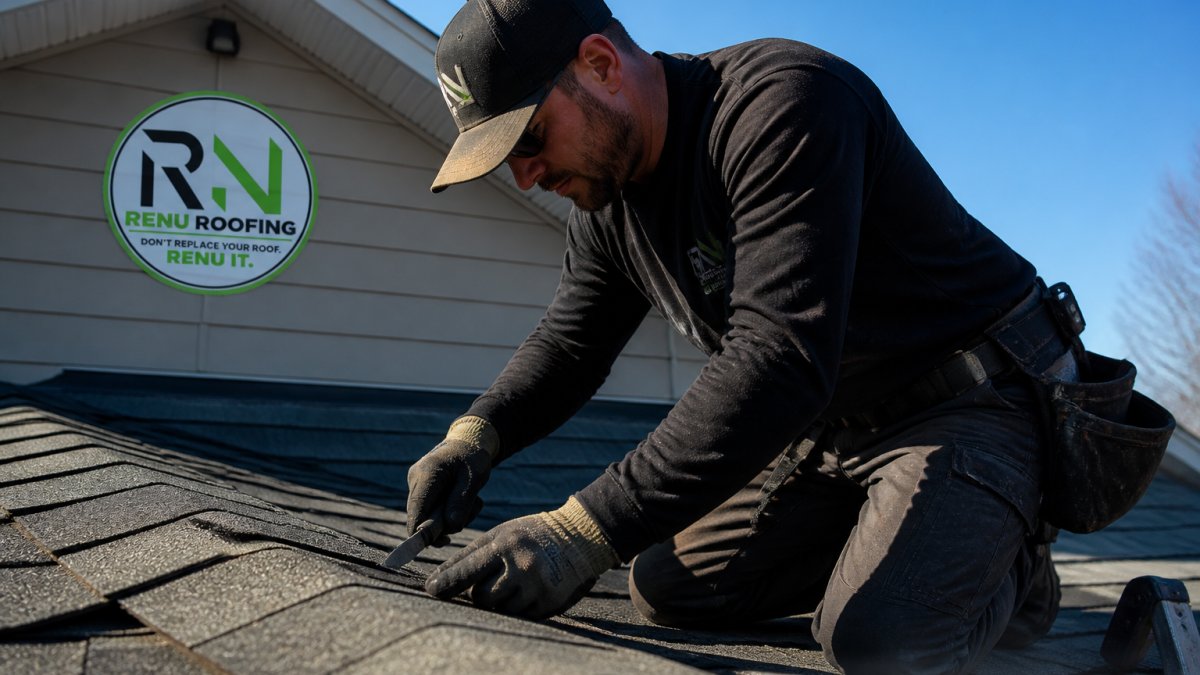
Curling shingles can indicate that asphalt shingles have lost flexibility over time, often due to UV exposure and repeated temperature changes. As shingle edges lift, they can become more vulnerable to wind damage. Buckling looks different: shingles ripple or rise in a ridge, sometimes pointing to moisture, improper installation, or ventilation issues beneath the roofing surface.
Missing shingle tabs or entire shingles are more than a cosmetic concern. They can expose the underlying roofing materials to moisture, increasing the risk of leaks and further damage if left unaddressed.
Can damaged shingles be repaired before roof rejuvenation? In some cases, yes. If curling, buckling, or missing shingles are limited to isolated areas, a roofing professional may be able to replace damaged shingles, repair localized issues, and determine whether the remaining roof is a suitable candidate for rejuvenation. ReNu Roofing provides shingle repair and replacement services, along with roof rejuvenation for eligible asphalt shingle roofs.
However, widespread deterioration, significant buckling, recurring moisture issues, or compromised roofing materials may indicate that rejuvenation alone isn't appropriate. A professional roof inspection can help determine whether repairs and rejuvenation are a viable option—or whether a larger repair or roof replacement is needed.
Granule Loss and Gutter Buildup
Granules protect asphalt shingles from UV rays, and as they wear away, shingles become more vulnerable to weather and aging. One place to spot granule loss is in your gutters: heavy, dark, sand-like buildup after rain may indicate that shingles are shedding their protective surface.
Check downspout splash areas, too. Some granule loss is normal, especially on newer roofs, but heavy or recurring deposits can signal accelerated wear. In Utah, years of intense sun and seasonal temperature swings can contribute to shingle deterioration.
For eligible asphalt shingle roofs, rejuvenation may help improve flexibility and slow further deterioration and granule loss. However, significant granule loss or exposed underlying material may indicate that repairs or replacement are needed. A professional inspection can help determine whether rejuvenation is appropriate.
Water Stains, Attic Leaks, and Damaged Flashing
Water stains on attic rafters or ceiling drywall can mean moisture is getting past the roofing system. Brown rings, dark streaks, damp insulation, or a musty attic smell are common warning signs. The source isn't always the shingles themselves—flashing failures, roof penetrations, and drainage issues can also allow water inside.
Utah homeowners should pay attention to these signs after heavy rain, snowmelt, or winter weather. Even a small leak can lead to more extensive damage if left unaddressed. Identifying the source early can help determine whether a targeted repair is sufficient or whether more extensive roofing work is needed.
Compromised Flashing Around Chimneys and Vents
Flashing seals vulnerable roof transitions around chimneys, vent pipes, skylights, and walls. When metal lifts, corrodes, or separates—or sealant cracks and deteriorates—water can work its way beneath the roofing system.
Flashing problems don't automatically require a full roof replacement. Many localized issues can be repaired as part of a roof maintenance or a rejuvenation project. However, if water has damaged the surrounding decking or underlying materials, those issues must be addressed before restoration is considered.
Moss, Algae Streaks, and Soft Spots on the Roof Deck
Organic growth and deck softening are different problems that get lumped together, which is why many homeowners misjudge whether restoration is still on the table.
Algae Streaks: A Surface Issue That Deserves Attention
Dark streaks on asphalt shingles are commonly caused by Gloeocapsa magma, a type of cyanobacteria that grows on roofing surfaces. Algae is more common in areas that remain shaded or damp, including north-facing slopes and roof sections beneath trees.
Algae staining is generally cosmetic and doesn't automatically mean the shingles are failing. However, the roof's overall condition—including granule loss, brittleness, and other signs of wear—should be evaluated separately.
Professional roof cleaning may help remove algae, but it does not restore lost granules or reverse shingle deterioration.
Moss: The Growth That Can Lift Shingles
Moss can create more serious roofing concerns because it retains moisture and may grow beneath shingle edges. As it spreads, it can lift shingles, interfere with proper water drainage, and contribute to deterioration over time.
In Utah, moss is more likely to develop on shaded roof sections, beneath overhanging trees, or in areas that stay damp.
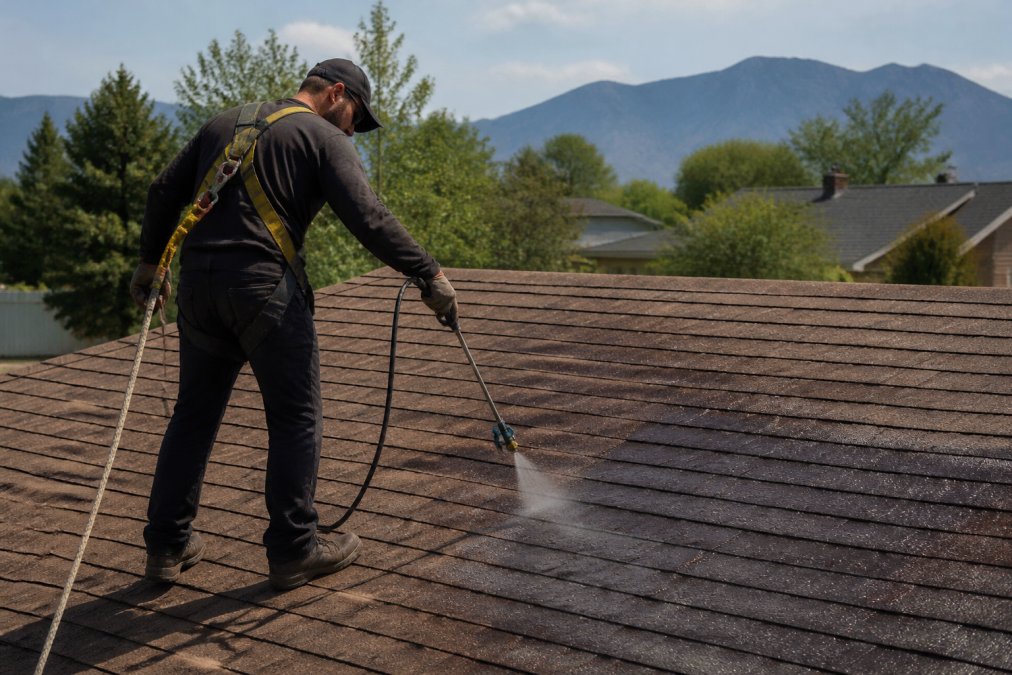
Existing moss should be removed carefully. Aggressive scraping or pressure washing can damage shingles and strip away protective granules. A professional can assess the growth, determine an appropriate removal method, and check for lifted or damaged shingles. If the roofing system remains in suitable condition, repairs or rejuvenation may be options after the necessary maintenance is completed.
Schedule Your FREE Roof Inspection Today →
Soft Spots: What the Roof Deck Is Telling You
A soft or spongy area on a roof may indicate moisture-damaged decking or deterioration beneath the shingles. From inside the attic, warning signs can include dark streaks on the sheathing, damp insulation, rusted nail heads, or visible water staining.
These problems can result from long-term leaks, poor ventilation, flashing failures, or drainage issues. Soft decking should never be dismissed as normal shingle aging.
Localized decking damage may be repairable by replacing the affected wood before considering rejuvenation. However, widespread deterioration may require more extensive repairs or roof replacement. Rejuvenation cannot repair damaged decking or correct structural problems, so underlying issues must be addressed first.
Material-Specific Failure Signs
Roofing materials show different signs of aging and damage. Knowing what to look for can help homeowners understand when maintenance, repairs, or restoration may be appropriate.
Asphalt shingles: Granule loss, curling, cracking, missing tabs, brittle shingles, and algae staining. Eligible roofs may be candidates for rejuvenation, while damaged shingles may need repair or replacement first.
Metal roofs: Rust around fasteners or seams, backed-out screws, loose panels, and deteriorating factory finishes. Some metal roofs may be candidates for compatible coating systems after proper evaluation and preparation.
Clay and concrete tile: Cracked or slipped tiles, broken corners, and deteriorated underlayment. Depending on the condition of the system, repairs or underlayment replacement may provide a restoration option.
Slate: Cracked or delaminating slate, loose or missing pieces, deteriorated fasteners, and flashing failures. Individual components may be repairable, but slate roofs should be evaluated by a qualified professional familiar with the material.
Not every roofing material is suitable for the same restoration process. The right approach depends on the roof's material, condition, and underlying components.
Climate-Specific Wear Patterns
Your local climate plays an important role in how a roof ages. In Utah, intense UV exposure, seasonal temperature swings, snow and ice, and wind or hail can all contribute to roofing wear.
High UV exposure and dry conditions: Prolonged sun exposure and temperature changes can contribute to asphalt shingle aging, brittleness, and granule loss.
Snow and freeze-thaw cycles: Ice buildup, repeated freezing and thawing, and snowmelt can reveal weaknesses around flashing, valleys, and roof penetrations.
Wind and hail: High winds can lift or damage shingles, while hail may bruise or fracture shingle surfaces. Some damage may not be obvious from the ground and requires closer inspection.
These conditions don't automatically mean a roof needs replacement. The extent of damage, shingle condition, and integrity of the underlying roof system all matter when determining whether repairs, rejuvenation, or replacement may be appropriate.
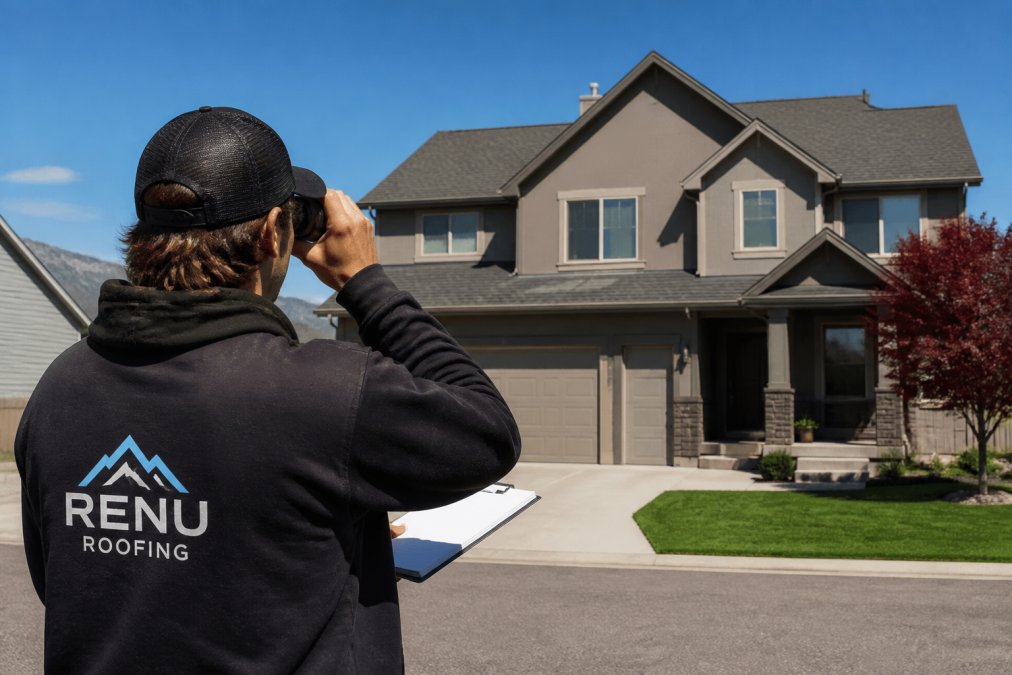
Contractor using binoculars to check for signs your roof needs restoration from the driveway safely.
Roof Rejuvenation Benefits: What Restoration Actually Fixes
Roof rejuvenation benefits come down to one thing: it restores what age takes away. Asphalt shingles are made with flexible oils that keep them pliable, and over years of sun and temperature swings those oils evaporate and the shingle turns brittle. Rejuvenation replenishes that flexibility and re-bonds loose granules, slowing the aging process rather than hiding it.
What Roof Restoration Fixes:
Restores shingle flexibility and helps reduce further granule loss
Replenishes lost oils to help aging shingles stay flexible and resilient
Helps prevent cracking, brittleness, and premature shingle deterioration
Protects against UV exposure, heat, wind, rain, snow, and ice
Helps extend the service life of aging asphalt shingles and delay costly replacement
Cost of Roof Restoration vs Replacement: A Decision Framework
The cost of roof restoration vs replacement is the decision most homeowners are actually making, and the gap is significant. Restoration is a maintenance-tier investment; replacement is a capital project including tear-off, disposal, new underlayment, and new materials. Pricing depends on roof size, pitch, material, and local labor, so any provider quoting a flat number before inspecting is guessing.
Use this framework instead of a price tag:
Situation | Recommended Path | Why |
|---|---|---|
Shingles 10-20 years old, sound deck | Restoration | Flexible life remains to be extended |
Isolated curling, moss, or flashing issues | Restoration plus targeted repairs | Damage is localized |
Widespread buckling or missing tabs | Full inspection, likely replacement | Shingle mat has failed |
Soft spots across multiple planes | Replacement | Deck integrity is compromised |
Active leaks with rot present | Replacement | Coating cannot fix structural decay |
Ask any provider to show you the deck condition before recommending a path. A restoration quote given without an attic or deck check is a guess, not a diagnosis.
How Long Does Roof Rejuvenation Last? Lifespan and Warranty Expectations
How long roof rejuvenation lasts is not a single number. It is the product of four variables: treatment chemistry, shingle condition at application, climate, and material. Change any one and the expected service window moves.
What actually drives the lifespan
1. Product chemistry. Asphalt-based emulsions penetrate the shingle and replenish the flexible oils UV and thermal cycling have driven off, showing the strongest results on shingles that still have most of their granules. Acrylic or silicone coatings sit on top and form a reflective, waterproof membrane, adding UV resistance and sealing minor cracks but doing less to restore flexibility. A well-applied rejuvenation on sound shingles typically extends service life by 5 to 15 years.
2. Condition at application. This is the single biggest lever. A roof treated at year 12 with intact granules and a dry deck holds its restored flexibility far longer than the same roof treated at year 20 with bare patches and early fishmouthing. Timing matters more than the brand of product.
3. Climate. High-UV regions break down the restored surface faster; hail and freeze-thaw cycles stress the coating mechanically; sustained humidity keeps organic growth pressure on. Roofs in these conditions should expect the lower end of the range and more frequent re-inspection.
4. Material. Asphalt shingles respond best to oil-replenishing rejuvenation; metal roofs to reflective coatings that address rust and heat gain; tile and slate are usually restored by re-laying sound units on new underlayment rather than coating the surface.
Schedule Your FREE Roof Inspection Today →
Warranty terms: what to actually read
Warranty language varies widely, and the headline number is rarely the whole story. Compare providers on:
- What is covered: material failure, application defects, or both. A warranty that covers only the product and not the labor leaves you paying for the re-do.
- Transferability: a warranty that follows the house is a documented asset at resale. A non-transferable one dies with the original owner.
- Proration: some warranties pay a declining percentage of the original cost over time; others pay in full for the covered term.
- Exclusions: pre-existing deck damage, poor attic ventilation, and failure to perform recommended maintenance are common exclusions. Read them before you sign.
- Registration requirements: many manufacturers require the homeowner to register the warranty within a set window after installation, or coverage is void.
ReNu Roofing backs its rejuvenation services with a 6-year transferable warranty, and its roof coatings carry a 20-year warranty. Transferability matters if you plan to sell: a warranty that follows the house is a documented asset.
Two factors that shorten the clock
Roofs with heavy existing granule loss and roofs in high-UV, high-hail regions age faster after treatment. A less obvious factor is attic ventilation: a roof that cannot shed heat and moisture from below degrades the restored surface from the underside, regardless of the topcoat. If your attic runs hot in summer or shows condensation in winter, fixing ventilation is part of getting the full lifespan out of any restoration.
How to Inspect Your Roof Safely: A Step-by-Step Checklist
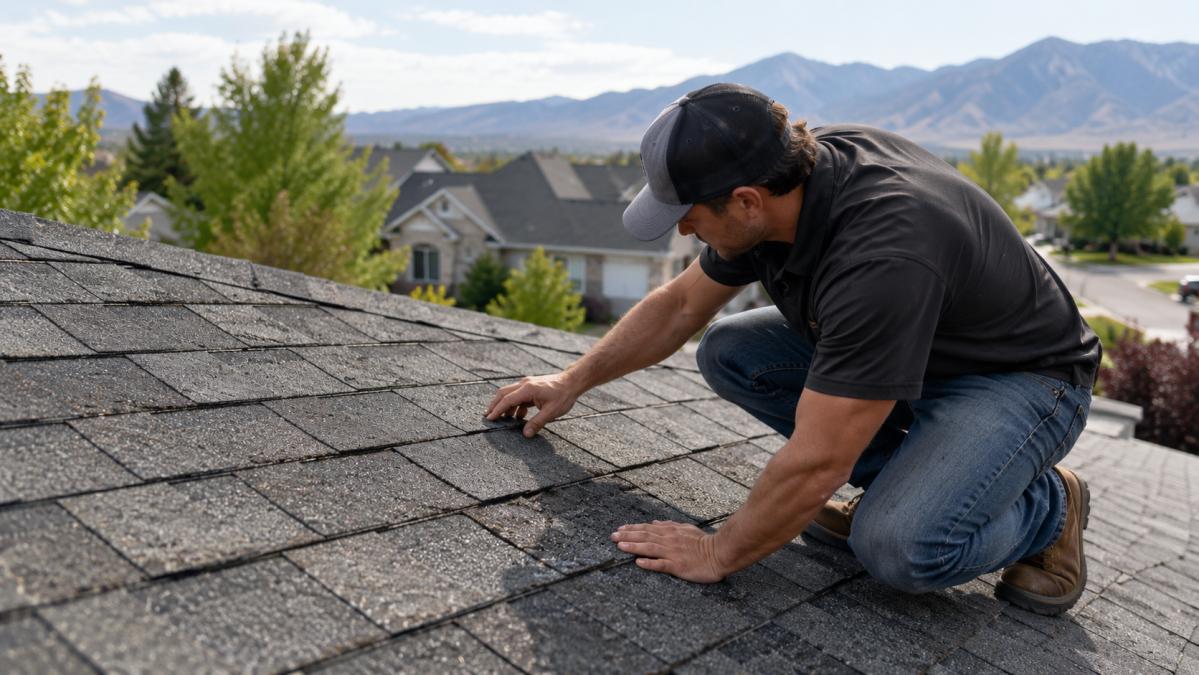
The safest roof inspection happens from the ground. Falls are the leading serious injury in residential roofing work, and most of what you need to know is visible with binoculars and a perimeter walk. Only go on the roof if it is dry, low-pitch, and you have stable footing, and never go up alone.
Run this checklist each spring and fall:
- Walk the perimeter with binoculars and note curled, lifted, or missing tabs
- Check gutters and downspout splash zones for granule buildup
- Inspect flashing at chimneys, vents, and skylights for lifted metal or cracked sealant
- Look for algae streaks and moss, especially on north-facing slopes
- From inside the attic, check rafters and sheathing for water stains, dark streaks, or daylight
- Feel for soft or spongy decking from the attic side where reachable
- Photograph anything suspicious with a date stamp for your records
Common Mistakes Homeowners Make During a DIY Inspection
The biggest mistake is walking the roof in wet or icy conditions. The second is poking at soft spots from above, which can punch through a weakened deck. The third is judging shingle condition from one slope; damage on the shaded north side often runs ahead of the sun-facing planes. Document what you find and let a professional confirm it.
When Restoration Is Not Enough: Insurance, Age, and Structural Limits
Restoration stops being viable in three situations: the deck is structurally compromised, the roof is at the end of its expected lifespan, or the damage is widespread enough that coating would only mask a failing system. Most asphalt shingle roofs are expected to serve roughly 20 years, and one past that mark with multiple failing indicators rarely justifies restoration (Long-Term Durability of Asphalt Shingle Roof Covers).
Insurance adds another layer. Most policies cover sudden damage from hail, wind uplift, or a fallen limb, but not gradual wear and tear. If a storm caused the damage, documenting it promptly and filing a claim is usually the right first move, since restoration and replacement may both be partially covered. If damage accumulated slowly, the claim will likely be denied and the decision falls back to you.
Never let a contractor talk you into a restoration coating over active rot or a soft deck. The coating will fail within a season, and you will have paid for the problem twice.
That is where an honest second opinion earns its keep. ReNu Roofing's team evaluates deck condition, flashing, and shingle integrity before recommending restoration, repairs, or replacement, so you are not sold a coating for a roof that needs more. If your inspection turns up any of the signs above, get a professional assessment before the next storm season. Inquire now to schedule yours.
The hard part is not spotting damage; it is judging whether that damage has crossed the line from aging to failing. Get that call wrong and you either overspend on a replacement you did not need or underinvest in a roof that is already leaking. ReNu Roofing specializes in professional roof rejuvenation, repairs, and protective coatings that extend roof life by 5 to 15 years, backed by a 6-year transferable warranty on rejuvenation services and a 20-year warranty on coatings. Get started with ReNu Roofing and protect your home without paying for a full replacement.
Frequently Asked Questions
What are the first signs that my roof needs restoration instead of replacement?
The earliest signs include granule loss (check your gutters for sandy grit), curling or buckling shingle tabs, and dark algae streaks. If your roof is under 20 years old and the roof deck feels solid, restoration is often viable. Water stains in the attic or damaged flashing are later indicators. A professional roof inspection can confirm whether moisture damage has reached the underlayment or if the shingles just need rejuvenation.
How long does roof rejuvenation last compared to a full replacement?
Professional roof rejuvenation typically extends your roof's life by 5 to 15 years, depending on the shingle condition, climate, and coating used. A full replacement resets the clock for 20 to 30 years but costs significantly more. ReNu Roofing backs its rejuvenation services with a 6-year transferable warranty and a 20-year warranty on coatings, giving homeowners a measurable lifespan guarantee rather than a vague promise.
Will my insurance cover roof restoration or roof rot?
Insurance generally covers sudden damage like hail or wind uplift, not gradual wear or rot. If rot stems from a covered event, your claim may include restoration. Otherwise, restoration is typically an out-of-pocket preventative maintenance cost. Document your roof's condition with dated photos and keep receipts. Review your policy for exclusions around neglect and aging, and ask your roofing contractor to provide an inspection report you can submit if you file a claim.
Is the cost of roof restoration vs replacement worth it for an older roof?
For roofs with solid structural integrity, restoration usually costs a fraction of replacement and avoids landfill waste. The cost of roof restoration vs replacement depends on square footage, roof pitch, and coating type, so pricing varies. If more than 30% of shingles are missing or the roof deck sags, replacement is the safer call. Request a written quote so you can compare both options side by side.